China’s parade carries message for friends and foes
Beyond the parade, China signals strategic message to both rivals and allies
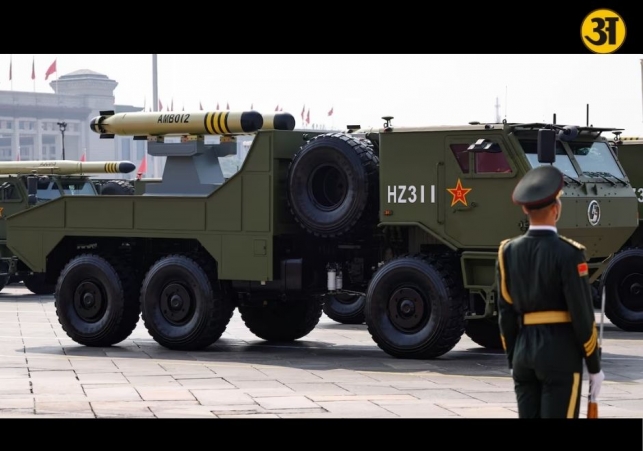
China recently organised one of its biggest military parades in Beijing to mark the 80th anniversary of the end of World War II. While September 3 has long been remembered in China as the “Victory Day of the Anti-Japanese War”, such large-scale commemorations have been rare. This year’s event was not simply about remembering history. It was carefully designed to send messages to Japan, Taiwan, the United States, and the wider world. The parade, with its strong anti-Japan undertone, highlighted how Beijing uses history as a tool to strengthen its political position and strategic interests.
The pomp and show were meant to impress both domestic and international audiences. With thousands of troops, advanced weapons, and global leaders in attendance, President Xi Jinping used the parade to underline China’s strength and its central role in shaping a new world order. At the same time, the event also revealed how China sees its rivals and allies, and how it wants to position itself in the coming decades.
Warnings to Japan and Taiwan
One of the clearest signals was directed at Japan. Chinese commentators openly said the parade was meant to act as an ultimatum. Beijing wants Japan to be more restrained, especially on Taiwan. In recent years, Japanese leaders have increasingly voiced concern about Taiwan, with statements like “Taiwan’s problems are Japan’s problems.” China views this as unacceptable interference. By linking the parade to memories of Japan’s wartime aggression, Beijing aimed to remind Tokyo of its past and pressure it into avoiding a more active role in East Asian security matters.
Taiwan was also a central target of the messaging. China’s military display was designed to make Taiwanese citizens feel powerless against the mainland’s superior force. Propaganda compared Taiwan’s resistance to “a mantis trying to stop a chariot.” At the same time, Beijing tried to reshape history by claiming that both China and Taiwan suffered under Japanese rule, painting their wartime experiences as a shared heritage. Chinese media even accused Taiwan of being “spineless” for calling Japan a friend today. This approach is not just about intimidating Taiwan—it is also about undermining its ties with Tokyo while trying to reframe its identity as historically tied to the mainland.
Signaling to the US and the wider world
The United States was another major audience for the parade. Chinese analysts described the event as a turning point in the global balance of power. By displaying advanced nuclear and military capabilities, Beijing sought to establish what it called a “new strategic stability” with Washington. In simpler terms, China wants to warn the US that confrontation could be costly and that it is better for both sides to seek cooperation instead of conflict. This fits with China’s long-standing military philosophy of “subduing the enemy without fighting.”
At the same time, the parade carried a strong ideological message. Chinese media stressed that it was not the West, but countries like China and the Soviet Union, that made the greatest sacrifices in defeating fascism. By reviving this narrative, Beijing hopes to position itself as a natural leader of today’s global south and to challenge the Western-led world order. With leaders from Russia, North Korea, and several other countries in attendance, the event was also about showing that China is not alone. Instead, it seeks to present itself as the centre of a new multipolar world, where emerging economies no longer bow to old imperial powers.
This ideological push also serves domestic purposes. At a time when China’s economy is slowing and facing challenges, the parade offers citizens a sense of unity and pride. By highlighting past sacrifices and linking them to present-day strength, the government is encouraging people to rally behind the national flag rather than question internal difficulties.
Opinion: history and symbolism as China’s strategy
The September 3 parade was not just a military event. It was a political message wrapped in history and symbolism. Beijing wants the world to remember its wartime sacrifices while also recognising its current military and economic power. Japan was reminded of its past and warned against interfering in Taiwan. Taiwan was shown the vast power gap across the Strait. The US was told to treat China as an equal, not a junior partner. And the global south was invited to see China as an alternative to the Western-led system.
For India, the timing of the event was particularly delicate. Prime Minister Narendra Modi attended the Shanghai Cooperation Organisation summit in China, meeting both Xi Jinping and Vladimir Putin. But he skipped the parade itself and made a point to strengthen ties with Japan just before his China visit. This shows that India is carefully balancing between the two sides, keeping its “strategic autonomy” intact.
ALSO READ: How to get your protein intake right for better health and energy
ALSO READ: WHO says over one billion people lived with mental health conditions in 2021
Ultimately, China’s parade was less about soldiers and weapons, and more about narratives and influence. By mixing history, ideology, and military strength, Xi Jinping hopes to shape perceptions at home and abroad. The real question is how long such shows of strength can mask economic weaknesses and whether rivals like the US, Japan, and Taiwan will bend to pressure or push back harder. For now, Beijing has made its message clear: it sees itself not just as a regional power, but as the architect of a new global order.
Related News