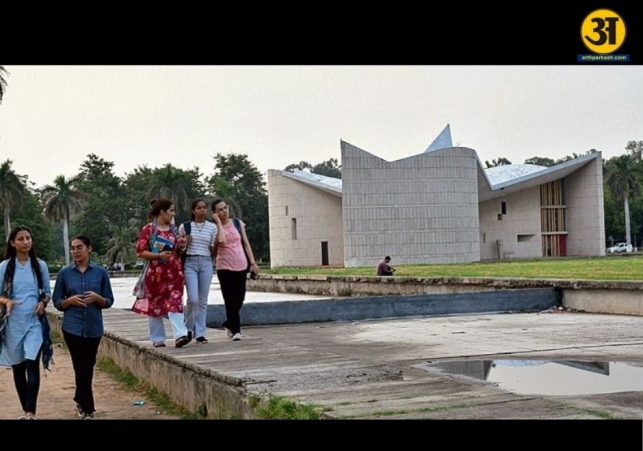
Centre withdraws Panjab University senate reform plan
Government rolls back proposed changes to Panjab University senate after criticism
The Central Government has taken back its controversial decision to restructure the Panjab University (PU) senate and syndicate after facing strong opposition from political parties, students, and teachers. The Union Ministry of Education issued a fresh notification on Thursday, cancelling its earlier order that aimed to change the governance structure of the 143-year-old institution. The move came amid rising protests at the university campus in Chandigarh and growing political backlash across Punjab.
The reforms were first announced on October 28 and were meant to come into effect at a later date. However, after widespread criticism, the Centre decided to withdraw them through another notification issued under Section 72 of the Punjab Reorganisation Act, 1966. The ministry explained that the decision followed several rounds of discussions and feedback from students, teachers, former vice-chancellors, and the current VC of PU.
“After receiving various inputs from stakeholders and student groups, the Ministry of Education has decided that the order changing the constitution and composition of the senate and syndicate shall stand rescinded,” the official statement said on Friday evening. The rollback was announced just as preparations were underway for a planned university shutdown on November 10, organised by protesting students.
For over a week, members of the Panjab University Bachao Morcha had been camping outside the vice-chancellor’s office, demanding that the Centre reverse the reforms. Students claimed the new structure would reduce democracy within the university and weaken Punjab’s say in its functioning. Their protests received support from teachers, alumni, and politicians across different parties.
Opposition claims Punjab’s rights being diluted
The proposed changes had sparked strong reactions in Punjab’s political circles. Leaders from across parties claimed that the Centre’s reforms were an attempt to “dilute” Punjab’s historical and administrative claim over Chandigarh. The Centre’s plan would have reduced the number of senate members — PU’s highest governing body — from 97 to just 31. It also proposed abolishing elections to the syndicate, the university’s executive arm, and scrapping the registered graduate constituency — a distinctive feature of PU’s democratic structure.
Although the reforms did not reduce the number of ex-officio members from Punjab and Chandigarh, they added the Chandigarh MP as a new member. According to the government, these changes were based on the recommendations of a committee formed in 2021 by the then vice-president and university chancellor, M. Venkaiah Naidu. The committee had submitted its report in 2022. Since the term of the previous senate ended in October 2024 and elections were not held, the Centre said the reforms were intended to make the governance process smoother.
Officials in favour of the reforms had earlier argued that vice-chancellors were struggling to function freely because of pressure from elected senate members. However, critics maintained that the changes would take away the university’s autonomous and participative character. Even with the new system, experts said, the full senate could not have been formed immediately because electing and nominating new members could take six to eight months.
After the Centre’s withdrawal of the notification, student leaders said they were not satisfied. “Nothing changes on the ground for us. The university still doesn’t have a functioning senate, and this confusion has eroded our faith in the Centre’s intentions,” said Raman Singh, a student leader from the PU Bachao Morcha. “Our November 10 shutdown call remains in place until a permanent solution is ensured.”
ALSO READ: BJP still needs Nitish Kumar despite differences in Bihar politics
ALSO READ: Why strokes can strike at any age: 8 common myths busted
Punjab CM and BJP exchange blame
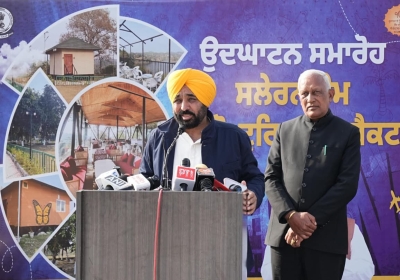
Reacting to the Centre’s decision, Punjab Chief Minister Bhagwant Mann accused the central government of constantly interfering in Punjab’s affairs. Speaking at an event in Amritsar, he said, “Panjab University is not just an academic institution; it is an emotional part of Punjabi identity. Generations have studied here, and its autonomy must be respected.” He described the Centre’s earlier decision to dissolve the senate and syndicate as a “direct attack” on Punjab’s heritage.
The chief minister also connected the issue with other recent disputes between the state and the Centre, including the demand to release extra water from the Bhakra Dam to Haryana and Rajasthan. “Punjab will never bow to pressure. The Centre must stop bullying Punjab. We know how to fight for our rights and how to claim them,” Mann said firmly.
However, the Bharatiya Janata Party (BJP) accused the Aam Aadmi Party (AAP) government in Punjab of politicising the issue. Punjab BJP vice-president Subhash Sharma said that it was, in fact, the Punjab BJP leadership that conveyed people’s sentiments to the Centre, resulting in the withdrawal of the reforms. “While the AAP government tried to mislead the public, Union Education Minister Dharmendra Pradhan has shown sensitivity and responsibility by taking back the notification,” Sharma said during a press conference.
He also criticised the Punjab chief minister and education minister for never attending senate meetings despite being ex-officio members. “If they truly cared about the university, they would have participated in its functioning instead of using it for political drama,” Sharma added.
With the Centre’s withdrawal of the notification, the university’s previous governance structure — including its senate and syndicate system — stands restored. Still, the episode has left behind tension and distrust between students and authorities. While the Centre called the move a response to feedback, protesters saw it as a result of their determination to protect the university’s democratic values.
As the November 10 shutdown call remains, Panjab University continues to be at the heart of a larger debate — one that goes beyond campus walls, touching on Punjab’s identity, autonomy, and relationship with the Centre.
Related News