Breathe to earn: Why clean air must be every worker’s right
Clean air is not a luxury—it’s a right every urban worker deserves
Every morning, as I walk through my city to reach work, I can feel the thick smog in my lungs before I even take my seat. The air is heavy, gritty, and carries a bitter sting. And I’m not alone. Millions of urban workers across India breathe this toxic mix of dust, vehicular fumes, and industrial emissions every single day.
We talk about growth, about Smart Cities, about digital infrastructure—but when will we talk about air, the one thing we all need to survive?
I believe it’s time we stop treating clean air as a policy afterthought. It must be declared and enforced as a fundamental right, especially for the urban working class, who bear the worst brunt of pollution without having the luxury to escape it.
Urban workers suffer the most, but their voices are ignored
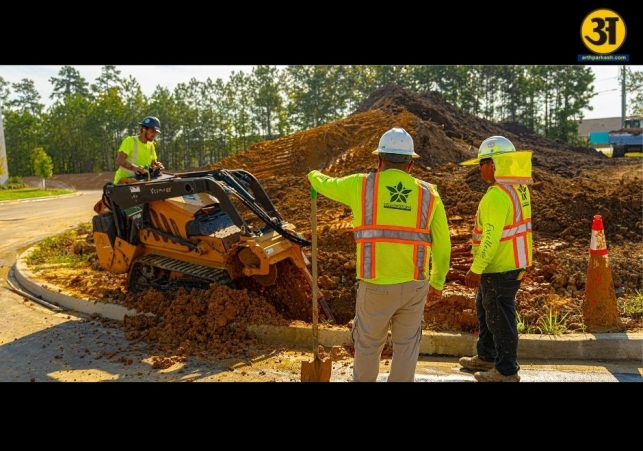
Office-goers, factory workers, street vendors, security guards, construction labourers—these are the people who keep our cities running. Yet they are also the ones most exposed to hazardous air conditions. They don’t have access to indoor air filters, green office campuses, or remote work setups.
They spend hours on dusty roads, near traffic junctions, under open skies, surrounded by emission-spewing vehicles and construction dust. And while middle-class homes might still have air purifiers, these workers are lucky if they get a mask that filters anything more than social expectation.
This is class-based environmental inequality, and it’s as unjust as denying someone clean water or food.
Polluted air is stealing our health and productivity
Let’s cut through the noise. Air pollution is not just a vague health issue—it’s a daily attack on our lungs, heart, and brain. Studies have directly linked dirty air to respiratory problems, heart disease, reduced immunity, poor cognitive function, and even depression.
But there’s another impact people rarely talk about: productivity loss. Tired lungs mean tired bodies. Long-term exposure leads to chronic illness, sick days, lower output, and higher healthcare costs. A workforce breathing poison cannot build a healthy economy.
And yet, clean air is still not a guaranteed right in India’s Constitution.
Constitutional rights must evolve with public health threats
The Indian Constitution guarantees the right to life under Article 21. The Supreme Court has often expanded its meaning to include the right to a clean environment. But here's the issue: there is no specific, enforceable right to clean air for citizens, and certainly not for urban workers who are affected most.
It’s time we change that. Just like food security became a legal right under the National Food Security Act, clean air must also become a justiciable right, with mechanisms for enforcement, monitoring, and accountability.
Because if the air we breathe is slowly killing us, how can we claim to be a welfare state?
ALSO READ: Top 6 Tech Innovations Disrupting Traditional Indian Retail
ALSO READ: The rise of the freelance economy: Challenges and opportunities
We need stronger laws and real enforcement
We don’t lack policies—India has the National Clean Air Programme (NCAP), pollution control boards, emission standards. But the implementation is weak, and there’s little public participation in decision-making.
What we need is a Clean Air Rights Bill—one that gives urban workers the legal standing to demand action against polluters, to seek workplace protection from air hazards, and to hold governments accountable for inaction.
Cities should be required to issue real-time air quality warnings, ensure safe air zones around hospitals, schools, and industrial areas, and restrict construction or vehicular activity when pollution crosses danger levels.
Why this fight is urgent—and deeply personal
This isn’t just policy—it’s personal. I’ve seen friends struggle with asthma, family members develop breathing issues, and workers collapse at sites due to exposure. I’ve seen children grow up in toxic neighbourhoods with no playgrounds or clean air to breathe.
As someone who lives, works, and breathes in this environment every day, I no longer see this as a passive concern. It’s a fundamental rights issue, a labour issue, and a human rights issue rolled into one.
To conclude: clean air is survival, not privilege
If water can be declared a right, and education a right, why not clean air? Urban workers are not second-class citizens. They deserve the same air that ministers breathe inside sealed office chambers.
The time has come to recognize clean air as a fundamental right—one that cannot be violated by unchecked industrialization, urban planning failures, or weak enforcement. Because no economic dream is worth chasing if it’s built on the suffocation of the very people who build it.
Let clean air be the justice we owe our cities' hardest workers.
Related News