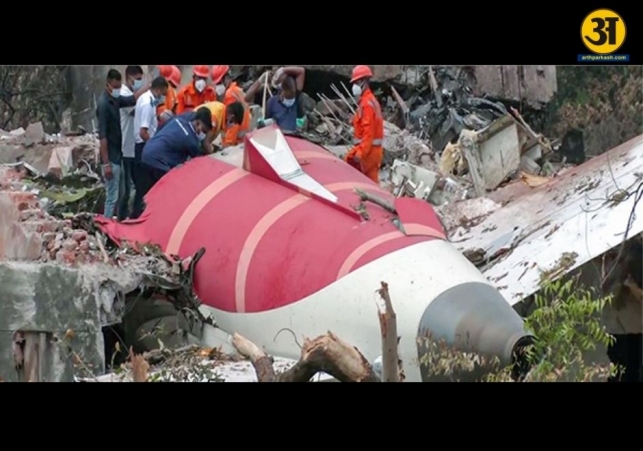
AAIB submits Air India crash report to ministry, say sources
Air India crash: AAIB submits preliminary report to aviation ministry, say sources
The Aircraft Accident Investigation Bureau (AAIB) has submitted its preliminary report on the tragic Air India Flight AI-171 crash to the Ministry of Civil Aviation and other key agencies. According to senior sources, this is the first official update on the crash since it happened on June 12 near Ahmedabad.
The AI-171 flight, which was carrying 241 people, crashed in a residential area, killing at least 270 people, including those on the ground. This tragedy is now among India’s deadliest aviation disasters.
The preliminary report is based on the early findings gathered from the crash site, including data recovered from the aircraft’s Flight Data Recorder (FDR) and Cockpit Voice Recorder (CVR)—commonly known as the black boxes.
According to officials, the Crash Protection Module (CPM) from the cockpit recorder was safely retrieved, and on June 25, the memory module was successfully accessed at the AAIB laboratory in Delhi. The downloaded data includes crucial information about the aircraft's movements, crew communications, and system performance during the moments before the crash.
This marks a significant achievement for Indian aviation authorities, as this is one of the first times that India has independently retrieved and decoded black box data without depending on foreign labs. It shows a major improvement in the country’s aviation investigation capability.
India now decoding black box data locally
In past years, India did not have the advanced facilities needed to extract and analyse data from black boxes after major air crashes. Because of this, India had to send the equipment abroad to get technical support from other countries.
Here are a few examples:
-
In the 1996 Charkhi Dadri crash, the black box was sent to Moscow and the UK.
-
In the 2010 Mangalore crash, the data was decoded in the United States.
-
In the 2015 Delhi crash, the Canadian Transportation Safety Board assisted in analysis.
-
In the 2020 Kozhikode crash, while the recorders were downloaded in India, the data analysis still needed NTSB support.
But now, with the AAIB lab in Delhi fully operational, India can independently handle both the decoding and analysis of black boxes. This is expected to speed up investigations and help improve domestic aviation safety.
To verify the accuracy of the data retrieved from the black boxes, a “golden chassis” (a test unit that matches the actual black box) was used. This step helps ensure that the data extracted is both reliable and complete.
The two recorders were recovered from different parts of the crash area. The first was found on a rooftop near the site on June 13, just one day after the crash. The second was discovered within the aircraft debris on June 16. Both devices were in a damaged but usable condition, and the AAIB team managed to recover data from them.
Joint investigation includes global aviation experts
The investigation is being led by the Director General of AAIB and includes multiple Indian and international experts. The team includes specialists from:
-
Indian Air Force (IAF)
-
Hindustan Aeronautics Limited (HAL)
-
Boeing – manufacturer of the aircraft
-
GE Aerospace – engine manufacturer
-
National Transportation Safety Board (NTSB), USA – representing the aircraft’s country of origin
-
An aviation medicine expert
-
An Air Traffic Control (ATC) officer
This group is working together to study all aspects of the crash. The NTSB team is currently in Delhi, assisting the AAIB at their lab.
These experts are reviewing voice recordings, flight data, technical logs, and aircraft maintenance history, among other things. Their goal is to determine what caused the crash, and what preventive steps can be taken to avoid similar accidents in the future.
ALSO READ: MPs from all parties urge Bharat Ratna for Dalai Lama, suggest Parliament address
ALSO READ: Two bodies recovered after fire at Vishal Mega Mart in Delhi’s Karol Bagh
Final report expected in the coming months
The preliminary report is only the first step in the investigation process. It includes basic facts, early observations, and initial data from the black boxes. However, it does not yet provide a complete explanation of the crash or assign any official cause.
Officials said that the final report, which will include a full timeline, root cause analysis, and safety recommendations, will take several more months to complete. The final report will be made public after review by all concerned agencies.
The aviation ministry hopes the findings will lead to stronger safety protocols, better crew training, and possible design or maintenance changes if required.
The crash of Air India Flight AI-171 was a national tragedy that claimed over 270 lives. With the AAIB now submitting its preliminary report and the black box data successfully decoded in India for the first time, the investigation has taken a crucial step forward.
The ability to analyse black box data locally is a milestone for India’s aviation sector, allowing for quicker responses and stronger internal capabilities in air safety investigations.
As the country waits for the final report, families of victims and aviation experts alike hope that the findings will lead to meaningful changes that can prevent such disasters in the future.
Related News