Why Trump’s Hormuz strategy faces major challenges
Inside the failed US-Iran talks: Understanding Trump’s Strait of Hormuz blockade plan
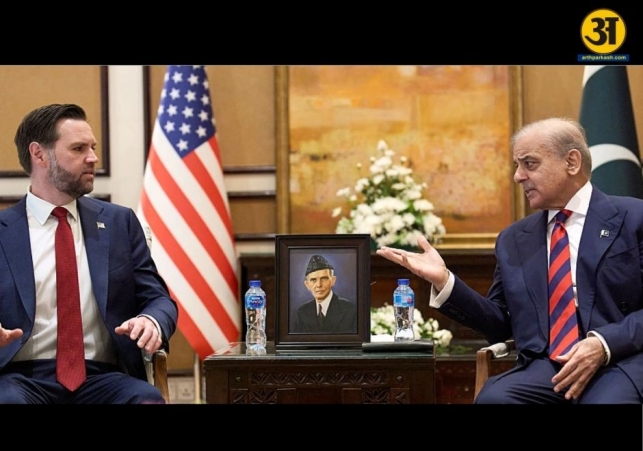
Washington: Fresh tensions have emerged in the Middle East after negotiations between the United States and Iran reportedly ended without an agreement. Following the failed talks in Islamabad, US President Donald Trump announced a naval blockade targeting Iranian shipping and access through the Strait of Hormuz, one of the world’s most important oil routes.
The move has drawn strong reactions from analysts, diplomats and global markets, as the Strait of Hormuz is a narrow but highly strategic waterway through which a major share of the world’s crude oil passes.
Any disruption in this route can quickly affect fuel prices, shipping costs and energy security across Asia, Europe and beyond.
The reported talks between Washington and Tehran were seen as an attempt to reduce tensions and restart diplomacy after recent conflict in the region.
However, both sides appear to have remained far apart on key issues, especially Iran’s nuclear programme and regional security matters.
After the collapse of talks, President Trump announced that the US Navy would begin blocking vessels linked to Iranian ports and challenge ships that paid what he described as Iranian tolls in the strait.
The White House presented the move as pressure on Iran to return to negotiations under stronger terms.
But many experts believe the strategy may be difficult to sustain and could create new risks rather than immediate gains.
The Strait of Hormuz lies between Iran and Oman and connects the Persian Gulf to the Gulf of Oman and the Arabian Sea.
Because many oil-producing countries rely on this route, any military escalation there can affect the global economy within days.
Shipping firms often respond quickly to threats by raising insurance costs, delaying cargo movement or rerouting vessels where possible.
That means even a limited blockade can create economic pressure far beyond the Middle East.
Why the talks reportedly failed
According to reports, the main disagreement during the Islamabad discussions involved Iran’s nuclear programme and the terms of future monitoring or restrictions.
US officials said Washington had made a final proposal, while Iranian leaders said American demands were unreasonable and did not respect Iran’s rights. (euronews)
This reflects a long-standing pattern in US-Iran diplomacy.
The US wants tighter controls to prevent nuclear weapons development, while Iran says its programme is peaceful and insists on sovereignty and sanctions relief.
Trust between the two countries has also remained weak for years.
The earlier 2015 nuclear deal once offered a framework, but later political changes and withdrawal from the agreement damaged confidence.
That history makes fresh negotiations much harder.
Even when talks begin, both sides often enter with suspicion.
As a result, failure in one round can quickly lead to renewed pressure, military signals and harsh public statements.
That appears to be what happened after the latest discussions.
Instead of extending talks, Washington moved toward coercive pressure through maritime action.
Iran, meanwhile, has indicated it will defend national interests and rejects external diktats.
ALSO READ: US seeks 20-year nuclear pause while Iran offers 5 years as talks remain deadlocked
ALSO READ: Trump says he does not care if Iran returns to talks after negotiations fail
Why the blockade may be risky
Several analysts say a blockade may look strong politically but be complicated in practice.
Stopping ships in or around one of the busiest energy chokepoints in the world requires constant naval presence, surveillance and readiness for escalation.
That can become expensive and dangerous.
A prolonged operation could expose US forces and commercial shipping to missile, drone or mine threats.
Experts have also noted that Iran has geographic advantages near the strait and can use asymmetric tactics even without matching US naval power directly. (Council on Foreign
Another challenge is diplomacy.
Many countries depend on oil flows through the route, including US partners.
If shipping disruptions raise energy prices sharply, allies may press Washington to reduce tensions.
There is also the question of enforcement.
Some reports suggest the actual US posture may be narrower than a full closure of the strait and focused more on vessels trading with Iranian ports. (Al Jazeera)
If true, the gap between political messaging and practical enforcement could limit the strategy’s impact.
Financial markets are also watching closely.
Whenever the Strait of Hormuz is threatened, oil prices often react immediately.
Higher crude prices can raise inflation globally, increase transport costs and pressure households.
That creates wider economic consequences even for countries far from the conflict.
Many observers now believe renewed negotiations may still be the most practical path.
Military pressure can create leverage, but history shows durable solutions usually require diplomacy.
If both sides harden positions, the crisis may deepen.
If backchannel talks resume, the blockade could become a bargaining tool rather than a long-term policy.
For now, the world is watching whether this strategy forces compromise or leads to another dangerous phase of confrontation.
The failed talks have shown once again that in the Middle East, diplomacy can collapse quickly—but the consequences can spread worldwide.
Related News