Why cities fail to withstand floods
Hidden flaws in India’s urban planning exposed by recurring floods
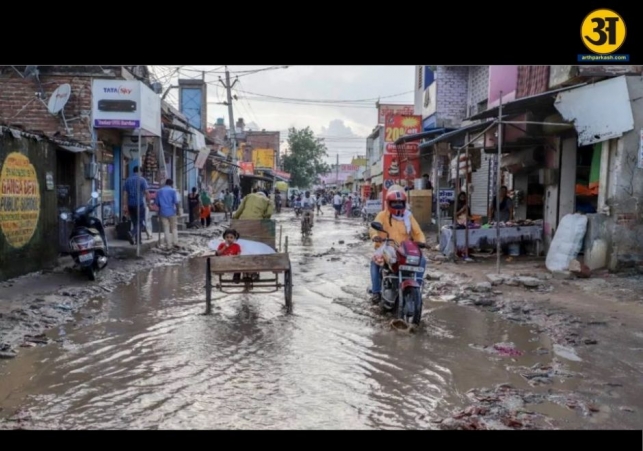
India’s floods are not just caused by heavy rains. They are also the result of weak urban planning. From Gurugram’s shiny new boulevards that drown each monsoon to Delhi’s flyovers that crumble before their time, the cracks run deeper than engineering mistakes. They show how our cities are being treated as “finished projects” instead of living, breathing spaces that must keep evolving.
The truth is clear: the collapse of urban infrastructure is not about cement and steel. It is about imagination.
Cities built for today but not for tomorrow
Many of India’s fast-growing cities were never really “planned” in the true sense. Take Gurugram. It rose from empty fields to skyscrapers almost overnight. The city was built for corporate offices and aspirational lifestyles but ignored the basics like sewage, drainage, mobility, and resilience. The result? A city that looks modern on the surface but breaks down every time it rains.
Older cities face a different but equally serious problem. Delhi and Mumbai are trapped in their own weight of history. Layers of outdated infrastructure and endless bureaucratic hurdles stop them from keeping up with today’s needs. Hyderabad, once famous for its lakes and smart water systems, now floods every year. Shimla, never meant to carry the load of year-round modern living, is breaking under pressure.
Even Chandigarh, designed by Le Corbusier as India’s proud experiment in modern city planning, is failing to keep up. Its grid, stormwater drains, and open spaces worked well for the 1950s. But today, the same systems are unable to handle rapid sprawl, higher populations, and unpredictable monsoons. The design remains the same, but the city’s reality has changed.
The common thread across all these examples is clear. Our master plans are outdated by the time they are implemented. They are usually drawn for 20 or 30 years, based on census figures and economic assumptions. But cities grow in uneven and unpredictable ways. Climate change, migration, and new industries constantly reshape them. Yet, once a plan is written, we treat it like a holy book. No one checks later if the assumptions are still valid.
This is how our cities end up with flyovers that crack in ten years, drains that fail with the first rain, and buildings that collapse far before their time. Infrastructure is not just about what we build—it is about how we maintain, adapt, and revise it. Sadly, India’s urban culture is quick to build and quicker to cut ribbons, but slow to maintain. Maintenance is not glamorous, so it is neglected.
A chance to rethink urban resilience
If we want cities that survive floods, heatwaves, and population pressures, we must change our habits. Urban audits should become a regular practice—every 10 years at least. These audits must not only check the physical health of roads, drains, and flyovers but also ask bigger questions. Has the population grown beyond forecasts? Has climate change made old drainage systems useless? Have jobs and homes shifted away from earlier centres?
These are not side issues—they are the very foundation of planning. Globally, some cities are already moving in this direction. Copenhagen and Singapore design resilience into their planning. They build green roofs, encourage permeable pavements, rely on decentralised utilities, and prioritise public transport. These features are not cosmetic—they are part of how the city works.
Even then, climate change is testing the strongest cities. New York’s subway flooded during Hurricane Sandy. London’s flood defences are stretched thin. No city, however advanced, can escape the impacts of extreme weather.
ALSO READ: Trump’s remarks spark controversy among Indian-origin Brahmins in Boston
ALSO READ: Comparing losses in gaming and investing sparks debate on regulation
For India, the path forward is not to blindly copy global models but to adapt them to our context. We must look back at our own traditions—rainwater harvesting, shaded courtyards, airflow-friendly designs, and compact urban forms. These were not primitive ideas. They were intelligent, climate-sensitive, and affordable solutions. They are exactly what modern planners claim to value today.
Urban resilience in India will not be decided by how many skyscrapers we build or how many digital sensors we install. It will be defined by whether our cities can pause, reflect, and adjust to change. The most successful cities of tomorrow will not be the ones that dazzled at their inauguration, but the ones that keep working year after year.
Opinion: India’s urban crisis is not about floods alone. It is about the lack of humility in our planning. We act as though cities are monuments to be built once and admired forever. In reality, they are living systems that must grow, adapt, and heal. If we want our cities to survive the climate shocks and population pressures of the future, we must replace rigid planning with flexible thinking, and grand announcements with daily care. Only then will our urban foundations stop cracking beneath the weight of water and time.
Related News