Uttarakhand marks 25 years amid gains and challenges
Uttarakhand at 25: Reforms, political wins and rising fault lines in 2025
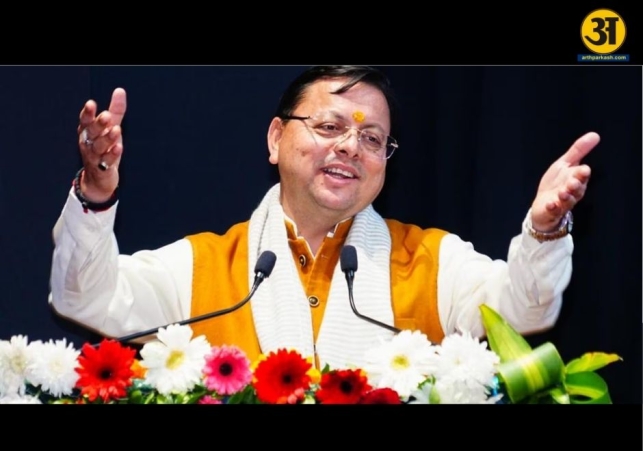
Uttarakhand completed 25 years of statehood in 2025, a year marked by major reforms, political gains for the ruling BJP, governance challenges, and ambitious development plans. The silver jubilee year saw the Pushkar Singh Dhami-led government push through landmark laws while dealing with rising human–wildlife conflict, opposition attacks, and growing public scrutiny. Overall, 2025 reflected both progress and emerging fault lines in the hill state.
Key reforms and political gains
The year began with a historic step when Uttarakhand implemented the Uniform Civil Code (UCC) on January 27. With this move, Uttarakhand became the first state in independent India to enforce a uniform set of personal laws across religions, except for Scheduled Tribes. The UCC banned practices such as iddat and halala and made registration of live-in relationships compulsory. The BJP projected the law as a major social reform and described it as a model for other states to follow. The decision also placed Uttarakhand at the centre of national political debate.
Political momentum continued for the ruling party soon after. In the urban local body elections held in January, the BJP recorded a strong performance by winning mayoral posts in 10 out of 11 municipal corporations. This was a significant improvement from 2018, when the party had won only five mayoral seats. In Dehradun, BJP candidate Saurabh Thapliyal won with a record margin of more than 1.05 lakh votes. The party also managed to wrest Haridwar and Kotdwar from the Congress. The only major setback came in Srinagar in Pauri district, where an Independent candidate defeated the BJP nominee by a narrow margin.
Another important reform followed in February, when the state assembly passed a stricter land law. The amended law was aimed at protecting land ownership in hill areas and responding to long-standing public demands. It banned the sale of agricultural and horticultural land to non-residents in 11 hill districts, excluding Haridwar and Udham Singh Nagar. The law also capped residential land purchases at 250 square metres and restricted multiple purchases by members of the same family. In Haridwar and Udham Singh Nagar, the power to approve land purchases was shifted from district magistrates to the state government, giving tighter control to the administration.
ALSO READ: Is low ovarian reserve normal in your 20s or 30s? Fertility expert answers
Challenges, development push and future outlook
While reforms moved ahead, governance challenges also grew during the year. One of the most serious issues was the rise in human–wildlife conflict, especially leopard and bear attacks in several districts. In response, the government announced plans to set up animal sterilisation centres in all 13 districts. It also strengthened forest patrolling and took steps such as identifying and eliminating man-eating leopards in affected areas of Pauri Garhwal.
Additional measures included escort services for school and Anganwadi children, drone surveillance, installation of trap cameras and cages, use of fox lights, and deployment of Animal Intrusion Detection and Repellent systems. To support affected families, the government increased compensation for deaths caused by wildlife attacks from ₹6 lakh to ₹10 lakh. Despite these steps, wildlife conflict remained a sensitive issue throughout the year.
On the political front, the Congress continued to target the Dhami government on issues such as unemployment, inflation, crimes against women, disaster management, and the Pauri receptionist murder case. The BJP responded by accusing the opposition of spreading misinformation and engaging in vote-bank politics. Although the Congress tried to mobilise public opinion through protests and student-related issues, it struggled with internal coordination problems.
Towards the end of the year, controversy intensified after viral audio and video clips surfaced, allegedly linking a senior BJP leader to the Pauri murder case. The issue sparked widespread debate and is expected to influence political discussions in 2026, adding to the already tense political environment.
Throughout 2025, the state government highlighted infrastructure development as a key achievement. It pointed to progress on all-weather roads, Char Dham connectivity, and improved infrastructure in border areas. The administration also ran campaigns against illegal mining, liquor smuggling, and encroachments. According to government claims, more than 10,000 acres of land were freed from illegal encroachments, including cases involving religious structures. Tourism remained central to the state’s economic strategy, covering religious tourism, adventure activities, and winter travel.
At the national level, Uttarakhand received recognition for reforms in the mining sector. In November, the state secured ₹100 crore under the Union Ministry of Mines’ Scheme for Special Assistance to States for Capital Investment for 2025–26. This was in addition to a similar incentive awarded in October after Uttarakhand ranked second in the State Mining Readiness Index, taking the total incentive amount to ₹200 crore.
The year concluded with grand silver jubilee celebrations on November 9, marking 25 years of Uttarakhand’s formation. Prime Minister Narendra Modi visited Dehradun and inaugurated development projects worth over ₹8,200 crore. During his address, Modi said that the “third decade of the 21st century belongs to Uttarakhand.” Following his emphasis on the state’s spiritual potential, the government announced plans to set up Spiritual Economic Zones in Garhwal and Kumaon to promote yoga, ayurveda, and wellness tourism.
As Uttarakhand moves beyond its silver jubilee year, 2025 stands out as a period of bold reforms, political consolidation for the ruling party, and growing challenges. The balance between development, environmental protection, and social stability is likely to shape the state’s direction in the years ahead.
Related News