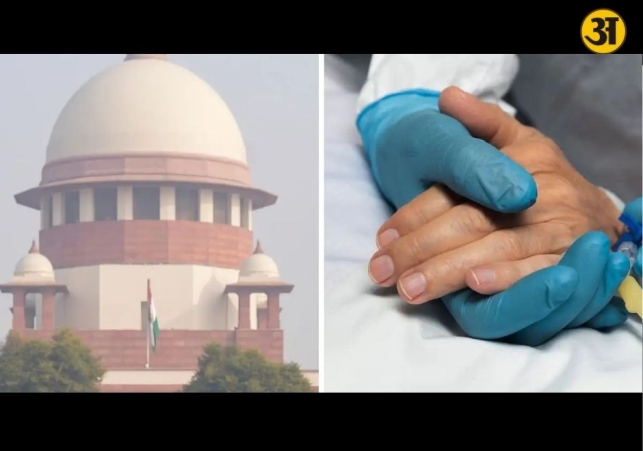
Understanding passive and active euthanasia after top court verdict
Supreme Court decision in Harish Rana case explains euthanasia laws in India
A recent decision by the Supreme Court of India has once again brought attention to the topic of euthanasia. The case involves Harish Rana, a man who has remained unconscious for nearly 13 years after a serious accident.
The court allowed passive euthanasia for Rana after considering medical reports and the request made by his parents. Judges said he would be admitted to the palliative care unit at All India Institute of Medical Sciences, commonly known as AIIMS. There, doctors will slowly withdraw life-sustaining treatment while ensuring that the patient receives comfort and dignity during the process.
This decision has made many people curious about euthanasia and the difference between passive and active euthanasia.
Euthanasia refers to intentionally ending a person’s life to relieve them from long-term pain or suffering caused by serious illness or medical conditions that cannot be cured. The word comes from a Greek term that means “good death.”
In medical and legal discussions, euthanasia is usually considered in cases where a person is terminally ill, permanently unconscious, or suffering from severe conditions with no chance of recovery.
The issue of euthanasia is debated across the world. Different countries have different laws on the subject. Some nations allow certain forms of assisted dying under strict conditions, while others completely ban it.
In India, the legal system allows only passive euthanasia under strict guidelines set by the Supreme Court. Active euthanasia, however, is illegal and considered a criminal offence.
Understanding this difference is important to know how the law approaches end-of-life care.
Passive vs active euthanasia
Passive euthanasia means stopping or withdrawing medical treatment that is keeping a patient alive artificially. In this situation, doctors do not take any direct action to end the patient’s life. Instead, they allow the illness to follow its natural course.
This may include removing life-support machines such as ventilators, stopping certain medicines that prolong life, or not performing procedures that artificially extend survival.
While treatment is withdrawn, doctors continue to provide palliative care. Palliative care focuses on comfort, pain relief, and dignity rather than curing the illness.
In the Harish Rana case, the Supreme Court allowed doctors at AIIMS to gradually stop the life-sustaining treatment while providing proper care and support to the patient.
Passive euthanasia is legal in India under strict conditions. Usually, a medical board must examine the patient and confirm that recovery is impossible. Courts also review the situation carefully before giving permission.
ALSO READ: Oil Prices Surge as Iran-Israel War Disrupts Global Energy Supply
ALSO READ: Pakistan raises petrol price by PKR 55 per litre amid Middle East conflict
Active euthanasia, on the other hand, is very different.
Active euthanasia involves taking direct steps to cause death, such as giving a lethal injection or administering drugs intended to end a patient’s life. This method actively causes death rather than allowing it to happen naturally.
Under Indian law, active euthanasia is illegal and treated as a criminal act. Doctors cannot intentionally cause death, even if the patient is suffering from a serious illness.
However, some countries have chosen a different legal path. Nations such as Netherlands and Belgium permit active euthanasia in certain circumstances. Even in those countries, strict legal procedures and medical evaluations are required before such actions are allowed.
The Harish Rana case shows the difficult decisions families sometimes face when caring for patients who remain unconscious for many years.
Rana suffered a severe head injury in 2013 after falling from the fourth floor of his hostel building while studying in Chandigarh. Since the accident, he has remained in a permanent vegetative state with complete disability and quadriplegia.
Medical experts have said there is no possibility that he will regain consciousness. Over the years, his prolonged bedridden condition has also caused several complications, including bedsores and infections.
After caring for their son for more than a decade, his parents approached the Supreme Court seeking permission for passive euthanasia.
The court carefully examined medical reports and listened to the concerns of the family before delivering its decision. Judges described the issue as emotionally difficult but stressed that the patient must be treated with dignity and compassion.
The case has once again opened discussion about end-of-life care and the rights of patients who are suffering from incurable medical conditions.
Supporters of euthanasia argue that people facing unbearable pain should have the right to die peacefully. They believe that forcing someone to remain alive despite extreme suffering may not be humane.
Opponents, however, worry that euthanasia could be misused or abused. They believe medical science should always focus on saving life and improving treatment.
Because of these concerns, India’s legal system tries to maintain a careful balance. Passive euthanasia is allowed only in exceptional circumstances, and the decision requires strict legal and medical checks.
The debate around euthanasia is likely to continue in the future as medical technology advances and people live longer with serious illnesses.
The Harish Rana verdict has once again reminded society about the complex questions surrounding dignity, suffering, and the difficult choices families and doctors sometimes have to make.
Related News