Udant Martand was the first Hindi newspaper in the world
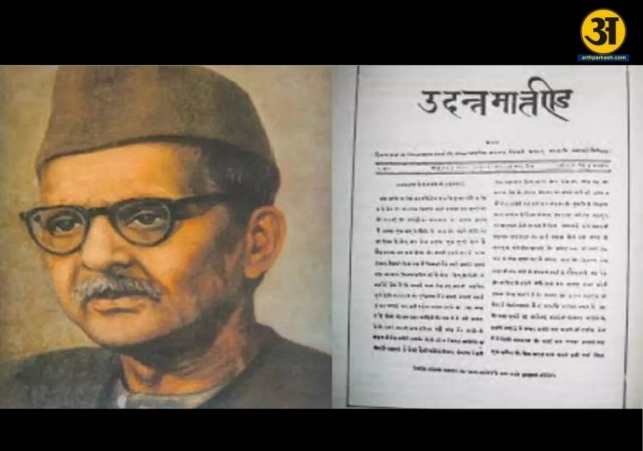
World’s first Hindi newspaper ‘Udant Martand’ was started by Pandit Jugal Kishore Shukla
On May 30, 1826, Calcutta witnessed the birth of the world’s first Hindi newspaper, Udant Martand, which means “the rising sun.” Published in the Devanagari script, it was a historic step in giving voice to millions of Hindi speakers in India. Before this, most newspapers in India were in English, Bengali, or Urdu, leaving Hindi readers without a platform to follow news, debate ideas, or discuss social issues.
The man behind this historic publication was Pandit Jugal Kishore Shukla, a lawyer from Kanpur who had settled in Calcutta. Shukla realised that the Hindi-speaking community lacked access to newspapers in their language, limiting their participation in public discussions. Despite limited resources and challenges from colonial authorities, he decided to launch a weekly newspaper that would start Hindi journalism in India.
How Udant Martand started and operated
Shukla, who worked as a pleader and court proceedings reader under the British administration, saw the need for a Hindi newspaper. Although English and Bengali newspapers were available in Calcutta, and Urdu papers circulated in northern India, there was no Hindi newspaper for the growing Hindi-speaking population. To fill this gap, Shukla applied for government permission to start a newspaper, which he obtained on February 16, 1826, along with Munnu Thakur from Banstala Gali, Calcutta.
The first issue of Udant Martand was released on May 30, 1826, from 37 Amartalla Lane in Kolutolla near Barabazar Market. It was published weekly on Tuesdays and used a language mix of Khari Boli and Braj Bhasha, making it accessible to readers familiar with both styles. Around 500 copies of the first issue were printed. The paper covered local news, social commentary, and general interest stories.
The newspaper aimed to connect with Hindi readers not only in Calcutta but also across northern India in cities like Kanpur and Varanasi. However, distance became a major challenge. Postal charges were high, and the colonial government refused to provide concessions. Distribution costs soon became unsustainable, and the paper struggled to maintain its operations without a strong subscriber base in Calcutta.
After just 18 months, the newspaper released its final issue on December 4, 1827, due to financial difficulties and logistical challenges. Despite its short life, Udant Martand made history by proving that Hindi could be a language for newspapers and public discourse.
Legacy of Udant Martand and Hindi journalism
Though Udant Martand survived for only a year and a half, it laid the foundation for Hindi journalism. The newspaper inspired later Hindi publications that flourished in northern India. May 30, the day of the first issue, is now celebrated annually as Hindi Journalism Day (Hindi Patrakarita Diwas).
Following Udant Martand, newspapers like Banaras Akhbar (1845), Hindustan (1867), and Kavi Vachan Sudha (1867) emerged, showing that Hindi could be used for modern communication and discussion. By the late 19th century, influential newspapers like Bharat Mitra and Hindustan began addressing social reforms, caste issues, and cultural revival, solidifying Hindi as a language for public awareness and debate.
ALSO READ: Plant-based diet linked to lower risk of heart attack and cancer
ALSO READ: Non-communicable disease deaths surge in India, women face greater burden
During India’s freedom struggle, Hindi newspapers played a crucial role in spreading nationalist ideas. Publications like Harischandra Magazine edited by Bharatendu Harishchandra, Abhyudaya edited by Madan Mohan Malaviya, and later Pratap by Ganesh Shankar Vidyarthi criticized British policies, promoted Swadeshi ideas, and mobilised public opinion. These newspapers helped ordinary people engage with political and social issues in their own language.
Udant Martand may have been short-lived, but its influence lasted for decades. It proved that Hindi could serve as a medium for journalism, education, and cultural expression. Shukla’s initiative remains a symbol of resilience, vision, and cultural pride, marking the beginning of Hindi journalism in India.
In summary, Udant Martand was not just a newspaper; it was a milestone in the history of Hindi language and media. Its creation by Pandit Jugal Kishore Shukla gave millions of Hindi speakers a printed voice and inspired generations of journalists and writers to continue Hindi journalism in India.
Related News