Trump orders nuclear tests before Xi meeting
Trump orders 'immediate' nuclear weapons testing ahead of meeting with Xi Jinping
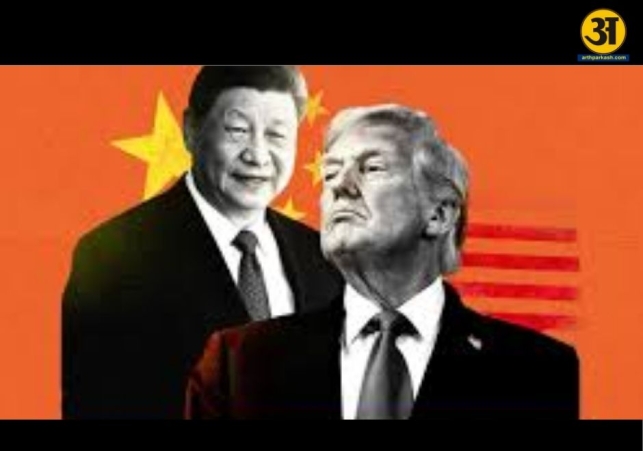
In a dramatic move, US President Donald Trump announced that the United States would immediately begin testing its nuclear weapons, marking a sharp shift in global nuclear policy. The announcement came just minutes before his scheduled meeting with Chinese President Xi Jinping in South Korea. Trump said this decision was made in response to recent nuclear tests by Russia and China, claiming that the US must match its rivals to ensure national security.
The declaration has sparked global concern, as it comes amid already high tensions between the world’s major powers. Trump’s move could trigger a new phase in the nuclear arms race and raise worries about international stability and diplomacy.
Trump’s reason for nuclear testing
Trump made the announcement through a post on X (formerly Twitter), where he stated, “The United States has more nuclear weapons than any other country. This was achieved through a full update and renovation during my first term. Because of the tremendous destructive power, I hated to do it but had no choice.”
He said the decision was a direct response to Russia and China’s nuclear activities, which he described as “provocative and irresponsible.” Trump mentioned that the United States would now test its weapons “on an equal basis” with its rivals to maintain balance and security.
According to reports, Russia recently tested two powerful nuclear-capable systems — the 9M730 Burevestnik cruise missile and the Poseidon underwater drone. Both weapons are designed to carry nuclear warheads and can travel long distances, posing serious threats to global safety. In his remarks, Trump said the US could not afford to remain silent while other nations expanded their nuclear programs unchecked.
“I have instructed the Department of War to start testing our nuclear weapons,” Trump added. “That process will begin immediately.”
His statement has been seen as an attempt to show strength before the upcoming summit with Xi Jinping, where both leaders are expected to discuss trade, defense, and regional security.
ALSO READ: How Noida International Airport is set to redefine travel and trade across northern India
ALSO READ: How Cyclone Montha got its name and what it means
Rising tensions before Xi meeting
Trump’s nuclear announcement came just hours before he was set to meet Xi Jinping in South Korea, ahead of the Asia-Pacific Economic Cooperation (APEC) CEO Summit. The timing has drawn global attention, as the United States and China are already locked in an intense trade war that has disrupted global markets and strained diplomatic ties.
In recent weeks, tensions have risen after Washington expanded export restrictions on Chinese technology, while Beijing responded by tightening control on rare earth mineral exports. These rare materials are critical for industries like electronics, defense, and clean energy. In retaliation, Trump had earlier threatened to impose a 100% tariff on Chinese goods starting November 1.
However, despite the sharp words, officials from both sides said there had been some progress during recent trade talks held in Malaysia. Negotiators reportedly agreed on a basic framework for a potential trade deal, giving hope for some resolution during the leaders’ upcoming meeting.
But Trump’s nuclear statement could complicate the discussions. Analysts believe that raising a military issue before a major trade summit might make diplomatic dialogue more difficult. China has not yet officially responded to Trump’s announcement, but foreign policy experts expect Beijing to express strong disapproval.
Trump’s criticism of Putin and global concerns
In his statement, Trump also criticized Russian President Vladimir Putin, calling Russia’s recent nuclear activities “inappropriate.” He urged Putin to focus on ending the ongoing war in Ukraine, which began in 2022. “He should end the war — a war that should have taken one week is now in its fourth year,” Trump said.
The global community has expressed growing alarm over renewed nuclear testing. Russia has pulled out of several arms control agreements, including those that once limited nuclear development between major powers. Meanwhile, China has been expanding its nuclear capabilities rapidly, reportedly increasing its stockpile of warheads and building new testing facilities.
Earlier this week, Putin confirmed the successful test of the Poseidon nuclear-powered torpedo, a new underwater weapon capable of carrying nuclear payloads across continents. This, combined with reports of China advancing its own missile systems, seems to have pushed Trump toward his “immediate testing” decision.
Many experts, however, warn that this move could escalate a new nuclear arms race, undoing decades of progress made through treaties and disarmament efforts. Global leaders are expected to call for restraint, urging the US and its rivals to prioritize diplomacy over confrontation.
What lies ahead
Trump’s decision has once again placed the United States at the center of international attention. Supporters of his policy argue that the country must demonstrate strength to deter potential threats, while critics fear the announcement could destabilize existing peace efforts and trigger aggressive responses from other nations.
The Department of War has yet to release detailed plans about where and how the nuclear tests will be conducted. It is expected that any testing will face heavy scrutiny from international watchdogs and environmental groups concerned about radiation and global safety.
As Trump prepares to meet Xi Jinping, the world watches closely. The meeting, which was initially seen as a chance to ease trade tensions, may now turn into a high-stakes diplomatic test involving nuclear policy, global security, and economic rivalry.
For now, Trump’s words have sent a powerful message — that the United States is prepared to act fast and assertively in the face of growing competition. Whether this will bring peace through strength or deepen global divisions remains to be seen.
Related News