Top court to review fake news regulation dispute
Supreme Court to Examine Centre’s Challenge to Struck-Down IT Rules
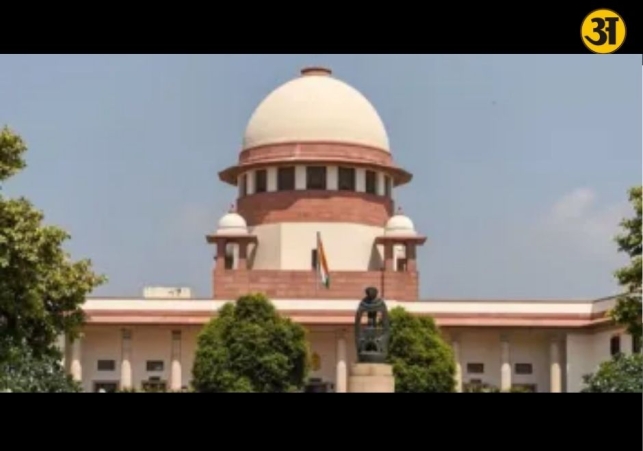
The Supreme Court of India has agreed to examine the Central government’s appeal against a Bombay High Court judgment that struck down amendments to the Information Technology Rules aimed at regulating fake news about the government on social media. However, the Supreme Court refused to stay the High Court’s ruling for now, meaning the decision that declared the amended rules unconstitutional will continue to remain in effect until the case is finally decided.
The matter was heard by a bench led by Chief Justice of India Surya Kant along with Justices R. Mahadevan and Joymalya Bagchi. The bench issued notices to several petitioners who had originally challenged the rules in the Bombay High Court. These petitioners include stand-up comedian Kunal Kamra, the Editors Guild of India, and the Association of Indian Magazines.
The Supreme Court’s decision to hear the Centre’s appeal means that the final legality of the controversial amendments will now be examined at the highest level. The case has drawn widespread attention because it raises important questions about freedom of speech, government regulation of online content, and the responsibility of social media platforms in dealing with misinformation.
Court declines to stay high court ruling
While agreeing to hear the appeal, the Supreme Court clearly stated that it would not put the High Court’s decision on hold at this stage. This means that the amended rules will remain invalid for now until the Supreme Court gives its final judgment.
During the hearing, Chief Justice Surya Kant said that it would be better if the entire issue is examined and decided in a comprehensive manner rather than granting temporary relief. According to the bench, the case involves complex questions about misinformation, online platforms, and the protection of institutions from false claims.
The Chief Justice also highlighted the growing problem of misleading information spreading on social media platforms. He pointed out that such content can damage the reputation of important institutions and mislead the public. At the same time, the court indicated that any regulatory framework must carefully balance the need to control misinformation with the need to protect freedom of expression.
The bench said that clear guidelines may be necessary to deal with misinformation online. However, the court also suggested that responsibility should not be placed only on the government or platforms without properly examining the role of those who actually spread false information.
Because of these larger issues, the Supreme Court decided that the matter should be examined thoroughly before any final decision is made.
ALSO READ: Pakistan raises petrol price by PKR 55 per litre amid Middle East conflict
ALSO READ: Jaishankar speaks with Iran and Oman as India pushes for diplomacy in Middle East crisis
Government defends controversial amendments
During the proceedings, Solicitor General Tushar Mehta appeared on behalf of the Central government and defended the amendments to the IT Rules. He argued that the purpose of the amendments was not to censor content or suppress criticism of the government.
According to the government, the amendments were introduced to create a system that could address fake or misleading information related to government activities circulating on social media platforms. The Centre said misinformation online has become a serious concern and can create confusion among the public.
The Solicitor General requested the Supreme Court to stay the Bombay High Court’s verdict. He argued that without the rules, the government lacks an effective mechanism to deal with false information related to official policies and actions.
However, the Supreme Court chose not to grant that request at this stage and instead decided to hear the matter fully before reaching any conclusion.
The dispute began after the Central government amended the Information Technology (Intermediary Guidelines and Digital Media Ethics Code) Rules, 2021 in April 2023. These amendments introduced a new system to identify and flag content considered fake or misleading when it related to government matters.
Under the amended rules, a Fact Check Unit (FCU) was created to monitor online posts about government business. If the FCU identified content as fake or misleading, social media platforms were required to take action.
The platforms could either remove the flagged content or add a disclaimer informing users that the information had been marked as misleading. If they failed to do so, they could face legal consequences and lose certain legal protections available to intermediaries under Indian law.
Critics argued that the system gave the government too much power to decide what information is true or false about its own actions. They feared that the rules could be used to silence criticism, satire, or independent reporting.
Because of these concerns, several individuals, journalists, media organisations, and digital rights groups challenged the amendments before the Bombay High Court.
On September 26, 2024, the Bombay High Court struck down the amendments, declaring them unconstitutional. The court held that allowing a government-controlled fact-checking body to determine the truth about government-related information could undermine free speech.
The High Court said the rules could create a chilling effect on online expression, where individuals and media outlets might hesitate to share opinions or criticism out of fear that their content could be flagged or removed.
Following this judgment, the Central government approached the Supreme Court to challenge the ruling.
The Supreme Court’s decision to review the case means that the final interpretation of the law will now be made at the national level. The outcome could have a major impact on how social media platforms operate in India and how misinformation is handled online.
The case also highlights the ongoing challenge faced by governments worldwide. On one hand, authorities want to limit the spread of false information that can mislead the public. On the other hand, democratic societies must protect freedom of speech and allow citizens to question and criticise those in power.
Legal experts believe the Supreme Court’s final decision could set an important precedent for balancing these competing interests in the digital age.
For now, the debate continues, and the court’s upcoming hearings are expected to closely examine the role of governments, platforms, and users in addressing misinformation on the internet.
Related News