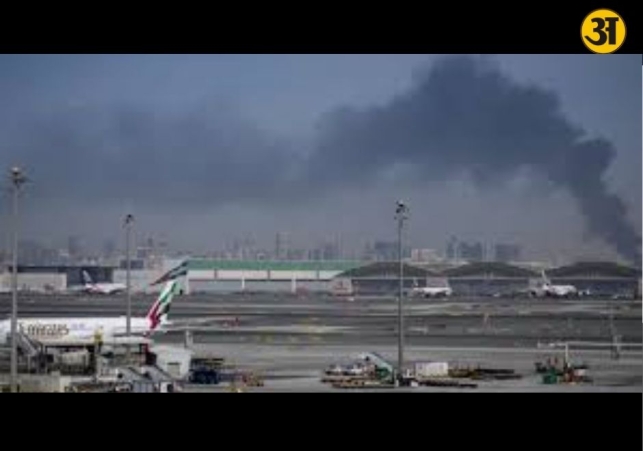
Thousands of passengers stranded after major airspace closures
Middle East conflict disrupts global air travel as airports close and flights are cancelled
- By Gurmehar --
- Friday, 06 Mar, 2026
Air travel across the Middle East has been severely disrupted as tensions involving Iran, the United States and Israel continue to escalate. Several countries in the region have closed their airspace or restricted flights, leading to the cancellation of more than 1,000 flights and leaving thousands of passengers stranded at airports.
Some of the busiest international transit hubs in the world have been affected by the crisis. Airports in cities such as Dubai, Abu Dhabi and Doha usually handle millions of travellers every year. However, the ongoing conflict has forced airlines to suspend or delay many flights.
Because of the uncertainty and safety concerns, authorities in several countries have temporarily shut their airspace. This has created a major challenge for airlines, passengers and airport authorities across the world.
Major airspace closures disrupt flights
Large sections of Middle Eastern airspace remained closed as security concerns increased due to military tensions in the region. Countries including the United Arab Emirates, Qatar, Kuwait, Bahrain, Iraq and Jordan restricted or suspended flights in their airspace.
Flight tracking data showed that many aircraft were avoiding the region entirely, resulting in unusually empty skies over some of the busiest aviation corridors in the world. Airlines have been forced to reroute flights or cancel services to ensure passenger safety.
Some airlines have begun to resume a limited number of services. For example, flights from Dubai restarted on a restricted schedule after temporary suspensions. However, authorities warned that the situation remains unstable and flight schedules may change quickly.
Airport officials have advised travellers not to come to the airport unless they have received confirmation from their airline. Many passengers who arrived without updated information were left waiting for hours due to cancellations or delays.
Airlines based in the region, including Emirates, Etihad Airways and Qatar Airways, have been among the most affected. These carriers operate hundreds of international routes and connect travellers between Asia, Europe, Africa and the Americas.
Some international airlines have also temporarily stopped flights to several cities in the region. For example, Lufthansa suspended flights to destinations including Tel Aviv, Beirut and Tehran for safety reasons.
Because many long-distance flights normally pass through Middle Eastern airspace, the disruption has affected travellers far beyond the region. Passengers travelling between continents are also experiencing delays and cancellations.
ALSO READ: Iran warns US after warship Iris Dena sunk in Indian Ocean, 87 killed
ALSO READ: US Embassy in Riyadh hit by suspected Iranian drones; Trump warns response coming soon
India begins evacuation efforts
With thousands of travellers stranded at airports, several countries have started evacuation and special rescue flights to bring their citizens home.
Air India operated a special repatriation flight to bring back Indian passengers who were stuck in Dubai due to the travel disruptions. The flight landed in New Delhi carrying 149 passengers.
Earlier, another special flight brought back 143 pilots and cabin crew members from Air India and Air India Express who had been stranded in Dubai.
Other Indian airlines have also stepped in to help passengers. SpiceJet announced plans to operate four special evacuation flights from Fujairah. These flights will connect Fujairah with major Indian cities including Mumbai, Delhi and Kochi.
The airline said these flights would help stranded passengers return home safely over the next few days.
Meanwhile, governments have issued travel advisories asking citizens to remain alert and stay in contact with their airlines. The United States has advised its citizens to leave the region using available commercial flights whenever possible.
Experts say passengers should regularly check updates from airlines and airports because the situation is changing rapidly. Airlines are trying to rebook passengers or provide refunds, but many travellers are facing difficulties contacting customer service due to extremely high call volumes.
Travel industry experts say that the aviation disruption may continue until tensions in the region decrease and airspace restrictions are lifted.
For now, passengers planning to travel through the Middle East are advised to monitor official announcements, check their flight status frequently and be prepared for possible delays or cancellations.
As the conflict involving Iran, the United States and Israel continues, global aviation authorities remain cautious about reopening normal flight routes. Until the security situation improves, air travel across the region is expected to remain uncertain.
Related News