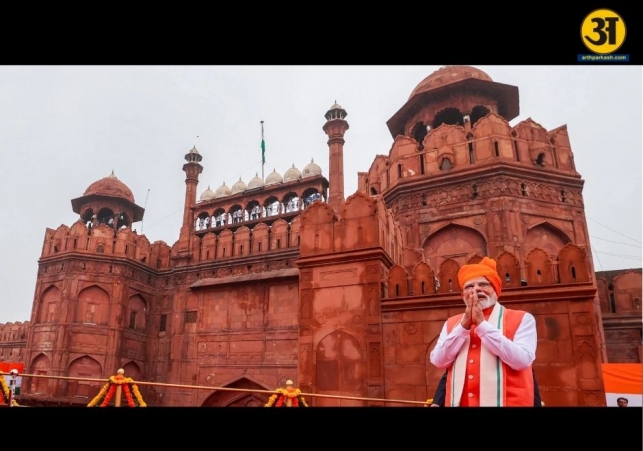
Shaping a future-ready Bharat through economic nationalism
India at 79: Reimagining economic nationalism for a future-ready Bharat
India is celebrating its 79th Independence Day at a time when the nation is moving towards a big shift—turning economic nationalism from a political slogan into a real plan for action. The goal is clear: move from being a buyer of goods from other countries to becoming a creator, builder, and exporter of high-quality products for the world. This transformation is being driven by bold policies, new technology, strong infrastructure, and Indian companies that are innovating and competing globally.
The global economy is also changing, with countries rethinking their supply chains and trade priorities. India’s push for self-reliance, through initiatives like Make in India, Aatmanirbhar Bharat, PM GatiShakti, and Production Linked Incentives (PLI), is about building strong capabilities at home while staying connected to the global market. This is not about shutting the world out—it’s about ensuring India’s place as a respected and trusted partner.
Transforming through infrastructure and incentives
The government’s infrastructure plans are more than just road and building projects. Schemes like PM GatiShakti’s National Master Plan, the National Industrial Corridor Development Programme, and the National Logistics Policy aim to make transportation smoother, reduce delays, and make India’s supply chains stronger. Tools like the Unified Logistics Interface Platform (ULIP) use technology to connect different parts of the logistics system, improving efficiency and competitiveness.
Technology-led Indian companies are playing a big role here. By using artificial intelligence, automation, and data analysis, they are cutting costs, improving accuracy, and helping small and medium businesses (MSMEs) join global trade networks.
The Production Linked Incentive (PLI) Schemes are a good example of this economic shift. Covering 14 key sectors—from electronics and automobiles to pharmaceuticals and home appliances—these schemes offer financial support to industries that meet production targets. They have already brought in over ₹1.76 lakh crore in investments, created more than 12 lakh jobs, and reduced India’s dependence on imports in crucial areas.
In the mobile phone sector, exports have gone up by nearly 775% in just four years, turning India into a global manufacturing hub. In the medical devices sector, India is now making advanced machines like MRI scanners and CT scanners domestically, saving foreign exchange and becoming a reliable supplier for other countries.
Smart nationalism for a global future
Modern economic nationalism is not about closing borders—it’s about making sure Indian industries are strong and competitive. The government is doing this by introducing Quality Control Orders (QCOs) to maintain product standards, setting fair minimum import prices, and removing outdated business laws through reforms like Jan Vishwas. These measures tell the world that India is open for business, but on fair and high-quality terms.
Digital systems like the National Single Window System make it easier to start and run businesses, while investments in warehouses, industrial cities, and logistics hubs create a better business environment.
ALSO READ: World Organ Donation Day 2025: History, significance, and how you can become a donor
ALSO READ: Significance of IAF downing an ELINT, AEW&C aircraft in Operation Sindoor
Indian companies are also changing their roles. Instead of only providing services, they are now designing, engineering, and innovating products. New startups, medical technology firms, and AI-based manufacturers are working alongside national goals to create intellectual property, generate jobs, and boost exports. The vision is not just “Make in India” but “Design and Innovate in India,” creating a cycle of growth that benefits everyone.
India’s trade and economic diplomacy are also part of this plan. Agreements like the Supply Chain Resilience Agreement under IPEF, free trade negotiations, and strategic partnerships are helping India position itself as an important player in the world economy.
This approach to nationalism is forward-looking—it encourages women entrepreneurs, builds a skilled workforce, and makes sure growth is inclusive. The real measure of independence today is not only political freedom but also economic power, innovation, and the ability to produce world-class goods and services at home.
As India looks ahead, the vision is clear: a country that does not depend on the goodwill of others but earns global respect through its strength, quality, and innovation. By combining smart policymaking, strong infrastructure, fair regulation, and the creativity of its people, India is building a future-ready economy. This is the path to a Viksit Bharat—developed, confident, and respected around the world.
Related News