Seat expansion may help bring 33% women’s quota by 2029
Why the Delimitation Bill is crucial for implementing women’s reservation in Parliament
New Delhi: The proposed Delimitation Bill has become one of the most important parts of the government’s plan to implement women’s reservation in the Lok Sabha and state assemblies. Along with a constitutional amendment, the bill aims to increase the total number of seats in the Lok Sabha and make the long-pending 33 per cent quota for women a reality before the 2029 general elections.
The issue has gained national attention because women’s reservation has been discussed for many years, but implementation remained delayed due to legal and political hurdles.
Now, the government says increasing the size of the Lok Sabha through delimitation can help solve a major problem — how to reserve one-third seats for women without sharply reducing the number of seats currently held by male MPs.
At present, the Lok Sabha has 543 elected members. Under the new proposal, the total strength may rise to around 850 seats.
This would be a historic increase and one of the biggest changes in India’s parliamentary system since independence.
According to the proposal, around 815 seats would go to states and 35 seats to Union Territories.
The increase is meant to create enough additional seats so that women’s reservation can be introduced without triggering major resistance within political parties.
If one-third reservation is applied to an 850-member House, nearly 283 seats could be reserved for women.
That would significantly improve female representation in Parliament, which has remained lower than many democracies around the world.
Currently, women form only a limited share of elected MPs despite growing political participation across India.
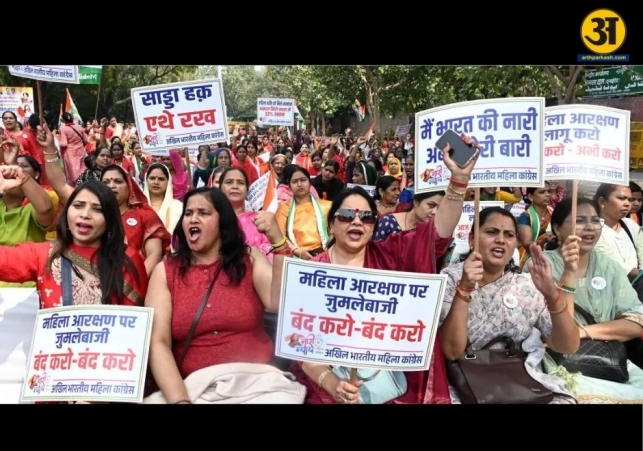
Supporters of the bill say this reform can transform Indian politics by bringing more women into decision-making roles.
Why delimitation matters for reservation
Delimitation means redrawing constituency boundaries and deciding the number of seats for each state based on population data.
Whenever seats are increased or boundaries are changed, a fresh allocation process is needed.
That is why the Delimitation Bill is directly linked to women’s reservation.
Without revising seat numbers and constituencies, implementing a one-third quota would be far more difficult politically.
Many sitting MPs and parties may resist losing existing constituencies.
By expanding the Lok Sabha instead, the government hopes to reduce conflict.
Instead of cutting many current seats, new seats can be added and then reservation can be applied.
This approach allows the system to grow rather than simply redistribute existing political space.
The proposal also reportedly uses the 2011 Census as the base for seat calculation.
This is important because earlier versions of the women’s reservation framework were linked to a future Census and later delimitation exercise, which delayed implementation.
Using already available Census data could speed up the process and allow changes before the 2029 elections.
The bill also proposes that reserved seats for women would rotate after future delimitation exercises.
That means the same constituencies would not remain permanently reserved.
Rotation is intended to spread representation opportunities across different regions and communities over time.
The reservation would not be limited to the Lok Sabha.
It is also proposed for state legislative assemblies and assemblies of Union Territories such as Delhi, Puducherry and Jammu and Kashmir.
This would make the reform one of the widest democratic representation changes in modern India.
ALSO READ: US seeks 20-year nuclear pause while Iran offers 5 years as talks remain deadlocked
ALSO READ: Trump says he does not care if Iran returns to talks after negotiations fail
Debate over seats and states
Even though the women’s reservation goal has broad public support, delimitation has created political debate.
Some opposition parties have raised concerns that changes in seat allocation may alter the balance of power between states.
Southern states, which controlled population growth earlier, have expressed concern that fast-growing northern states could gain more seats.
The government has argued that no state will lose seats in absolute numbers because the House itself is being expanded.
Instead, most states would see increases, though the size of increases may vary.
This is why the design of the Delimitation Bill matters so much.
It is not only about women’s reservation — it is also about federal balance, representation and political fairness.
Experts say the challenge is to ensure both goals are met:
-
Bring women into legislatures in large numbers.
-
Protect trust among states and regions.
Many analysts believe that if implemented carefully, the reform could modernise India’s democracy.
More women lawmakers often lead to stronger focus on health, education, water, safety and local development issues.
At the same time, fair delimitation can improve representation where populations have changed over time.
Critics, however, say details must be transparent and debated thoroughly in Parliament.
They want clarity on how seats will be distributed, how rotation will work, and whether social justice groups will also receive adequate representation within the women’s quota.
Still, the political importance of this moment is clear.
For decades, women’s reservation was promised but postponed.
Now, the Delimitation Bill may become the practical tool that turns a promise into law.
If Parliament approves the package and timelines are met, India could enter the 2029 general elections with a much larger Lok Sabha and one-third of seats reserved for women.
That would mark a major turning point in the country’s democratic journey.
The coming parliamentary debates will decide whether this long-awaited reform finally becomes reality.
Related News