Rs 10,000 scheme targets women voters in Bihar
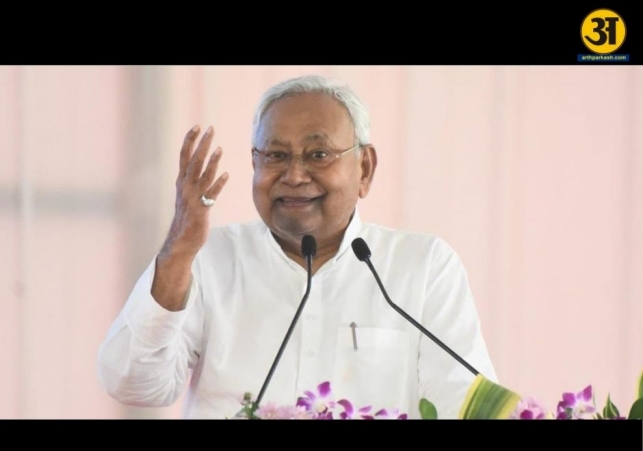
Nitish Kumar announces Rs 10,000 scheme to attract women voters in Bihar
Women voters in Bihar have become a key force in state elections. They now often outnumber men at the polls and focus on issues like safety, education, healthcare, employment, and welfare schemes. Political parties have noticed this change, making women’s votes decisive in determining election outcomes.
Since Nitish Kumar became Chief Minister, women in Bihar have shifted from being passive participants to active decision-makers. Studies show that women consistently vote in higher numbers than men, with a gap of five to six percentage points. This trend has forced political parties to consider women’s priorities while designing policies and election strategies.
Government initiatives like distributing bicycles to girl students have helped education by solving transport problems. Programs like Jeevika Didi have empowered rural women through self-help groups and microfinance. Reservation in panchayats has given women a direct voice in governance. Improved law and order has also encouraged women to step out and participate in elections confidently.
Another factor boosting women’s turnout is male migration. Many men leave Bihar to work in other states, reducing their presence in local elections. This makes women the primary voters in many constituencies.
The 2020 turning point
Women voters played a decisive role in Bihar’s 2020 Assembly elections. The NDA won by a very narrow margin of about 12,000 votes, largely thanks to female voters. While overall results seemed close, a deeper look revealed that women slightly favoured the NDA over the Mahagathbandhan. Among men, the opposition held the lead, but women’s higher turnout gave the NDA a critical edge.
Age-based analysis shows that younger women, especially those aged 18–39, are more likely to support the NDA. These women have grown up benefiting from government schemes and are receptive to the ruling alliance’s message.
Caste and community also influence women’s votes. Upper-caste women, non-Yadav OBC, extremely backward class, and Dalit women mostly support the NDA. Muslim-Yadav women generally favour the Mahagathbandhan. In constituencies where women outnumber men, higher female turnout has consistently benefited the NDA, especially in North Bihar, which holds 58 per cent of the state’s seats.
The cash transfer scheme and its impact
Recognising the political influence of women voters, the NDA recently launched a direct benefit transfer scheme. Under this program, 1.21 crore women received Rs 10,000 each. The scheme also provides the possibility of up to Rs 2 lakh for expanding businesses after six months of government formation. This program covers about 35 per cent of women voters and touches nearly half of the total electorate in Bihar.
The timing of the scheme, coinciding with the festive season, is seen as strategic. It gives women extra purchasing power during celebrations, creating goodwill toward the ruling party.
However, the scheme has faced criticism. Women who were excluded feel left out and disappointed, which could create electoral challenges for the NDA. Unlike other states, Nitish Kumar has avoided promising monthly payments, which would have strained the state’s finances.
Surveys suggest that the cash scheme may influence a 5.8 per cent shift in votes from opposition parties to the NDA. Vote Vibe data indicates that the NDA now enjoys a six per cent lead among female voters, while the Mahagathbandhan has a two per cent advantage among male voters. If these shifts materialise, they could be decisive in a close election.
ALSO READ: India’s poverty rate falls dramatically since Independence
ALSO READ: Taliban-linked TTP leader Noor Wali Mehsud fuels border tensions
Opposition’s response
The Mahagathbandhan has responded with its own women-focused promise. It pledges Rs 2,500 per month to women (Rs 30,000 per year), which is more generous than the NDA’s one-time payment. This approach draws from successful schemes in Madhya Pradesh, Maharashtra, and Jharkhand, where similar programs helped political parties win women’s support.
A guaranteed monthly income appeals to women seeking financial independence and household security, especially in a state with low per capita income. For many women managing tight budgets, such a sum provides significant relief and dignity.
While cash transfers are important, women evaluate governments more broadly. Safety, law and order, education, healthcare, and employment opportunities also play a major role in their voting decisions. Improved policing and reduced crime have had tangible impacts on women’s daily lives, mobility, and overall well-being.
As Bihar heads toward elections, the competition for women voters is likely to shape the results. Parties that address women’s comprehensive needs—economic security, personal safety, education, and healthcare—will have the best chance of success. In this context, both the NDA’s cash scheme and the Mahagathbandhan’s monthly allowance are tools to win the attention and trust of women voters.
Women voters have become kingmakers in Bihar. Their priorities—safety, welfare, education, and economic independence—have transformed the political landscape. Nitish Kumar’s Rs 10,000 cash transfer is a significant attempt to woo them, but the Mahagathbandhan’s promise of a regular monthly allowance shows the growing competition for female votes.
Ultimately, the party that convinces women it can meet both their immediate and long-term needs may decide Bihar’s next government. Women voters are not just participants anymore—they are the central force that can make or break electoral outcomes.
Related News