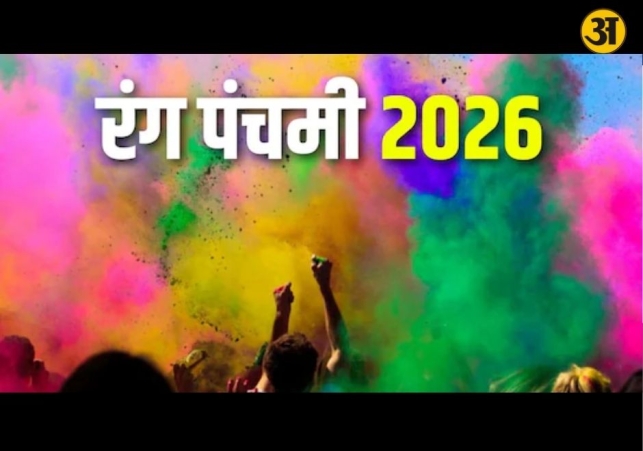
Rang Panchami marks the final day of Holi celebrations
Rang Panchami 2026: Celebrations, traditions and why it is observed five days after Holi
- By Gurmehar --
- Friday, 06 Mar, 2026
Rang Panchami is a festival celebrated in India five days after Holi. While Holi marks the arrival of spring and the victory of good over evil, Rang Panchami focuses on spreading joy, positivity, and colours in communities. It is observed on the fifth day of the Krishna Paksha (dark fortnight) of the Chaitra month in the Hindu calendar. In 2026, Rang Panchami will be celebrated on March 8, coinciding with Dhruva Yoga and Swati Nakshatra. The festival has deep roots in mythology and continues to be an important part of India’s cultural and social traditions.
Significance and history of Rang Panchami
Rang Panchami traces its origins to the Dwapar Yuga, when Lord Krishna played Holi with Radha Rani. Seeing their playful use of colours, other Gopis and even gods and goddesses joined in the celebration. Because of this divine participation, Rang Panchami is also known as the “Holi of the Gods and Goddesses.”
While Holi is celebrated to honour the triumph of good over evil, Rang Panchami focuses on joy, harmony, and purification. The coloured powders, or gulal, used during this festival are believed to remove negative energies from the environment, creating a cheerful and positive atmosphere. The festival also marks the conclusion of the extended Holi celebrations that began with Holika Dahan, ensuring that the festive spirit ends on a bright and happy note.
ALSO READ: Iran warns US after warship Iris Dena sunk in Indian Ocean, 87 killed
ALSO READ: US Embassy in Riyadh hit by suspected Iranian drones; Trump warns response coming soon
Traditions and ways of celebrating Rang Panchami
Rang Panchami celebrations are similar to Holi, but they are often more social and community-oriented. People gather in streets, temples, and public spaces to play with colours. Music, dance, and festive processions are common, and the mood is one of unity and happiness.
Temple rituals form an important part of the day. Devotees visit temples, offer prayers, and perform special ceremonies. In many places, coloured powders are offered to deities as a symbol of devotion and celebration. These rituals reinforce the religious and cultural significance of the festival.
Community gatherings are another highlight of Rang Panchami. Neighbours and friends come together to enjoy cultural programmes, share festive meals, and strengthen social bonds. The festival thus serves not only as a time for fun but also as a way to reinforce connections within communities and families.
Overall, Rang Panchami is a joyful and colourful festival that adds meaning and energy to the Holi season. By combining mythology, traditions, and social engagement, it provides a way for people to celebrate life, happiness, and community. Whether through temple rituals, playing with colours, or attending cultural events, the festival brings people together and ends the Holi celebrations on a high and positive note.
In 2026, Rang Panchami will be observed across India on March 8, allowing people to continue the festive spirit, enjoy vibrant colours, and participate in both religious and social celebrations. The festival remains a symbol of joy, cultural heritage, and the enduring importance of colour and community in Indian traditions.
Related News