Rahul’s dare falls flat as Modi puts India’s interests first
Why Modi’s silence on Trump is a masterstroke in global diplomacy
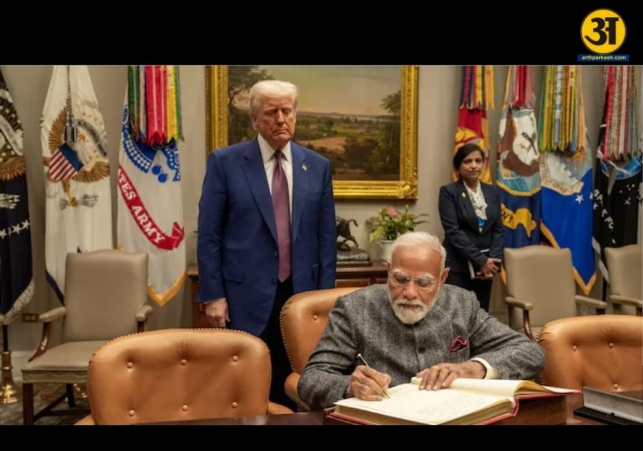
In a recent speech in Parliament, Congress leader Rahul Gandhi challenged Prime Minister Narendra Modi to call U.S. President Donald Trump a liar. This was in response to Trump claiming he helped bring about a ceasefire between India and Pakistan during Operation Sindoor. Rahul said that if Modi had even "50% of Indira Gandhi’s courage," he should declare Trump a liar in Parliament.
But this kind of challenge is not only immature—it’s dangerous. Asking India’s Prime Minister to call out the leader of a key ally, especially publicly, is not how responsible diplomacy works. While Rahul Gandhi may believe such a statement would show strength, in reality, it would hurt India’s global image and relationships.
India is not just another country—it is a major player on the world stage. Prime Minister Modi represents a nation that has growing strategic ties with many countries, including the United States. Name-calling or personal attacks on leaders of allied nations can damage these partnerships and create long-term consequences.
History shows us that such performative acts often backfire. Trying to look strong for political points at home can result in loss of international support, funding, and goodwill. This is not a risk any serious leader should take.
When politics meets foreign policy, India must choose wisely
Let’s take the example of Maldivian President Mohamed Muizzu. A few years ago, he wore T-shirts with the slogan “India Out” and refused to attend Modi’s swearing-in ceremony after the 2024 elections. He thought this move would boost his image back home. But the decision backfired. India scaled down its aid and financial help, and Indian tourists stopped visiting. This hurt the Maldives economy, which depends heavily on tourism. Under pressure, Muizzu had to change his stance and welcomed Modi just two years later.
These events prove that reckless political moves can have real consequences. India cannot afford to play games with its foreign policy.
Another example comes from 1971. Back then, U.S. President Richard Nixon made disrespectful comments about Indian Prime Minister Indira Gandhi in private conversations. Those words weren’t just insulting—they also affected U.S. policy toward India. As a result, India moved closer to the Soviet Union, which changed the balance of power in the region for decades. It shows how fragile international ties can be.
Today, India sits at the global decision-making table. Whether it’s trade, climate, technology, or defense, India’s voice matters. In this environment, how India acts—and reacts—is closely watched by other countries. Prime Minister Modi must think beyond domestic politics and consider the long-term national interest.
By refusing to take Rahul Gandhi’s bait, Modi showed maturity and restraint. He did not fall into the trap of performative politics. He chose to keep India’s diplomacy steady and focused on long-term goals, not short-term political wins.
The Congress party may think it scored a point by making the Prime Minister look like he’s avoiding confrontation. But in reality, the Prime Minister acted in the best interest of the country by not giving in to provocation. He maintained India’s dignity, and more importantly, its strategic position in the world.
India’s foreign policy must be driven by smart choices, not emotional outbursts or television soundbites. That means avoiding unnecessary fights, especially with close allies. Today, the world is facing many challenges—wars, economic uncertainty, climate change. Countries need to work together more than ever.
Calling a partner nation’s president a liar may grab headlines, but it does nothing to solve real problems. Instead, it weakens the trust and cooperation that India has built with the international community. Modi’s refusal to take that path was the right call.
ALSO READ: Salt therapy gains popularity as a wellness trend, but experts urge caution
ALSO READ: Subtle signs of anxiety you might be missing in everyday life
Final thoughts
India is no longer a quiet observer on the world stage. It is a global influencer. With that power comes responsibility. The Prime Minister must act like a statesman, not a political performer.
Rahul Gandhi’s challenge may have sounded bold to his supporters, but it was reckless and self-serving. Modi’s silence was not weakness—it was wisdom. Strong leadership often means knowing when not to speak.
In a time when the world is watching, India needs leaders who think long term. That means prioritising the country’s future over political theatre. Modi did just that.
Related News