Punjab floods: CM Mann asks PM for Rs 60,000 crore aid
Punjab faces worst floods in decades as CM Mann seeks Rs 60,000 crore relief from PM Modi
- By Gurmehar --
- Sunday, 31 Aug, 2025
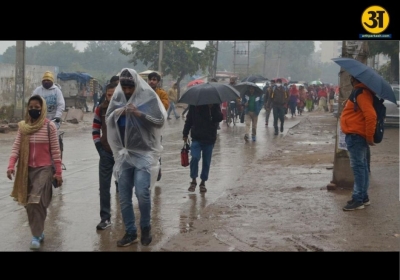
Punjab is experiencing one of its worst floods in recent decades, leaving over 1,000 villages under water and lakhs of people displaced. Heavy rainfall in the catchment areas of Himachal Pradesh, Jammu and Kashmir has caused the Sutlej, Beas, and Ravi rivers to overflow, flooding several districts of Punjab.
Chief Minister Bhagwant Mann has written to Prime Minister Narendra Modi, asking for the urgent release of ₹60,000 crore in pending funds so that the state can carry out relief and rehabilitation work effectively. The worst-hit districts include Gurdaspur, Pathankot, Fazilka, Kapurthala, Tarn Taran, Ferozepur, Hoshiarpur, and Amritsar. Villagers in these areas have lost homes, crops, and livestock, making the crisis even more severe.
CM Mann demands fair relief norms and release of pending funds
In his letter to PM Modi, Chief Minister Mann criticised the current compensation rules under the State Disaster Response Fund (SDRF), calling them “totally unrealistic.” At present, the rule allows an input subsidy of just ₹17,000 per hectare, or about ₹6,800 per acre, if a farmer loses more than 33% of his crops. Mann said this amount is far too little to cover the real losses suffered by farmers.
“This is a cruel joke with the farmers,” he wrote. The Punjab government already gives an additional ₹8,200 per acre, but according to Mann, at least ₹50,000 per acre is needed to help farmers recover. He asked the Prime Minister to revise the SDRF guidelines while assuring that Punjab would continue to pay its 25% share under the scheme.
The Chief Minister also accused the Centre of holding back large sums of money owed to Punjab. He said the state has not received ₹49,727 crore in GST compensation, more than ₹8,000 crore in reduced Rural and Mandi Development Funds, and ₹828 crore from cancelled PMGSY projects. Mann wrote that this financial strain has made it harder for Punjab to manage the flood crisis, and he urged the Centre to release these funds without delay.
Army, Air Force, and rescue teams work round the clock
The scale of the disaster has required a massive rescue effort. The Indian Army’s Western Command has sent 47 Humanitarian Assistance and Disaster Relief (HADR) teams, which include medical staff, engineers, and helicopters. These teams are working in flood-hit districts like Gurdaspur, Pathankot, Fazilka, Kapurthala, Amritsar, and Hoshiarpur.
The Indian Air Force has deployed around 20 aircraft, including Mi-17 helicopters, Chinooks, and Advanced Light Helicopters (ALHs), to evacuate stranded people and deliver food, medicines, and other essential supplies.
Lieutenant General Manoj Kumar Katiyar, who visited some of the affected areas, praised the strong coordination between the Army, state government, and civil administration. He said that soldiers and officers are working day and night to ensure people are rescued quickly and given immediate help.
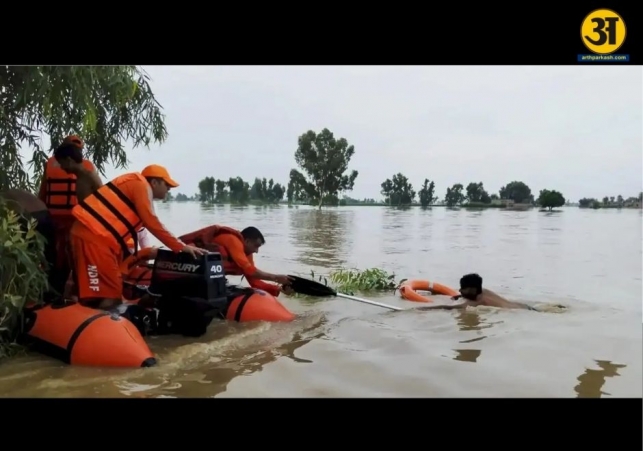
Other agencies like the National Disaster Response Force (NDRF), Border Security Force (BSF), Punjab Police, and local authorities are also carrying out rescue missions. Relief work is being done on a war footing, with special focus on saving lives and moving people to safe shelters.
Unfortunately, along with houses and farmland, Punjab has also suffered a huge loss of livestock. Since many rural families depend on dairy and cattle for their livelihood, this has made their situation even more difficult.
Schools closed and relief efforts continue
The Punjab government has extended the closure of all schools—government, private, and aided—till September 3, 2025, for safety reasons. Earlier, schools were closed from August 27 to 30 due to the worsening floods. Education Minister Harjot Singh Bains said the decision was taken by Chief Minister Mann to ensure students and teachers are safe. He urged families to follow all instructions from the administration and avoid unnecessary travel.
Meanwhile, relief camps have been set up in many areas to provide shelter, food, and clean drinking water to displaced families. Health camps have also been arranged to prevent the spread of water-borne diseases. Volunteers and local villagers are helping rescue teams by using tractors, boats, and makeshift rafts to move stranded people to safer places.
Despite these efforts, the state government has warned that the situation could get worse if more rain falls in the coming days. Officials said that only immediate financial assistance from the Centre can ensure that relief and rehabilitation reach people in time. Without adequate funds, rebuilding homes, repairing roads, compensating farmers, and restoring normal life will be extremely difficult.
ALSO READ: How technostress is affecting Gen Z’s mental health
ALSO READ: Trump’s tariffs on India take effect: Sectors impacted and exemptions explained
A state in crisis, waiting for support
Punjab has seen floods before, but this year’s disaster is being described as the worst in decades. The overflowing rivers have damaged vast areas of farmland, destroyed homes, and disrupted the lives of lakhs of families. Farmers, who were already under financial pressure, now face even bigger challenges.
Chief Minister Mann’s letter to PM Modi highlights not only the immediate need for relief but also the broader financial difficulties Punjab faces due to pending dues from the Centre. The state is demanding urgent action so that it can continue large-scale rescue, relief, and rehabilitation operations.
As rescue work continues with the help of the Army, Air Force, and multiple agencies, the people of Punjab are showing courage and resilience. However, the path to recovery will be long, and the support of the central government will play a key role in helping Punjab overcome this devastating crisis.
Related News