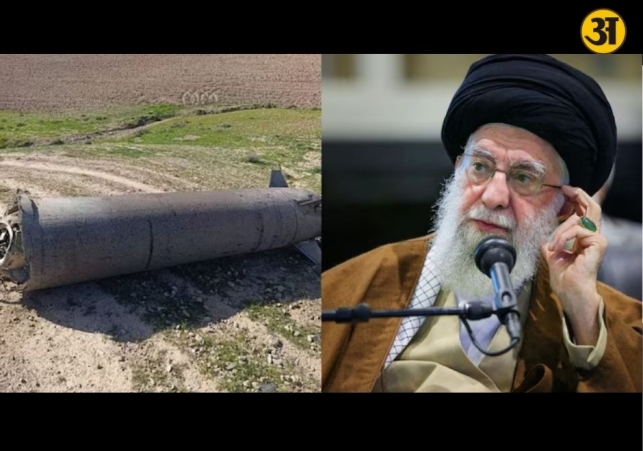
Precision missile strike reportedly killed Iran’s supreme leader
Inside the strike: How Israel allegedly used Blue Sparrow missile
The reported assassination of Iran’s Supreme Leader Ali Khamenei has sent shockwaves across the Middle East and the wider world. According to several media reports, the attack was carried out by Israel using a highly advanced missile known as the Blue Sparrow. The operation is believed to have been the result of years of intelligence gathering and detailed surveillance of the Iranian leader’s movements.
Reports suggest the strike took place in the early hours of February 28 when Khamenei arrived at a government leadership compound on Pasteur Street in the capital city of Tehran. The 86-year-old leader had reportedly spent several weeks staying inside underground bunkers due to fears of a possible Israeli attack.
However, shortly after he surfaced to attend an important leadership meeting, a powerful missile hit the compound. The explosion reportedly killed Khamenei along with several senior Iranian officials who were present at the meeting.
The strike was said to be extremely precise, indicating careful planning and advanced technology. Analysts believe the operation involved detailed intelligence tracking, modern missile systems and coordination between military and intelligence agencies.
The weapon used in the strike
According to reports, the attack involved the Blue Sparrow missile, a sophisticated weapon system developed by Rafael Advanced Defense Systems. The missile is usually used by Israel for testing missile defence systems and simulating enemy ballistic missile threats.
The Blue Sparrow missile is part of a family of missiles known as the Sparrow series. This family includes the Black Sparrow missile, the Blue Sparrow missile and the Silver Sparrow missile. Each version is designed to imitate different types of ballistic missiles that Israel might face in real combat situations.
The Blue Sparrow missile is about 6.5 metres long and weighs roughly 1,900 kilograms. It has a reported range of nearly 2,000 kilometres, allowing it to strike targets located far from the launch point.
According to reports, the missile used in the attack was launched from a fighter aircraft, believed to be an F-15 Eagle operated by the Israeli Air Force. Launching the missile from an aircraft allows the attacking side to stay at a safe distance from enemy air defence systems.
Once launched, the missile quickly accelerates and climbs toward the upper atmosphere. This steep climb is part of its ballistic flight path. After reaching a high altitude, the missile begins its descent back toward the earth.
During this final phase, the missile travels at extremely high speed. Advanced onboard guidance systems help it adjust its direction and accurately hit the intended target. Because the missile travels at such high speeds and from a steep angle, it becomes very difficult for air defence systems to intercept it.
This type of flight pattern is one reason why such missiles are considered extremely effective against hardened or heavily protected targets such as command centres, underground facilities or fortified compounds.
ALSO READ: Pakistan raises petrol price by PKR 55 per litre amid Middle East conflict
ALSO READ: Jaishankar speaks with Iran and Oman as India pushes for diplomacy in Middle East crisis
Years of intelligence tracking
While the missile strike itself lasted only minutes, the planning behind it reportedly took many years. According to media reports, Israeli intelligence agencies spent decades studying the security arrangements around Khamenei.
One of the key organisations involved in the intelligence effort was Unit 8200, which is responsible for cyber intelligence, electronic surveillance and signal interception.
Reports claim that Unit 8200 monitored the communication networks connected to Khamenei’s security teams. Intelligence analysts reportedly tracked the schedules of bodyguards, studied travel routes and mapped out security procedures used to protect the Iranian leader.
Over time, this information helped build a detailed picture of how the security system around Khamenei worked. Analysts reportedly identified moments when the security coverage was weaker or when the leader appeared in locations that were easier to target.
According to reports, surveillance also included monitoring traffic cameras and other observation systems near the leadership compound on Pasteur Street. These cameras allegedly helped intelligence officials observe movement patterns around the area.
By studying these patterns over long periods, intelligence teams could determine the best time and location for a possible strike. The final operation reportedly took place when Khamenei emerged from underground shelters to attend the leadership meeting.
Because the location of the meeting had been identified in advance, the missile strike could be planned with precise timing.
A turning point in regional tensions
If confirmed, the killing of Khamenei would represent one of the most significant targeted assassinations in the modern history of the Middle East. The Supreme Leader holds the highest political and religious authority in Iran, meaning his death could have major political consequences.
The incident is also likely to increase tensions between Iran and Israel. Both countries have been rivals for decades, often accusing each other of covert operations, cyber attacks and proxy conflicts across the region.
Military analysts say the strike demonstrates how modern warfare increasingly combines advanced weapons with long-term intelligence gathering. Instead of large conventional battles, many modern conflicts involve precise attacks against high-value targets.
The alleged use of a high-altitude ballistic missile also shows how missile technology continues to evolve. Weapons capable of travelling long distances and striking targets with great accuracy are becoming a major part of modern military strategies.
At the same time, such operations carry significant risks. Targeted assassinations of high-ranking leaders can escalate conflicts quickly and lead to retaliation.
As tensions in the Middle East remain high, the reported strike has raised many questions about what could happen next. Governments, analysts and international observers are closely watching the situation to see how Iran responds and how the regional balance of power may change.
Related News

.jpg)