Pakistan’s oil pursuit may bring more harm than good
Why chasing oil riches could push Pakistan into deeper troubles
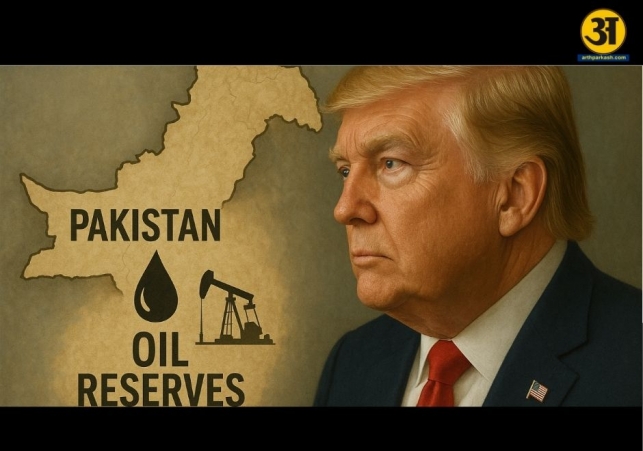
Recently, former US President Donald Trump made a bold claim: Pakistan is sitting on a huge reserve of oil. According to him, Pakistan’s Army Chief General Asim Munir shared this information with him during a private lunch at the White House. Trump even joked that one day Pakistan might sell oil to India. The story sounds dramatic and exciting, but the truth is more complicated. Oil may not be the lifeline many imagine. In fact, if Pakistan were to suddenly find large oil reserves, it could make the country’s problems worse, not better.
Why oil wealth is not a guaranteed blessing
Unlike Saudi Arabia, Iraq, or even the United Arab Emirates, Pakistan does not have a history of oil exploration or proven reserves. For decades, global oil companies have avoided investing heavily in Pakistan because they do not believe significant oil wealth exists there. If Pakistan truly had large reserves, it would have discovered and developed them long ago, especially since it spends billions of dollars every year on imported oil. The fact that exploration has always been limited and inconclusive shows that the country is not a natural oil economy.
But let’s imagine, for the sake of argument, that a big discovery is real. Would this solve Pakistan’s economic crisis? The answer is most likely no. Oil wealth is often seen as a shortcut to prosperity, but history shows it can be a curse rather than a blessing. Look at many oil-rich Gulf states. Their wealth has created glittering cities and impressive infrastructure, but beneath the surface, the problems are clear. Their political systems are closed and authoritarian, dissent is tightly controlled, migrant workers are often exploited, and corruption is widespread. Oil revenues enrich a small elite, especially ruling families and military leaders, while ordinary citizens gain fewer benefits.
Pakistan already suffers from weak democratic institutions, deep corruption, and the overpowering influence of the military. Adding petro-dollars to this mix could make things even worse. Instead of encouraging reform, oil wealth could further concentrate power in the hands of the elite and reduce the pressure for structural economic change. Leaders might become even more dependent on easy oil money rather than investing in industries, education, or innovation. The discovery of oil might bring quick cash, but it would likely block real progress.
How oil could fuel Pakistan’s instability
One of Pakistan’s biggest challenges today is the dominance of its military in politics and governance. Oil wealth would almost certainly increase this imbalance. With new money flowing in, the army would have more resources to tighten its control over the state, suppress dissent, and finance risky adventures abroad. This could include interference in neighboring countries or even more aggressive posturing against India, which would further destabilize the region.
Corruption, already a major problem in Pakistan, would likely explode with the arrival of oil money. Politicians and powerful families would fight for their share of the profits, creating more division within society. Instead of using oil revenues to build schools, hospitals, or industries, much of the money could end up in private accounts overseas. The ordinary Pakistani would see little improvement in daily life. In fact, inequality might grow, with the rich getting richer and the poor left further behind.
ALSO READ: Punjab government saves ₹383 crore, empowers 10,000 teachers with AI training
ALSO READ: How opposition parties exploit voter dynamics while accusing others of manipulation
Another concern is governance. Oil-rich countries often experience what experts call the “resource curse.” Easy money from oil reduces the need to collect taxes from citizens. When governments no longer depend on taxpayers, they also feel less accountable to the people. In Pakistan, this could mean even weaker democratic institutions, fewer checks and balances, and more space for authoritarianism. Civil society and the media could be further restricted under the excuse of “national interest.”
Pakistan also faces social and cultural pressures similar to those seen in Gulf states—patronage networks, religious conservatism, and limited opportunities for women and minorities. Oil money would not fix these problems. Instead, it might strengthen conservative forces and discourage modernization.
In the worst-case scenario, oil could even accelerate the breakdown of the state. By deepening corruption, feeding the military’s appetite for power, and suppressing reform, oil wealth might push Pakistan closer to dysfunction or even dissolution.
In conclusion, while Trump’s claims about Pakistan’s oil potential may sound exciting, the reality is far less promising. Oil is not a magic solution. For Pakistan, it could turn out to be a trap, one that deepens existing problems instead of solving them. Far from rescuing the country, oil might push it closer to collapse. True progress will not come from discovering hydrocarbons underground but from strengthening institutions, investing in people, and reducing dependence on military dominance. Until then, the dream of oil wealth may remain nothing more than a dangerous illusion.
Related News