Opposition accuses AAP of politicising public transport
PRTC buses painted yellow and blue, sparking political row in Punjab
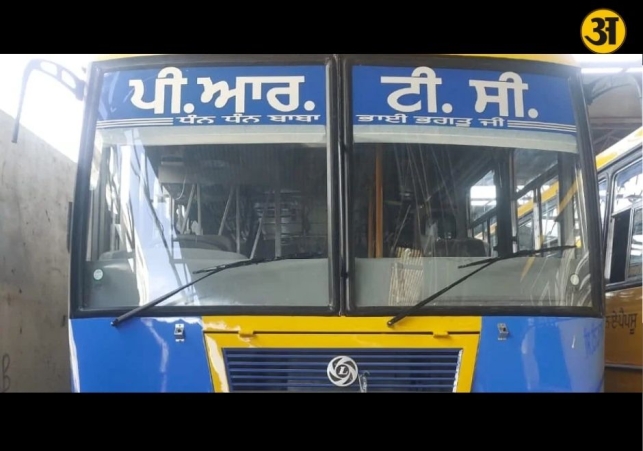
A fresh political controversy has started in Punjab after new buses of the Pepsu Road Transport Corporation (PRTC) were painted in yellow and blue colours. These colours are widely linked with the ruling Aam Aadmi Party (AAP).
The move has triggered strong reactions from opposition parties. They have accused the government of using public property for political branding. However, PRTC officials have denied any political motive behind the decision.
Nearly 650 new buses are being prepared in the new yellow-and-blue colour scheme. These buses will join the existing fleet of around 1,200 buses. Out of the 650 new buses, about 244 are expected to start running by the end of this month. The remaining buses will be added in phases.
PRTC Managing Director Bikramjeet Singh Shergill confirmed that only new buses will carry the revised colour scheme. He said there will be no change in the colour of the existing buses. The newly painted buses are expected to begin operations after March 15.
Photos and videos of buses being painted in workshops in Jaipur, Rajasthan, have already gone viral on social media. This has further increased the political debate in the state.
Opposition raises objections
Opposition leaders have strongly criticised the move. They claim that government resources are being used to promote the ruling party’s image.
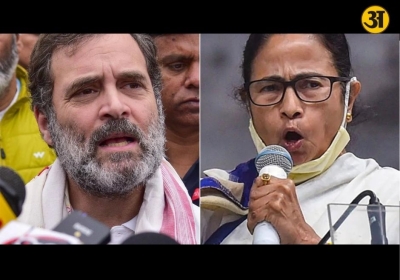
Amarinder Singh Raja Warring, the Punjab Congress chief, said that no government in Punjab or in other states had ever changed the colour of state-run buses in this way. He said that when a government has no major achievements to show, it tries to highlight its “true colours.” He added that people are already unhappy with the government and such actions may further annoy them.
Congress MLA Sukhpal Singh Khaira also criticised the move on social media. He said the AAP government had first painted government schools and hospitals in party colours and was now doing the same with buses. He compared this with earlier criticism made by AAP leaders against previous governments for branding public property.
Sukhbir Singh Badal, president of the Shiromani Akali Dal (SAD), also attacked the government. He accused AAP of focusing on repainting public buildings instead of solving real problems like law and order and economic issues. He claimed that such steps are only publicity tactics and will not fool the people of Punjab.
Another SAD leader, Bikram Singh Majithia, said that public money should not be spent on promoting party colours. He alleged that the government was more focused on advertisements than real development work.
The opposition has described the move as unnecessary and politically motivated. They believe that public transport services should remain neutral and free from political symbols.
ALSO READ: US Embassy in Riyadh hit by suspected Iranian drones; Trump warns response coming soon
ALSO READ: Israel-US strikes on Iran trigger regional emergency; explosions reported across Gulf
PRTC gives clarification
PRTC officials have defended the decision. A senior official said the corporation does not have a fixed or trademark colour scheme. Over the years, bus colours have changed several times.
According to the official, PRTC currently operates buses in different colour combinations, including orange, blue and grey, and white and red. Some minibuses are already painted in a blue-and-yellow combination. Therefore, the new colour scheme should not be seen as something unusual.
Officials also said the change could help reduce confusion among passengers. Some private bus operators in neighbouring states have reportedly copied the existing PRTC colour pattern. This sometimes misleads passengers into thinking they are boarding a government bus. A new design may help passengers easily identify official PRTC buses.
The Punjab transport minister, Laljit Singh Bhullar, has not made any public statement so far about the controversy.
Political experts say that colours often carry symbolic meaning in politics. In Punjab, yellow and blue are closely associated with AAP. Because of this, even a simple design change can become a political issue.
At the same time, some observers believe that public transport services need improvement more than cosmetic changes. They say that passengers are more concerned about bus frequency, safety, comfort, and punctuality than colour schemes.
The debate shows how sensitive political matters can become in a state where competition between parties is strong. While the government says it is a routine design update, the opposition sees it as political branding.
For now, the new buses will start running after March 15. Whether the issue fades away or continues to spark debate will depend on public reaction. What is clear is that even the colour of a bus can become a major political talking point in Punjab.
Related News