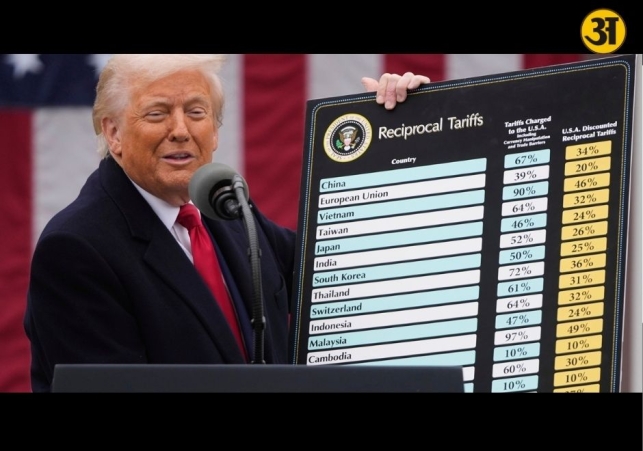
No automatic zero tariff for India
US Supreme Court quashes Trump’s tariff orders: Does it mean zero tariff on India? Explained
The United States Supreme Court has struck down former President Donald Trump’s broad global tariff orders in a major 6–3 ruling. The decision is being seen as an important legal setback for Trump’s trade policy. However, experts say the ruling does not mean that tariffs on Indian goods will automatically fall to zero.
The court ruled that Trump exceeded his authority by using the International Emergency Economic Powers Act (IEEPA) to impose sweeping import taxes. Chief Justice John Roberts wrote that the US Constitution clearly gives Congress — not the President — the power to impose taxes, including tariffs.
While the decision removes some broad duties, many product-specific tariffs remain in place. So the impact on India is positive but limited.
What the Supreme Court decided
In its 6–3 judgment, the Supreme Court upheld a lower court ruling against Trump’s use of emergency powers to impose wide “reciprocal tariffs” on nearly all trading partners. The majority said the law Trump used does not clearly authorise the President to impose import taxes.
Chief Justice Roberts stated that the framers of the Constitution did not give the executive branch any part of the taxing power. Because tariffs are considered a form of tax, the court found the policy legally invalid.
The ruling marks one of the most significant judicial checks on Trump’s economic agenda. It is also notable because Trump himself appointed three conservative justices during his presidency.
However, the court’s decision was narrow in scope. It focused only on tariffs imposed under the emergency powers law. It did not ban tariffs in general.
Importantly, the judgment leaves the door open for the administration to impose duties using other trade laws that Congress has already approved.
Does this mean zero tariff on India?
The short answer is no. The Supreme Court decision does not automatically create zero tariffs on Indian exports to the United States.
What the ruling mainly does is block the broad 18 percent reciprocal tariff that had been applied to many countries, including India. With that measure now struck down, many Indian goods could return to earlier, lower tariff levels.
But several important duties still continue. For example, product-specific tariffs — such as those on steel and aluminium — remain in force because they were imposed under different legal authorities. These are not affected by the Supreme Court’s ruling.
In addition, zero tariffs apply only in limited situations. Some sectors like pharmaceuticals or semiconductors may already enjoy very low or zero duties under existing trade frameworks. But this depends on the specific product category.
Trade experts say exporters should not assume blanket relief. Each product line will need to be examined separately to understand the actual duty impact.
ALSO READ: US military on standby for possible Iran strike, Trump yet to take final decision
What Trump and officials said
Donald Trump had earlier described the case as one of the most important in US history. He warned that striking down the tariffs could harm the American economy.
After the ruling, officials indicated that the administration could explore other legal routes to maintain pressure on trade imbalances. Because the court did not remove tariff powers entirely, alternative mechanisms remain available.
Analysts believe this means US trade policy could still remain assertive, even if the specific emergency-based tariffs are gone.
What it means for India
For India, the ruling is broadly positive but not transformational. The removal of the sweeping reciprocal tariff could ease pressure on several export sectors such as textiles, engineering goods and chemicals.
However, since many sector-specific duties continue, the overall tariff landscape remains complex. Indian exporters will still need to watch US trade policy closely.
The bigger takeaway is legal rather than immediate economic. The Supreme Court has reinforced that major tariff decisions must have clear backing from Congress. This could make future sweeping tariff moves by any US president more difficult.
The road ahead
Markets and trade observers will now watch how the US administration responds. If new tariffs are imposed under different laws, the practical impact on global trade — including India — could change again.
For now, the ruling removes one layer of broad tariffs but does not create a zero-tariff environment for Indian goods.
In simple terms, Indian exporters may get some relief, but the US tariff wall has not disappeared.
Related News
.jpg)