MP raises Metro delay in Lok Sabha
Manish Tewari warns Chandigarh may become traffic ‘hell’ by 2036 without Metro project
- By Gurmehar --
- Friday, 20 Feb, 2026
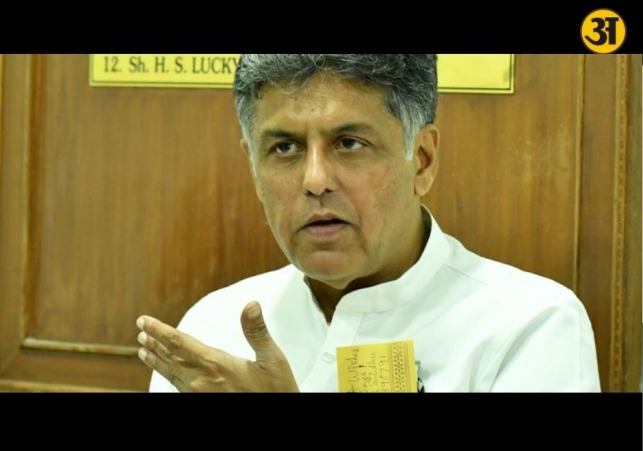
Member of Parliament Manish Tewari has warned that Chandigarh could turn into a “hell for traffic” by 2036 if the long-pending Metro Rail project is not implemented soon. Speaking during Zero Hour in the Lok Sabha on December 11, Tewari said it was “extremely unfortunate” that the Chandigarh Metro project appears to be “heading nowhere.”
He urged the Union government to step in and declare the Metro a strategic connectivity project. He also demanded a special financial grant of ₹25,000 crore to break the deadlock and move the project forward.
Chandigarh, along with nearby Panchkula, Mohali, and New Chandigarh, forms the tricity region. Over the years, the area has seen rapid population growth, rising vehicle ownership, and expanding residential and commercial zones. According to Tewari, traffic congestion is already a serious concern and will become much worse in the coming decade if strong action is not taken.
Demand for urgent action
While raising the issue in Parliament, Tewari stressed that a Metro Rail system is urgently needed to manage the growing transport pressure in the tricity. He pointed out that cities across India are investing in mass rapid transit systems to reduce congestion and pollution. Without a Metro, he warned, Chandigarh may struggle to handle future traffic demands.
Responding to his concerns, Union Minister of State for Housing and Urban Affairs Tokhan Sahu said that the Centre had not received any formal proposal for a Mass Rapid Transport System (MRTS) in Chandigarh and the surrounding areas. He mentioned that although the Unified Metropolitan Transport Authority (UMTA) was set up on April 28, 2023, no official plan has been submitted by the Chandigarh administration or the governments of Punjab and Haryana.
The minister added that urban transport is mainly a state subject. This means that planning and sending proposals for such projects is the responsibility of the Union Territory administration and the concerned state governments.
Tewari reacted strongly to this statement. He expressed surprise and questioned what the UMTA had been doing for nearly three years if no proposal had been prepared. He said that two reports had already been submitted by RITES, which highlighted the financial viability of the Metro project. According to him, these reports showed that the project could be economically feasible.
Calling the absence of a formal proposal a “serious lapse,” Tewari accused the ministry of “bureaucratic buck-passing.” He said that by claiming no proposal had been received, the ministry was avoiding responsibility and ignoring the seriousness of Chandigarh’s traffic crisis.
ALSO READ: US military on standby for possible Iran strike, Trump yet to take final decision
Growing traffic concerns
Chandigarh was originally planned as a well-designed city with wide roads and organized sectors. However, over the years, the number of private vehicles has increased sharply. Daily commuters from Mohali, Panchkula, and nearby towns travel into Chandigarh for work, education, and business. This has led to heavy traffic during peak hours.
Experts believe that without a mass public transport system, the city may face severe congestion in the future. Rising vehicle numbers also mean more air pollution and longer travel times. A Metro system, supporters argue, would reduce dependence on private cars and provide a faster, cleaner mode of transport.
Tewari said that if immediate steps are not taken, the situation could become unmanageable by 2036. He stressed that long-term planning is necessary because large infrastructure projects like Metro systems take years to design and build. Delays now could create bigger problems later.
The debate has also raised questions about coordination between different authorities. The tricity region involves the Union Territory of Chandigarh as well as the states of Punjab and Haryana. For a Metro project to succeed, cooperation between all these governments is essential.
While the Centre says it has not received a proposal, critics argue that the urgency of the situation demands proactive involvement. Some urban planners believe that instead of waiting for formal submissions, the government should take initiative and push the project forward.
The demand for ₹25,000 crore as a special grant highlights the scale of the proposed Metro system. Large transport projects require major investment, but supporters say the long-term benefits in reduced congestion, fuel savings, and improved quality of life justify the cost.
For now, the Chandigarh Metro project remains uncertain. The exchange in Parliament has brought the issue back into focus and sparked discussion among residents and policymakers.
As traffic pressure continues to grow, the question remains whether authorities will act quickly or allow the project to remain stalled. If no concrete steps are taken soon, Tewari’s warning about Chandigarh becoming a “hell for traffic” may become a reality in the coming years.
Related News