How to Have a Happy Monsoon: A Guide
The Rainy Season's Double Edge: Navigating the Joy and Hazard of the Impending Monsoon
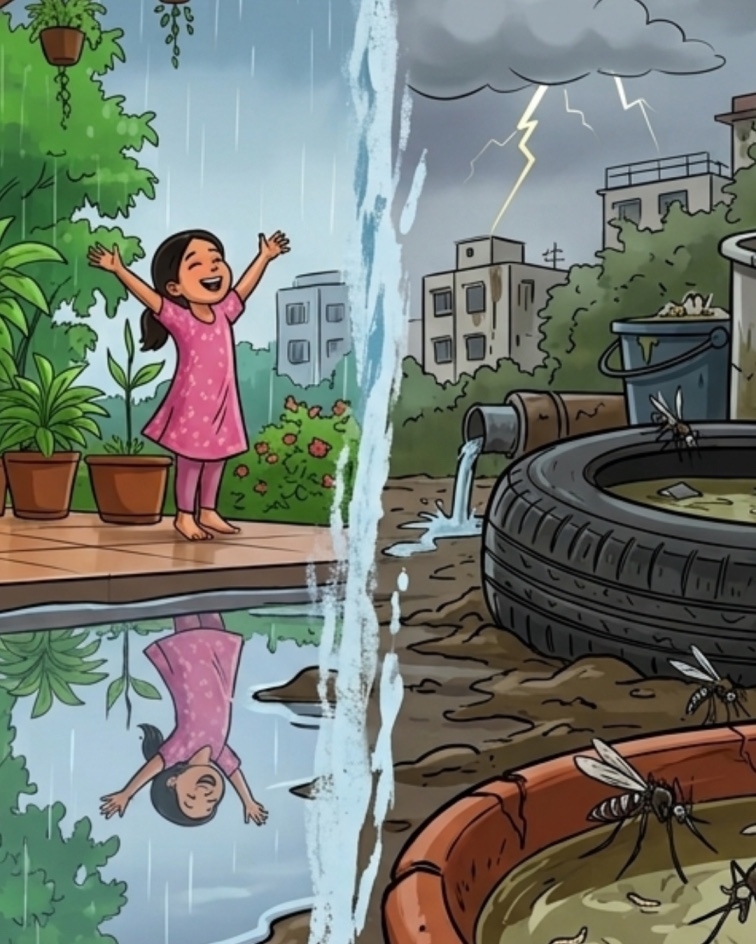
There is a distinct, undeniable magic to the arrival of the monsoon. After months of the extreme summer heat that leaves the earth cracked and the air thick with dust, the first heavy downpours bring an atmospheric shift that feels magical. The temperature drops in a matter of minutes, the beautiful smell rises from the wet soil, and the landscape transforms into a vibrant, lush canvas. It is a season celebrated with hot tea and pakode.
Yet, beneath this beauty lies a few problems that need to be dealt with responsibly. The very element that brings life to the soil also brings about a structural, municipal, and biological challenges.
The sudden surge in humidity with widespread pooling of water, creates a highly happy environment for some public health enemies. For a few months every year, our cities and towns become a breeding ground for bacterial infections, water-borne illnesses, and vector-borne diseases.
If we want to enjoy the relief of the rainy season without finding ourselves in a hospital bed, understanding the shifting environment and preparing our homes is not just a recommendation—it is a necessity.
Staying Safe and Healthy During the Rainy Season
When the heavy rains arrive, people often joke that the insects come out in full force. However, there is a serious medical truth behind this joke. The rain itself does not make people sick. Instead, the problem is that mosquitoes and bugs multiply very fast in the wet weather.
Between July and October, hospitals see a massive jump in two dangerous diseases: dengue and malaria.
To protect yourself and your family, it helps to understand how these two illnesses spread and how you can stop them.
Understanding the Two Culprits: Dengue vs. Malaria
Many people think all mosquitoes are the same, but the mosquitoes that carry dengue and malaria have completely different habits.
Dengue: The Daytime Biter
- The Insect: Dengue is spread by the Aedes mosquito. You can recognize it by the bright white stripes on its legs and body.
- The Schedule: This mosquito loves the daytime. It is most active early in the morning and in the late afternoon, just before the sun goes down.
- The Breeding Ground: This insect loves clean, still water. It lays its eggs in things around the house, like a forgotten flower pot on the balcony, the tray under the refrigerator, or a plastic cup left on the roof. Even a single tablespoon of clean rainwater is enough for a mother mosquito to lay her eggs. These eggs can stay dry for months and then hatch as soon as rain touches them.
Malaria: The Night Hunter
- The Insect: Malaria is spread by the Anopheles mosquito.
- The Schedule: This mosquito is a night hunter. It actively bites people from dusk (when the sun sets) until early dawn.
- The Breeding Ground: Unlike the dengue mosquito, the malaria mosquito is not picky. It loves dirty, stagnant water. You can find it breeding in muddy roadside puddles, slow-moving open drains, and construction sites.
- The Sickness: Malaria attacks a person’s red blood cells. It causes a very specific type of sickness where the patient experiences cycles of severe shaking chills, followed by a burning high fever, and then heavy sweating.
The Pre-Monsoon Audit: Preparing Your Home
The best time to fight these diseases is before the heavy rains actually start. Once the storms arrive, it is much harder to fix things. Take a few hours before the rainy season to check your home.
Clean Your Drains and Roofs
During the dry summer months, flat roofs, balconies, and gutters get filled with dry leaves, twigs, and plastic trash. When the first rain hits, this trash acts like a dam. It blocks the water and creates hidden, high-up pools that mosquitoes love. Clean these areas out early so rainwater can flow away safely. Also, check your air conditioner pipes to make sure they aren't dripping water onto the dirt and creating a permanent mud puddle.
The "Flip and Store" Rule
Walk around your yard and balcony. Look for anything that can hold water, such as:
- Empty buckets and mugs
- Old car tires
- Plastic tarps or sheets
- Broken toys and gardening tools
Flip them completely upside down or move them inside a shed so they cannot collect rainwater. If you keep indoor water plants, consider moving them into regular dry soil for the season.
Fix Your Windows and Doors
Check the mesh screens on your windows and doors. Even a tiny hole that is just a few millimeters wide is like an open door for mosquitoes. Fix any tears. If you don't have permanent screens, you can buy cheap, temporary magnetic nets that stick to your windows. This lets you enjoy the cool breeze after a rain shower without letting bugs inside.
Finally, go to the store and stock up on mosquito repellent creams, electronic vaporizers, and basic first-aid supplies.
Daily Habits to Stay Safe During the Rains
Once it starts raining every day, you need to change some of your daily habits to stay safe from bugs and bacteria.
Follow the 24-Hour Water Rule
Never let water sit inside your house for more than one day. Change the water in your flower vases every single morning. Scrub out your water coolers once a week, and keep bathroom buckets flipped upside down when you are not using them.
Wear the Right Clothes
Even if the weather feels hot and sticky, do not wear shorts or sleeveless shirts during mosquito season. Instead, wear loose, long-sleeved shirts and long pants.
Tip: Wear light colors like white, beige, or yellow. Mosquitoes are naturally attracted to dark, warm colors like black and navy blue. Light, loose clothes protect your skin and keep you cool.
Watch What You Eat and Drink
Mosquitoes are not the only danger. The warm, wet weather is perfect for bacteria to grow on food. This can cause scary stomach infections like typhoid, cholera, and food poisoning.
- Avoid Street Food: Stay away from street food, raw salads, and pre-cut fruits sold in open markets.
- The Golden Rule: If the food is not served steaming hot, do not eat it.
- Boil Your Water: Heavy rains can cause dirty ground water to mix with city tap water. Even if your tap water looks clear, it might contain hidden germs. Always filter and boil your drinking water to make it safe.
Clean Up After Walking in the Rain
Getting caught in a rain shower might feel nice, but walking through flooded streets is dangerous. Street water is full of germs, including animal urine, which can cause a serious bacterial disease called leptospirosis. If your feet or legs touch street water, wash them thoroughly with antibacterial soap the moment you get home, dry yourself completely, and change into warm, dry clothes.
The Danger of Self-Medication
If you or a family member suddenly gets a high fever, never assume it is just a normal cold.
Many people immediately grab common painkillers like Ibuprofen or Aspirin from their medicine cabinet. Do not do this during the rainy season.
If your fever is actually the start of dengue, medications like Ibuprofen and Aspirin can be very dangerous. They thin your blood and stop it from clotting properly. Since dengue already lowers your blood platelets (the cells that help stop bleeding), taking these medicines can cause dangerous internal bleeding.
What to do instead: If you have a fever, only take paracetamol for temporary relief. See a doctor as soon as you can. Rest properly, and drink plenty of water to stay hydrated.
Staying safe during the rainy season does not require complex science. It just takes a clean yard, a sharp eye for standing water, and the discipline to prepare before the first raindrop falls.
Related News