Modi cites strong growth, slams tariff moves
PM Modi highlights India’s 7.8% GDP growth while criticising tariff policies
Prime Minister Narendra Modi on Tuesday announced that India’s economy grew by 7.8 percent in the first quarter of the current financial year. He said this achievement came despite challenges caused by “economic selfishness,” a remark widely seen as a reference to U.S. President Donald Trump’s tariff policies on Indian goods.
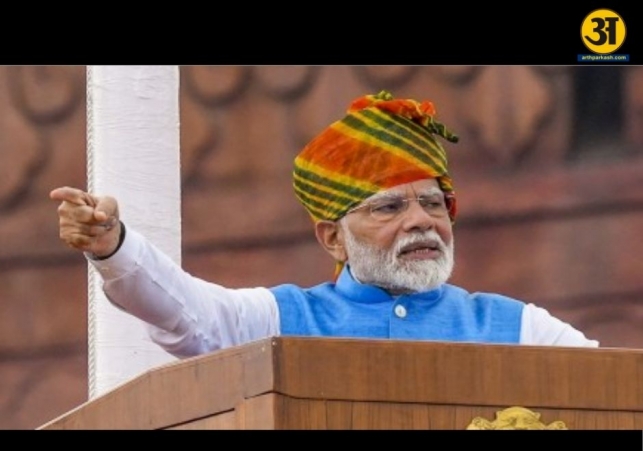
Speaking at the Semicon India 2025 conference in New Delhi, PM Modi underlined that India’s performance had exceeded expectations at a time when several countries are struggling with slow growth. “Just a few days ago, the GDP numbers for the first quarter of this year have come. Once again, India has performed better than every expectation, every assessment. At a time when there are concerns in the economy of the world, there are challenges created by economic selfishness; in that environment, India has achieved a growth of 7.8 percent,” he said.
The Prime Minister, who had just returned from visits to Japan and China, started his address with a touch of humor. “I returned last night after visiting Japan and China... are you clapping because I went, or because I came back?” he said, drawing laughter from the audience.
PM Modi stressed that nothing could stop India now. He said the country is moving beyond just providing backend support to becoming a full-stack semiconductor nation, meaning it will handle the complete process of designing, developing, and producing chips. “The day is not far when India’s smallest chip will drive the biggest change in the world. Our journey started late, but nothing can stop us now,” he said.
India’s big push in semiconductors
PM Modi described how India is fast becoming a trusted partner in the global semiconductor industry. Semiconductors, also called microchips, are vital for all modern technologies, from healthcare and transport to communication, defense, and space. With the world moving toward digitalization and automation, chips have become as valuable as oil once was. “It is said in the semiconductor world that oil was black gold, but chips are digital diamonds. Our last century was shaped by oil, but the power of the 21st century is limited to a small chip. This chip has the power to accelerate the development of the world,” Modi explained.
The Prime Minister shared India’s progress over the past four years. In 2021, the government launched the India Semiconductor Mission (ISM). By 2023, the first semiconductor plant was approved. In 2024, more plants were cleared, and in 2025, five additional projects got the green light. Altogether, an investment of over ₹1.5 lakh crore is being made in 10 semiconductor projects, reflecting the world’s growing trust in India’s capability.
To help investors, India has introduced the National Single Window System, which allows all approvals from the central and state governments to be completed on one platform. Modi said this has reduced paperwork and made it much easier for businesses to set up projects.
The government is also preparing the next phase of the India Semiconductor Mission, which includes an updated Design-Linked Incentive (DLI) Scheme to encourage innovation. PM Modi noted that India has also started working on the Critical Minerals Mission to secure the rare earth minerals needed for chip manufacturing.
First made-in-India chip presented to PM Modi
During the conference, Union IT Minister Ashwini Vaishnaw presented India’s first indigenously developed microchip to PM Modi. The chip, named VIKRAM3201, is a 32-bit processor created by ISRO’s Semiconductor Laboratory in Chandigarh. It is designed to work in the harsh conditions of space launch vehicles. Along with VIKRAM3201, test chips from four other approved projects were also presented.
This marks a major milestone in India’s technology journey. Until now, India had largely depended on other countries for semiconductor designs and manufacturing. With this achievement, the country has moved a step closer to self-reliance in a sector that has become central to global economic security.
The Semicon India 2025 conference, a three-day event, has brought together leaders from government, industry, and research. Sessions at the conference will focus on topics such as the progress of the India Semiconductor program, advanced packaging projects, smart manufacturing, research and development, artificial intelligence, and international cooperation. The event will also highlight opportunities for startups and showcase state-level policies designed to attract investments.
PM Modi said that the world is ready to build the semiconductor future with India. He envisioned a time when products would proudly carry the tag “Designed in India, Made in India, and Trusted by the World.”
ALSO READ: Comparing losses in gaming and investing sparks debate on regulation
A journey from vision to reality
In just four years since the India Semiconductor Mission began, the country has gone from a vision to actual projects on the ground. The Prime Minister said this transformation reflects not only the government’s commitment but also the trust that global companies now place in India’s capabilities.
He concluded his speech by expressing confidence in India’s semiconductor journey. “The day is not far when the smallest chip made in India will drive the biggest change in the world,” he said.
The combination of strong economic growth, despite global challenges, and the progress in advanced technology sectors like semiconductors, has given India both confidence and credibility on the global stage.
Related News