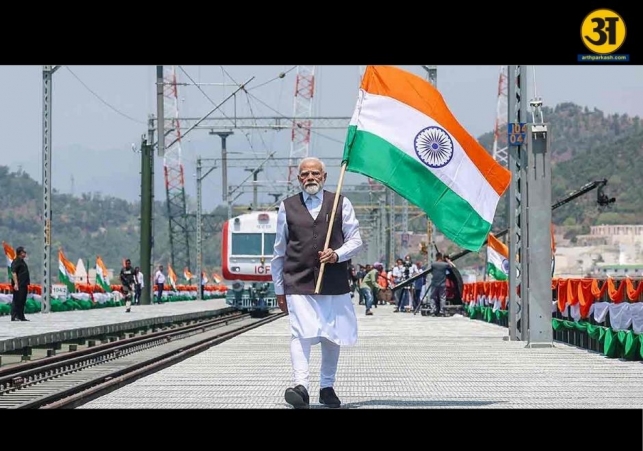
Modi at 75 reflects on past, present and future
PM Modi at 75: A journey of past, present and future
Narendra Modi, born on 17 September 1950—the same year the Indian Constitution came into effect—turns 75 in 2025. Even at this age, he remains extremely popular, especially among young people. What makes him unique is his ability to use technology, communicate across generations, and inspire hope even in difficult times. Modi is known for constantly improving himself, and even his critics acknowledge his tireless work ethic.
India has many leaders, but true statesmen are rare. Modi has shown his global leadership during crises, such as the COVID-19 pandemic, when India not only protected its citizens but also sent vaccines to other countries in need. His ability to see the bigger picture sets him apart. Scholars like Harvard’s Linda Hill note that a real leader grows and adapts continuously and proves their strength during adversity. Modi’s decisions during crises show he meets this standard, balancing relations with world powers while making tough choices at home.
Before becoming Prime Minister in 2014, Modi served as Gujarat’s Chief Minister for 13 years, demonstrating administrative skill and decisive governance. When he took office nationally, India faced corruption, policy paralysis, and high inflation. Over the next 11 years, Modi helped India grow into the world’s fourth-largest economy, with stronger global influence and military capability. His leadership has turned despair into hope, ending policy delays and encouraging decisive action in government.
Key reforms and achievements
Modi is unusual among leaders because he has combined military strength with economic and social reforms. He responded decisively to terror attacks, including authorizing surgical strikes in 2016 and the Balakot airstrikes in 2019, showing India would no longer absorb attacks passively. Compared with previous leaders like Nehru and Indira Gandhi, Modi has acted both in wartime and peacetime to secure India’s safety and progress.
One of his major goals has been building a self-reliant India. He gave the bureaucracy a clear directive: Reform, Perform, Transform. Inflation, which averaged 11–12% under the previous government in 2013, now mostly stays between 4–6%. Capital expenditure increased from about Rs 1.87 lakh crore in 2013–14 to over Rs 11 lakh crore in FY2026, a sixfold rise. Infrastructure development has been remarkable: national highways expanded from 91,000 km to 146,000 km, and metro rail grew from 248 km to nearly 1,000 km.
Modi has made several bold decisions that have transformed India:
-
Goods and Services Tax (GST): Implemented despite political risks, simplifying taxation nationwide.
-
Digital India: High-speed internet and digital payments now reach even remote villages.
-
Jan Dhan Accounts: Millions, especially women, gained access to banking and financial tools.
-
Abrogation of Article 370: A historic political decision changing Kashmir’s status.
-
Clean India Mission: Over 120 million toilets built and 90% of villages declared open-defecation free.
ALSO READ: Plant-based diet linked to lower risk of heart attack and cancer
Cultural and national pride has also been a focus. Projects like the Ram Temple in Ayodhya symbolize India’s cultural resurgence, with Modi playing a central role. His leadership has strengthened citizens’ pride in their identity. Even international observers, such as US Vice President JD Vance, have noted Modi’s enduring popularity and influence.
Throughout his career, Modi has shown resilience and vision, guiding India through crises while implementing long-term reforms. By combining strong governance, cultural initiatives, economic development, and national security, he has created a lasting impact on India’s present and future. His leadership exemplifies Chanakya’s idea that a ruler’s success lies in the happiness and welfare of the people.
Related News