Modi appeals for pride in using Swadeshi goods
PM Modi urges citizens to embrace local products in national address
- By Gurmehar --
- Monday, 22 Sep, 2025
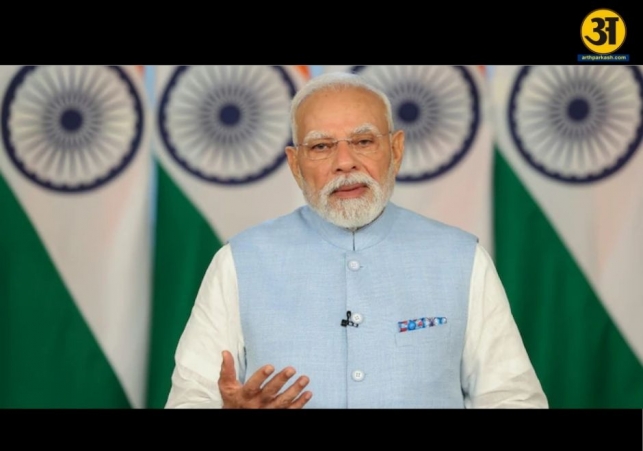
Prime Minister Narendra Modi addressed the nation on September 21, 2025, in a speech that came just ahead of the Navratri festival and the implementation of major reforms in India’s Goods and Services Tax (GST). Speaking to citizens, PM Modi highlighted the significance of these reforms for India’s economic growth and called on everyone to proudly use Swadeshi products.
The Prime Minister announced that the next-generation GST reforms, also termed the “GST Bachat Utsav,” would come into effect starting September 22, coinciding with the first day of Navratri. These reforms are designed to simplify taxation, reduce prices for consumers, and strengthen the vision of Aatmanirbhar Bharat. Under the new GST structure, the government has consolidated four previous slabs into two main categories—5% for essential goods and 18% for most other items—while luxury and harmful goods will attract a 40% GST.
PM Modi said, “From tomorrow, the festival of Navratri begins. I extend my best wishes to you. From the first day of Navratri, India is taking an important step towards becoming self-reliant. The next-generation GST reforms will begin at sunrise tomorrow.” His remarks reflected the government’s focus on boosting savings for citizens while ensuring affordability across a wide range of products.
Key highlights from PM Modi’s address
PM Modi outlined several key points regarding the GST reforms and their benefits. He emphasized that the GST system was made a priority in 2014 to serve the public and national interest. “When you gave us the opportunity in 2014, we made GST our priority in the public interest and in the national interest. We discussed with every stakeholder, addressed every state's doubts, and found solutions to every question. By taking all states on board, India’s largest tax reform became possible. The country was freed from the web of dozens of taxes, and a uniform system was established,” he said. He called the GST law “historic” for realizing the dream of “One Nation, One Tax” and highlighted how the previous tax and toll structures created difficulties for businesses and consumers.
The Prime Minister also stressed the positive impact of GST 2.0 reforms on citizens’ savings. “From tomorrow, GST Bachat Utsav will commence. Your savings will increase, and you will be able to buy your favorite things. This reform will benefit all sections of society,” he said. Essential items like ghee, paneer, butter, snacks, ketchup, jam, dry fruits, coffee, and ice creams will now attract a lower GST rate, while aspirational goods such as TVs, air conditioners, and washing machines will also become more affordable. FMCG companies have already announced price reductions in line with these reforms.
PM Modi highlighted the broader economic benefits, noting that GST 2.0 reforms are expected to attract foreign direct investment (FDI) and further accelerate India’s growth story. He appealed to citizens to embrace Swadeshi products, saying, “Say with pride that you use Swadeshi.” This call reinforces the government’s push for self-reliance and domestic manufacturing.
During the address, PM Modi also contrasted the new reforms with previous tax regimes, explaining that earlier systems were cumbersome and fragmented. The simplification of GST slabs to two main categories—5% and 18%—along with a 40% slab for luxury and sin goods like tobacco, alcohol, and high-end vehicles, will ensure that compliance is easier for businesses while consumers benefit from lower prices. He emphasized that these reforms are the result of cooperative efforts between the central and state governments.
GST reforms to benefit citizens and economy
The Prime Minister explained how GST Bachat Utsav would directly impact citizens’ lives. Essential goods will remain affordable, helping middle-class families manage household expenses. Tax reductions on daily-use items, electronics, and vehicles will encourage consumption and make modern amenities more accessible. Additionally, GST rationalization is expected to streamline business operations, reduce bureaucratic hurdles, and encourage investment in India.
PM Modi’s speech comes at a crucial time amid global economic uncertainties. Recent developments, such as the United States raising H1B visa fees and imposing high tariffs on imports, have put the spotlight on India’s economic policies. The Prime Minister’s address reassured citizens and investors alike that India is moving towards a more self-reliant and resilient economic structure.
ALSO READ: Kejriwal targets Congress leadership in new political move
ALSO READ: Uttarakhand landslide buries family, heroic mother shields children
The timing of the speech, just before Navratri, also aimed to encourage people to celebrate the festival with domestic products. PM Modi said that embracing Swadeshi products not only supports local businesses but also strengthens India’s manufacturing sector and overall economy. His message combined economic reforms with cultural pride, urging citizens to participate in nation-building through informed consumer choices.
In conclusion, PM Modi’s address to the nation highlighted the launch of next-generation GST reforms, the benefits for citizens, and the government’s vision for a self-reliant India. The GST Bachat Utsav aims to simplify taxation, reduce costs on essential and aspirational goods, increase savings, and attract investment, while fostering pride in using domestic products. As GST 2.0 comes into effect from September 22, citizens can expect significant relief on prices, while the economy moves towards a streamlined, efficient, and growth-oriented framework.
Related News