Man acquitted in rape case but must not abandon wife, says Supreme Court
Supreme Court cancels rape conviction after marriage but sets strict condition
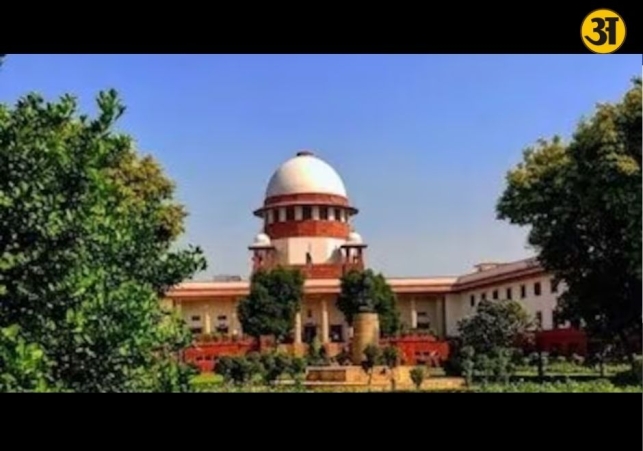
The Supreme Court of India has cancelled the rape conviction of a man who was earlier sentenced to ten years in prison. However, the court made it clear that this relief comes with a strict condition. The man must continue to live with and support the woman he married, who was the complainant in the case. If he abandons her in the future, the earlier conviction and legal proceedings will automatically come back into effect.
The decision was given by a bench led by Chief Justice of India Surya Kant and Justice Joymalya Bagchi. The judges said the order was based on special circumstances and should not be seen as a general rule for similar cases. They explained that the court used its extraordinary constitutional powers to deliver what it believed was “complete justice” in the matter.
The case had its origins in a relationship between the accused and a girl who was a minor at the time of their sexual relationship. Because she was under the legal age of consent, the man was charged with rape and offences under the Protection of Children from Sexual Offences (POCSO) Act.
Background of the case
The man was convicted by a trial court in Jeypore, Odisha. The court found him guilty under Section 376(2)(n) of the Indian Penal Code, which deals with repeated rape. He was also convicted under Section 6 of the POCSO Act, which punishes penetrative sexual assault against a minor.
The trial court sentenced him to ten years of rigorous imprisonment and imposed a fine. Both the IPC and POCSO sentences were ordered to run at the same time.
The man later challenged the conviction before the Orissa High Court. In October 2023, the high court refused to grant him regular bail after his conviction. However, the court did allow him temporary bail on some occasions, taking into account the time he had already spent in custody and his conduct during that period.
Even though he received interim bail, his conviction remained in place and his appeal was still pending. The case eventually reached the Supreme Court.
In February 2025, the Supreme Court granted bail to the man while the appeal was being heard. During the hearing, the court was informed that the accused had married the complainant in December 2019. The marriage reportedly took place with the involvement and approval of family elders.
The lawyer representing the woman also told the court that the man was treating her well and that they were living together as husband and wife.
ALSO READ: Jaishankar speaks with Iran and Oman as India pushes for diplomacy in Middle East crisis
ALSO READ: Iran warns US after warship Iris Dena sunk in Indian Ocean, 87 killed
Supreme Court’s conditional relief
While delivering its final decision, the Supreme Court took note of these developments that happened after the original conviction. The judges said that the marriage and the couple’s continued life together were important factors in the case.
The court decided to use its powers under Article 142 of the Constitution of India. This article allows the Supreme Court to pass any order necessary to ensure complete justice in a particular case.
Using these powers, the court cancelled the man’s conviction and declared that he would be treated as acquitted for all legal purposes. However, the judges placed a clear and strict condition on this relief.
The court ordered that the man must continue to maintain a respectful and cordial relationship with the woman, who is now his wife. He must not desert or abandon her at any point.
The judges warned that if the man tries to misuse the benefit given by the court, the earlier legal consequences will immediately return. In such a situation, the original conviction and all related court proceedings will automatically be revived.
The bench stressed that this decision was made in view of the unique circumstances of the case. The judges noted that the couple had been married for several years and were living together peacefully.
They also emphasised that the court’s intervention should not be interpreted as a standard approach in cases involving serious offences like rape or crimes under the POCSO Act.
Legal experts often describe Article 142 as one of the most powerful provisions in the Indian Constitution. It allows the Supreme Court to go beyond technical legal limits in order to deliver justice that fits the specific facts of a case.
In this situation, the court believed that cancelling the conviction while protecting the woman’s interests through strict conditions would achieve a fair outcome.
The decision also highlights the court’s effort to balance legal principles with real-life developments that occurred after the original judgment. By linking the acquittal to the continuation of the marriage, the judges ensured that the woman’s security and well-being remain protected.
At the same time, the warning about reviving the conviction serves as a strong reminder that the relief granted by the court can be withdrawn if the man fails to honour his responsibility toward his wife.
The ruling has drawn attention because it shows how the Supreme Court sometimes uses its constitutional authority to resolve complex cases where legal issues overlap with personal relationships and changing circumstances.
Related News