Leopard behind villager’s death shot dead in Uttarakhand
Uttarakhand forest team kills leopard that attacked villager and livestock in Gajald
- By Gurmehar --
- Friday, 12 Dec, 2025
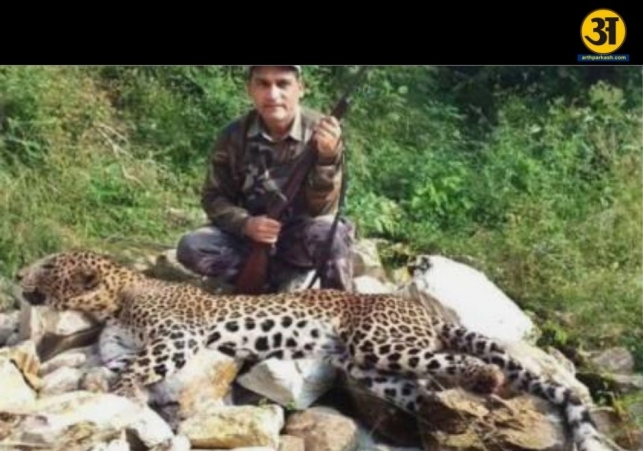
A five-year-old female leopard that had been attacking people and livestock in Pauri Garhwal, Uttarakhand, was finally shot dead on Wednesday night near Gajald village. The leopard had created fear across several villages over the past week and had killed a 45-year-old man earlier. Forest officials confirmed that the animal was tracked for days using camera traps, pug marks and drone footage before it was brought down by a specialist sharpshooter.
The operation brought a sense of relief to frightened villagers who had been staying indoors, avoiding forest areas and sending repeated SOS calls to forest authorities. The forest department said that their teams will continue to remain in the affected villages until the situation becomes fully safe.
How the leopard was tracked
According to Pauri divisional forest officer (DFO) Abhimanyu Singh, the leopard had been linked to several attacks in the Gajald and Satyakhal region. After a villager named Rajendra Nautiyal was killed on December 4, forest officials intensified their search. They installed camera traps at multiple places, studied pug marks and used drone surveillance to trace the animal’s movement.
Two forest department shooters were already on duty in the area. They were joined by two specialist hunters, Joy Hukil and Ramesh Chandra Barthwal. Late on Wednesday night, after continuous tracking for several hours, sharpshooter Joy Hukil spotted the leopard and shot it. Officials said that the shot was taken only after strong technical confirmation that this was the same leopard responsible for earlier attacks.
The forest department said that camera trap images, pug marks and the attack pattern all point to the same animal. “Postmortem is underway and DNA samples are being collected. Prima facie, our evidence confirms that this is the leopard that killed the villager,” DFO Singh said.
Forest teams are now working through the area to calm the situation. Additional staff will remain present in surrounding villages for the next few days to prevent any other incidents.
Fear in neighbouring villages
While Gajald village now has some relief, villagers in nearby areas are still on alert. In Phoolansain village, residents reported sightings of a tiger over the past few days. Because of this, a dedicated tranquillising team has been deployed under the Jaiharikhal block of the Lansdowne forest division.
Siroli village has also seen multiple leopard sightings recently. Villagers reported that a cow and a calf were attacked two days ago. Some residents managed to chase the leopard away, but people remain scared. Another goat was attacked near the village’s natural water source. Forest staff, panchayat workers and villagers together have been clearing bushes around homes and commonly used paths to reduce hiding spaces for wild animals.
Many villagers say that fear has become a part of daily life. “We are frightened to go outside after sunset. Even during the day we avoid lonely stretches. The forest department is helping, but we want long-term safety measures,” said 62-year-old Rajendra Singh Negi of Siroli.
Pauri Garhwal district magistrate Swati S. Bhadauria said that monitoring has been increased across all leopard-affected zones. Authorities are providing fodder to villagers so they do not have to enter forested areas, which are risk zones for leopard sightings. She added that cooperation between villagers and forest teams is essential at this time.
Forest department on high alert
The forest department has deployed fox lights, ANIDER devices, drones and tranquilliser guns across high-risk areas. These devices help detect wild animals, scare them away or keep them from entering residential zones. The blocks considered most at risk include Pokhra, Rikhnikhal, Jaiharikhal, Thalisain, Yamkeshwar, Pabo, Kot and Duggada.
Officials said that while killing a leopard is always the last option, they cannot take chances when human lives are at risk. In this case, the animal had already killed a villager and attacked livestock multiple times. The decision to eliminate it was taken following all legal procedures and with expert support.
Human-wildlife conflict has been increasing in several parts of Uttarakhand as expanding villages and shrinking forests push animals closer to human populations. Forest officers say that awareness, quick reporting and cooperation can reduce such incidents.
For now, the people of Gajald and surrounding areas are slowly returning to normal, but authorities remain alert. Teams will continue surveillance, and villagers have been requested to travel in groups, avoid forested routes after dark and report any new sightings immediately.
The successful tracking and removal of the leopard has brought temporary peace, but it has also highlighted the urgent need for long-term strategies to manage wildlife movement and protect human lives across Uttarakhand’s hilly regions.
Related News