Iran calls US deal one-sided but signals talks may continue
Iran rejects US peace proposal as unfair, keeps door open for diplomacy amid rising tensions
- By Gurmehar --
- Friday, 27 Mar, 2026
Iran has rejected a recent peace proposal from the United States aimed at ending the ongoing conflict, calling it “one-sided and unfair.” At the same time, Iran has made it clear that it is still open to dialogue, keeping hopes of a diplomatic solution alive despite rising tensions.
The proposal, which was reportedly shared through Pakistan, was reviewed by Iranian officials but did not meet their expectations. According to reports, Iran believes that the terms of the deal were heavily tilted in favour of the United States and its allies, especially Israel.
An Iranian official said that the proposal required Iran to give up its ability to defend itself in exchange for a possible easing of sanctions. Iran found this condition unacceptable and said that such an agreement would not be fair or balanced.
Concerns over peace proposal
Iran’s main objection to the proposal is that it does not treat both sides equally. Officials in Tehran believe that the deal focuses more on protecting the interests of the United States and Israel, rather than addressing Iran’s concerns.
The issue of sanctions is also a major point of disagreement. Iran has been under strict economic sanctions for years, which have affected its economy and trade. While the US proposal reportedly included some relief, Iran described it as vague and uncertain.
Iran wants clear and guaranteed steps when it comes to lifting sanctions. Without that, it is not willing to accept conditions that could weaken its defence capabilities. For Iran, national security remains a top priority, especially in a region where conflicts are already intense.
Another concern is trust. Relations between Iran and the United States have been strained for decades, and previous agreements have not always been successful. This has made Iran cautious about accepting new proposals without strong assurances.
Despite rejecting the proposal, Iran has not completely closed the door on diplomacy. Officials have said that discussions can still take place if the United States shows a more realistic and balanced approach.
ALSO READ: US may divert Ukraine-bound weapons to Iran war, raising global security concerns
Diplomacy still possible
Even though there is no formal agreement for talks at the moment, diplomatic efforts are continuing behind the scenes. Countries like Turkey and Pakistan are trying to act as mediators and help both sides find common ground.
Iran has clearly stated that diplomacy has not stopped. It believes that if the United States is willing to reconsider its position and offer fair terms, a solution may still be possible. This shows that while tensions are high, both sides may still be interested in avoiding further conflict.
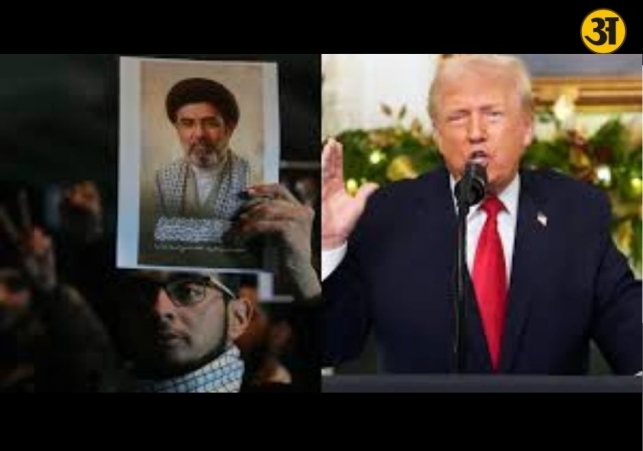
On the other hand, former US President Donald Trump has made strong statements about the situation. Speaking during a meeting at the White House, he claimed that Iran is “begging” for a deal. He suggested that Iran is under pressure due to the ongoing conflict and is looking for a way out.
However, Trump also expressed uncertainty about whether the United States is ready to move forward with a deal. He said that it is not clear if Washington is willing to agree to the terms required for peace.
Trump added that any agreement would need to address key issues, including the reopening of the Strait of Hormuz. This route is extremely important for global oil and gas transport, and its disruption has already affected international markets.
The situation has created uncertainty across the world. The conflict has not only affected the countries directly involved but also impacted global trade, energy prices, and economic stability.
The continued tensions have also raised concerns about further escalation. If diplomatic efforts fail, there is a risk that the conflict could expand, involving more countries and causing greater disruption.
At the same time, the fact that Iran is still open to dialogue offers a small hope. Diplomacy remains the most effective way to resolve such conflicts without causing further damage.
In conclusion, Iran’s rejection of the US peace proposal highlights the deep differences between the two sides. While Iran sees the deal as unfair and one-sided, it has not ruled out future negotiations.
The coming days will be crucial in determining whether both sides can move closer to a solution. For now, the situation remains uncertain, with diplomacy and conflict both possible outcomes.
A balanced approach, mutual trust, and clear commitments will be necessary if a lasting agreement is to be reached. Until then, the world will continue to watch closely as events unfold in this sensitive and important region.
Related News