India starts digital Census 2027 with self-enumeration option
Census 2027 begins in digital mode as India introduces self-enumeration for the first time
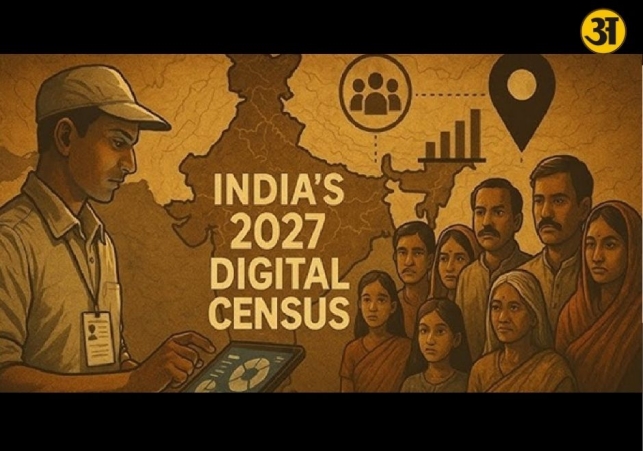
Census 2027 has officially started its first phase from April 1, marking an important step in India’s data collection process. This will be the country’s first fully digital census and also the largest population survey in the world. It is India’s 16th Census overall and the eighth since independence.
For the first time, people in India can fill in their own details online through a process called self-enumeration. This new feature is expected to make the census faster, easier, and more accurate.
The first phase of the census is called the Housing Listing and Housing Operations. It will take place between April 1 and September 30, depending on the schedule set by each state and Union Territory. During this phase, officials will collect details about houses and basic household information.
Citizens who want to use the self-enumeration option can do so through an online portal. They will be given a 15-day window before officials begin door-to-door visits in their area. For example, in areas like New Delhi, the first phase will run from April 16 to May 15, and self-enumeration will be open from April 1 to April 15.
How citizens can self-enumerate
The government has made the self-enumeration process simple and user-friendly. Citizens need to visit the official online portal and log in using their mobile number. After logging in, they must mark their house location on a map and enter details about their family.
The process usually takes around 15 to 20 minutes to complete. Once all the information is submitted, the system generates a 16-digit Self-Enumeration ID (SE ID). This ID is sent to the user through SMS and email.
When an enumerator visits the house later, the resident only needs to show this SE ID. This helps the official verify the data and complete the process quickly. Even though self-enumeration is available, government workers will still visit homes to ensure that everyone is counted.
The census can be filled in 16 different languages, making it accessible to people across the country. The government has also launched a help section and FAQ page to guide users through the process.
ALSO READ: Iran denies talks with US during war as Trump claims negotiations are ongoing
ALSO READ: Israel suspends battalion after CNN journalist assaulted in West Bank, probe ordered
What information will be collected
The government has released a list of 33 questions for the first phase. These questions are mainly about housing conditions and basic family details. Some of the key information that will be collected includes the type of house, materials used for construction, and the condition of the building.
Officials will also collect data about the number of people living in the house, the number of married couples, and details about the head of the family such as name, gender, and social category. Questions about food habits, types of grains consumed, and availability of vehicles and other facilities will also be asked.
An important update is that couples in live-in relationships will be counted as married if they consider their relationship stable. This clarification has been provided in response to public questions on the portal.
The census will be conducted in two main stages. The first stage focuses on housing and household details, while the second stage, called population enumeration, will take place in February 2027. This second stage will collect detailed information about individuals, including education, employment, religion, language, and migration.
The government has approved a budget of Rs 11,718 crore for this exercise. For the first time, the census will also include a caste count, which is expected to provide detailed social data.
A key feature of this census is the use of digital technology. Instead of paper forms, officials will use mobile devices and tablets to collect information. Data will be uploaded instantly to a central system, reducing errors and saving time.
The system used for monitoring is designed to track progress in real time. It will help manage staff, assign tasks, and ensure smooth operations across the country. Security features have also been added to protect personal data and prevent misuse.
Officials have assured that all information collected during the census will remain confidential. According to the law, personal data cannot be shared with other organisations or used in court cases. It is only used for statistical purposes.
Around 30 lakh personnel, including enumerators, supervisors, and trainers, will be involved in this massive exercise. Most of them are government employees, such as teachers, who will carry out census duties along with their regular work. They will receive extra payment for their efforts.
The digital census is expected to create employment for many people and improve the quality of data collected. It also reflects India’s move towards using technology in large-scale government operations.
Overall, Census 2027 is a major step forward in modernising how population data is collected in India. With the introduction of self-enumeration and digital tools, the process is likely to become more efficient, transparent, and convenient for citizens.
Related News