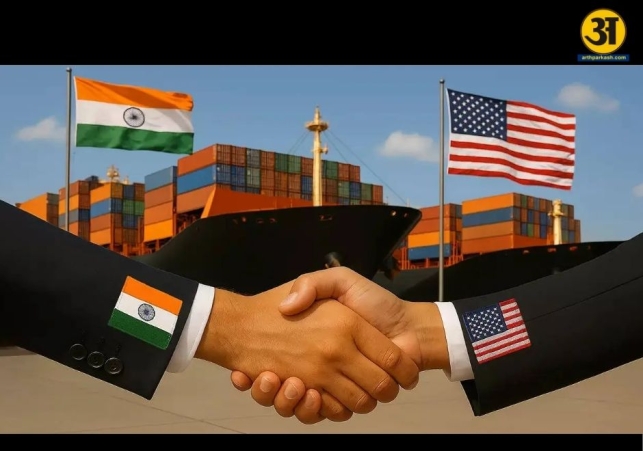
India must rethink its free trade strategy
India’s trade deals need clearer goals and stronger execution
- By Gurmehar --
- Friday, 21 Nov, 2025
India is entering a new phase in its trade policy. After many years of being careful and slow about signing free trade agreements (FTAs), the country is now moving quickly and confidently. With the United States saying that a trade deal is “very close” and the India–European Union agreement also nearing completion, India may soon have 12 bilateral FTAs in operation.
This is a major shift. In the early 2000s, India was unsure about signing FTAs. The first major agreement with the ASEAN countries began negotiations in 2003, and it took several years for India to trust FTAs as a tool for trade growth. Now, India is either negotiating or implementing FTAs with almost all G7 countries. Except for China, India has an FTA or some kind of preferential trade arrangement with every major East Asian country. It is also working on agreements with partners across all regions, with Africa being the only exception.
Since 2022, India has signed FTAs with the UAE, the UK, the European Free Trade Association (EFTA), and Mauritius. An early harvest agreement with Australia is already in force, and a comprehensive agreement is expected soon. Negotiations are still active with Canada, Israel, and New Zealand. But the talks with the United States and the European Union remain the most closely watched.
These FTAs together accounted for nearly 57% of India’s total trade in 2024–25. Even more striking, almost 71% of India’s exports went to FTA partners. This shows how important these trade relationships have become.
Exports to the UK, EU, US, and Australia have grown strongly, especially because of two major industries—mobile phones and petroleum products. Pharmaceutical exports to the US have also helped strengthen India’s trade position. Mobile phone exports to the US, in particular, have risen sharply over the past five years. The share of mobile phones in India’s total exports to the US increased from less than 5% in 2019–20 to more than 18% in 2024–25. More than 42% of India’s mobile phone exports went to the US last year, and this increased to 67% during April–August of 2025–26.
Petroleum product exports to the EU, UK, and the US also grew as India relied more on cheap Russian crude oil. As global restrictions tightened on Russia, India refined Russian crude and exported it, allowing many Western countries to indirectly purchase fuel produced from Russian oil. The EU’s share in India’s petroleum exports rose from 13% in 2021–22 to nearly 24% in 2024–25. The US was India’s third-largest buyer of petroleum products in 2022–23, although its imports slowed slightly the following year.
Exports to these Western partners remained strong, but imports from them did not grow as fast. As a result, India enjoyed a trade surplus with each of them. The surplus with the UK tripled in recent years, the surplus with the US rose by almost 2.5 times, and India turned a small deficit with the EU into a surplus of $15 billion by 2024–25.
On the other hand, India’s FTAs with ASEAN, South Korea, and Japan did not bring the expected benefits. These deals, signed earlier, did not significantly expand India’s exports. Instead, imports from these countries rose steadily. India’s trade deficit with these partners increased from $15 billion in 2010–11 to $73 billion, or 26% of the total trade deficit, after more than a decade of implementation. This prompted the government to launch reviews of the ASEAN and Korea FTAs.
ALSO READ: A simple daily breathing test can reveal early signs of lung trouble
ALSO READ: New strategies aim to reshape global tech growth and future manufacturing
Challenges and opportunities for the future
Looking ahead, India faces two big challenges in maintaining its trade surpluses with the UK, EU, and especially the US.
The first challenge comes from policy changes under US President Donald Trump. Trump is urging American companies to move manufacturing back to the US. Apple has promised to invest $600 billion over four years to ensure that iPhones sold in the US are also made there. If Apple shifts production for the US market away from India, India’s mobile phone exports could fall sharply. India’s petroleum exports to the US could also drop if India is forced to reduce or stop oil imports from Russia under pressure from the US.
The second challenge relates to the FTAs themselves. As India opens its markets to the US and the EU under upcoming agreements, imports from these regions may rise. If India does not fully utilize the new market access it receives in return, its trade surpluses could shrink. This is similar to what happened with some of India’s East Asian FTAs, where India opened its market widely but did not gain enough benefits for its own exports.
Yet, there is a positive sign. India’s exports to East Asian FTA partners have finally started showing improvement. Automobile exports to Japan nearly tripled in 2024–25 because Japanese firms are using India as a manufacturing base. Mobile phone exports to East Asian countries have also been rising.
These trends may help India demand better market access as it reviews older FTAs with East Asia. If India uses these strengths well, it could find new opportunities and improve its trade balance in the region.
In summary, India’s FTA strategy is entering a new and ambitious phase. The country has gained strong trade surpluses with major Western partners, but faces upcoming challenges that could reduce some of these gains. At the same time, fresh opportunities in East Asia may help India correct earlier trade imbalances. The road ahead will depend on how India navigates global politics, uses new FTAs to expand exports, and strengthens its position in future trade partnerships.
Related News