India hits back at Sharif at UN
India slams Shehbaz Sharif’s UN remarks, cites Pakistan’s sheltering of Osama bin Laden
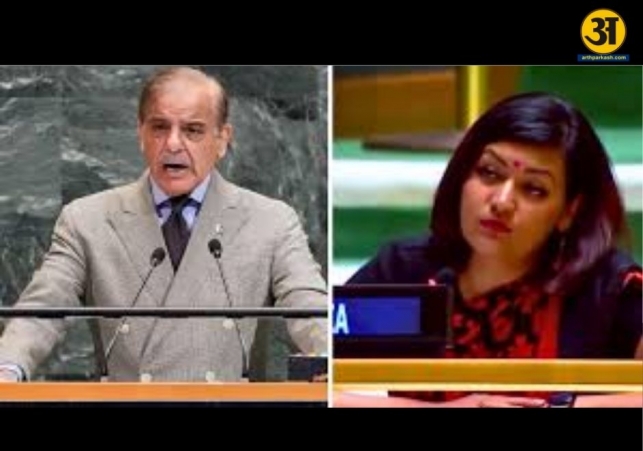
India strongly rejected Pakistan Prime Minister Shehbaz Sharif’s speech at the United Nations General Assembly, calling it “absurd theatrics”. Sharif had accused India of violating the Indus Water Treaty and claimed India had damaged seven Pakistani jets during Operation Sindoor in May. India responded firmly through Petal Gahlot, First Secretary in India’s Permanent Mission to the UN, reminding the world of Pakistan’s history of sponsoring terrorism and harboring terrorists.
In her statement, Gahlot highlighted that Pakistan has a long record of exporting terror and sheltering groups like the Resistance Front, and it even harbored Osama bin Laden for ten years while claiming to fight terrorism. She called Pakistan’s narrative “false” and said no amount of theatrics could hide the facts about its actions.
Gahlot referred to April 25, 2025, when Pakistan shielded the Resistance Front in the UN Security Council, preventing accountability for attacks on tourists in Jammu and Kashmir. She reminded the Assembly that Pakistan has consistently supported terrorism while pretending to be a partner in the war on terror.
India refutes claims of damaged jets and highlights terror links
Sharif claimed that seven Pakistani jets were damaged by India during Operation Sindoor. India rejected this, presenting evidence from Bahawalpur and Muridke terror complexes, showing terrorists eliminated by Indian forces. Gahlot said, “A picture speaks a thousand words. Indian forces destroyed terrorists in these complexes, and senior Pakistani officials glorifying them shows the true nature of this regime.”
She added that the conflict in May was initiated by Pakistan, which threatened more attacks. However, on May 10, Pakistan sought a ceasefire after Indian forces damaged several airbases. India emphasized that it acted to protect its civilians and to target terrorist infrastructure in Pakistan and Pakistan-occupied Kashmir.
Sharif also credited former US President Donald Trump for mediating the ceasefire, but Gahlot clarified that India and Pakistan have a long-standing agreement to resolve issues bilaterally, without third-party involvement.
Gahlot also addressed Sharif’s call for peace, stating that Pakistan must first shut down all terrorist camps and hand over wanted terrorists to India. She stressed that terrorism and its sponsors would be treated equally and warned against using nuclear blackmail to protect terrorists. India’s message, she said, is clear: there will be zero tolerance for terrorism.
Sharif’s claims and Pakistan’s narrative
During his UN speech, Sharif also talked about the Indus Water Treaty, claiming India was violating international law by suspending the treaty. The treaty, signed in 1960 and brokered by the World Bank, governs water sharing between India and Pakistan. Pakistan controls the western rivers—Indus, Jhelum, and Chenab—while India controls the eastern rivers—Ravi, Beas, and Sutlej.
Sharif condemned terrorism in all forms and accused Pakistan of facing “externally-sponsored terrorism” from foreign-funded groups such as the Tehreek-e-Taliban Pakistan and the Balochistan Liberation Army. He also proposed restarting dialogue with India on all issues, including Kashmir, which he described as suffering under Indian “tyranny.”
India’s response, however, questioned the sincerity of Pakistan’s remarks. Gahlot highlighted Pakistan’s long history of supporting terrorism, including operating terror camps for decades, glorifying militants, and misleading the international community about its role in the war on terror. She emphasized that India’s actions, including Operation Sindoor, targeted only terrorists and infrastructure used for attacks on civilians.
By pointing out Pakistan’s past sheltering of Osama bin Laden and the Resistance Front, India sought to remind the world of Islamabad’s double standards. Gahlot described Sharif’s speech as an attempt to shift blame and distract from Pakistan’s record of supporting terror.
India’s clear stand on terrorism and bilateral talks
India has consistently maintained that all issues with Pakistan must be resolved bilaterally. Gahlot reiterated that no third party should interfere, and peace requires Pakistan to stop sponsoring terrorism. She also called out Pakistan’s domestic discourse, describing it as “steeped in hate, bigotry, and intolerance,” and criticized the irony of Pakistan lecturing the world on matters of faith and peace.
India’s response made it clear that there will be no distinction between terrorists and their sponsors. Any acts of terrorism, whether carried out directly or supported by Pakistan, will be met with accountability. Gahlot stressed that India would continue defending its citizens and ensuring that terrorism does not succeed under the cover of state support or nuclear threats.
ALSO READ: Why Indian elections face fairness challenges despite being largely free
ALSO READ: BJP names Dharmendra Pradhan to lead Bihar election campaign
The UN debate highlighted the deep divide between India and Pakistan on security and terrorism issues. While Pakistan seeks to present itself as a victim of external aggression, India emphasized its actions against terrorism and called for honest reflection by Pakistan on its role in supporting terror networks.
India’s reply at the UN also reinforced its position that Kashmir and other bilateral disputes must be addressed directly between the two countries, without international mediation. By contrasting Pakistan’s claims with facts about terrorism and past conflicts, India sought to present a truthful account to the global community.
Related News