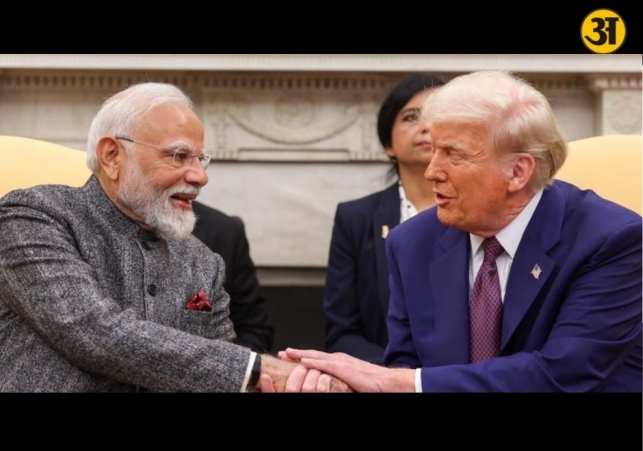
India gains edge after Trump lowers US tariffs
US cuts tariffs on India to 18 per cent under new trade deal
US President Donald Trump has announced a major reduction in tariffs on Indian goods, cutting the reciprocal duty to 18 per cent from the earlier 25 per cent. The decision comes after India and the United States reached a fresh trade agreement, which Trump said was done “out of friendship and respect” for Prime Minister Narendra Modi. The move brings relief to Indian exporters and gives India a stronger position compared to several other exporting nations.
Earlier, Indian goods were facing very high duties, including punitive tariffs linked to India’s purchase of Russian crude oil. At one point, total tariffs on Indian products had gone up sharply, affecting trade flows and increasing costs for businesses. With the latest cut, India now enjoys a lower tariff rate than many competing economies, which could help boost exports to the US market.
The announcement marks a significant shift in US trade policy towards India and signals improved relations after months of tension and negotiations. The tariff cut is expected to benefit sectors such as manufacturing, textiles, engineering goods, and consumer products that rely heavily on exports to the US.
India’s position compared to other countries
With the new rate of 18 per cent, India now stands in a relatively strong position among major exporters to the United States. Several countries continue to face much higher tariffs. China, one of the US’s biggest trading partners, is subject to tariffs of around 37 per cent. Brazil faces one of the steepest rates at 50 per cent, while South Africa is taxed at 30 per cent.
Countries like Pakistan, Indonesia, Malaysia, Cambodia, and Thailand face tariffs close to 19 per cent, slightly higher than India’s revised rate. Vietnam and Bangladesh face duties of about 20 per cent, while Myanmar, Laos, and Syria face extremely high tariffs of 40 per cent.
On the other hand, some developed economies enjoy lower rates. The United Kingdom faces a 10 per cent tariff, while the European Union, Japan, South Korea, Switzerland, and Afghanistan are taxed at around 15 per cent. Canada and Mexico continue to face tariffs of 25 per cent.
This comparison shows that India now has a tariff advantage over many emerging economies in Asia and other regions. Lower duties make Indian goods more attractive to US buyers, as they reduce overall costs and improve price competitiveness.
What tariffs mean for trade and consumers
Tariffs are taxes imposed on goods imported from another country. When a country like the US raises tariffs, imported products become more expensive. This affects businesses that rely on foreign goods and often leads to higher prices for consumers. Importing companies usually pass on the extra cost to buyers, making everyday products costlier.
Governments often use tariffs as a tool to protect domestic industries or apply pressure during trade negotiations. Higher tariffs can help local producers in the short term by making foreign goods less competitive. However, they can also disrupt global supply chains and lead to trade disputes between countries.
In the long run, high tariffs can slow down trade, reduce choices for consumers, and increase inflation. They can also strain diplomatic relations. This is why tariff cuts, like the one announced for India, are often welcomed by businesses and exporters.
ALSO READ: Shehbaz Sharif says Pakistan feels ashamed seeking loans abroad
For India, the reduction to 18 per cent is expected to improve export volumes and support economic growth. It also signals growing trust between New Delhi and Washington. Indian exporters who had been struggling with high duties may now find it easier to compete in the US market.
Overall, Trump’s decision to cut tariffs on India marks a positive turn in bilateral trade relations. While tariffs remain an important part of global trade strategy, the latest agreement shows that dialogue and negotiation can help reduce barriers and create opportunities for both countries.
Related News