IMD issues yellow alert for Himachal, flood risk in 7 districts
Himachal Pradesh rain: IMD issues yellow alert, 7 districts at risk of flash floods
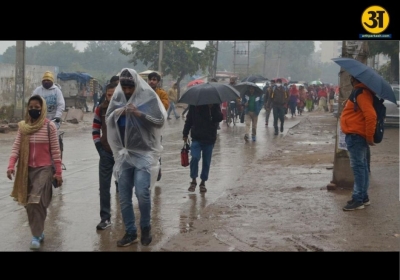
Heavy rain has caused widespread damage across Himachal Pradesh. On Tuesday, the India Meteorological Department (IMD) issued a ‘yellow alert’ and warned that seven districts face the risk of low to moderate flash floods in the next 24 hours. These districts are Chamba, Kangra, Mandi, Kullu, Shimla, Solan and Sirmaur.
The warning came after continuous rain battered many parts of the state. The weather office said this rainfall is likely to continue till next Monday and may cause more damage if conditions worsen. The alert asks people to stay cautious and avoid travel to vulnerable areas.
So far, the monsoon has hit Himachal hard since it arrived on June 20. From June 1 to July 8, the state received 203.2 mm of rainfall, which is far above the usual average of 152.6 mm for the same period. This means the state has recorded about 33% more rainfall than normal.
Some districts have seen even worse conditions. For example, Mandi received 110% more rain than usual, Shimla 89%, and Una 86%. These areas are now struggling with blocked roads, damaged infrastructure, and missing persons.
Roads blocked, people missing, and relief work on
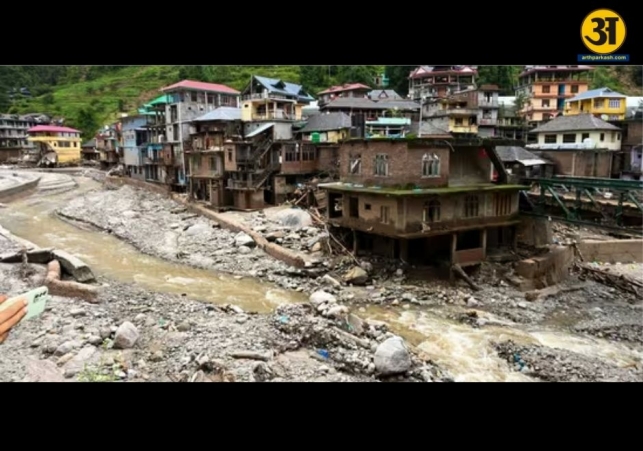
The impact of the heavy rain is being felt everywhere. According to the State Emergency Operation Centre (SEOC), 225 roads have been closed, including 153 roads in Mandi district alone, which is currently the worst-affected area.
In addition to blocked roads, 163 electricity transformers and 174 water supply schemes have been damaged or shut down. This has affected basic services like drinking water and power in many regions.
In Mandi district, the situation is especially alarming. Search and rescue teams are working continuously to find 28 people who went missing last week in Thunag, Gohar, and Karsog subdivisions. Drones and sniffer dogs are being used to support the operations in difficult and remote areas.
So far, 80 people have died across Himachal Pradesh since the start of the monsoon on June 20. Out of these, 52 deaths were caused by rain-related incidents like flash floods, landslides, and cloudbursts, while the other 28 deaths were due to road accidents linked to poor visibility, slippery roads, and falling rocks.
The state has already experienced 23 flash floods, 19 cloudbursts, and 16 landslides since the monsoon began. Officials say the number of such events is unusually high and dangerous this year.
The estimated loss due to the rains is around ₹692 crore, as per the SEOC. This includes damage to roads, houses, government buildings, and farmlands. However, the figure may rise further as more data comes in from remote villages and hill areas that are still cut off due to road blockages.
ALSO READ: Himachal Minister denies assault, alleges NHAI irregularities
Rainfall data and weather updates
The weather office has shared rainfall figures for key towns in the state over the past 24 hours:
-
Gohar received 85 mm of rainfall
-
Sarahan received 84.5 mm
-
Baijnath received 60 mm
-
Nahan recorded 54.2 mm
-
Poanta Sahib saw 48 mm
-
Naina Devi recorded 46.2 mm
-
Kasauli got 37 mm
-
Jogindernagar received 28 mm
-
Palampur got 27.2 mm
-
Shimla, the state capital, received 19 mm
These numbers show that rainfall is widespread and intense across different regions. Officials are keeping a close watch and are urging people living near rivers, hillsides, and landslide-prone areas to stay alert.
The state government has also started issuing advisories through local radio and TV channels. People have been asked to stay indoors unless absolutely necessary and to follow safety instructions from local authorities.
Himachal Pradesh is facing a serious rain-related crisis. With flash flood risks in seven districts, damaged roads, missing persons, and rising death tolls, the monsoon is already taking a heavy toll on the state. Emergency workers are trying their best to bring the situation under control.
The coming days are likely to be crucial. If the rain continues as predicted by the IMD, more damage could occur. People are advised to stay informed, avoid risky travel, and report any landslides, flooding, or missing persons to the nearest disaster response team.
The state government and local bodies are working together, but the safety and awareness of the local population will also play a key role in reducing the impact of the ongoing monsoon crisis.
Related News