Iftar gathering on Ganga leads to arrests and debate
Varanasi iftar boat row sparks arrests and political controversy
A controversy has erupted in Varanasi after a viral video showed an iftar gathering on a boat in the Ganga River, leading to the arrest of 14 Muslim youths. The incident has triggered a wider debate over religious sentiments, legal action, and communal harmony.
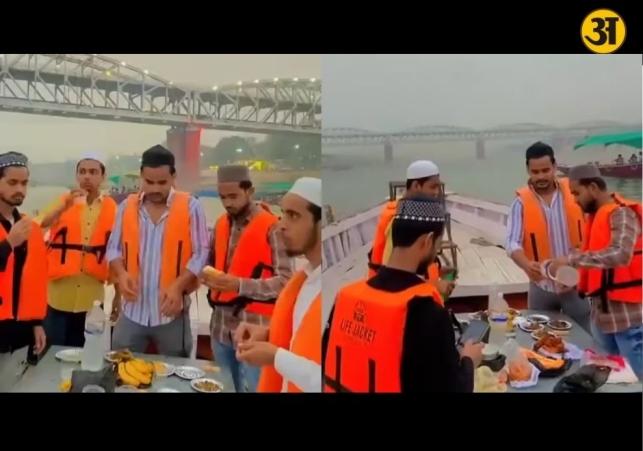
The video, which spread quickly on social media, showed a group of young men breaking their fast during the holy month of Ramzan while on a boat between Rajghat and Namo Ghat. According to reports, the group consumed fruits, dry fruits, and allegedly biryani as part of the iftar meal.
Soon after the video went viral, local police took action and arrested 14 individuals who were seen in the footage. Authorities said the arrests were made after verifying the video and based on a complaint that accused the group of hurting religious sentiments.
Arrests and legal action
The complaint was reportedly filed by a local political worker, who claimed that non-vegetarian food was consumed on the sacred river and that food remains were thrown into the water. Based on this, police registered a case under relevant sections of the law.
Officials stated that the Ganga holds deep religious significance for millions of people, especially Hindus, and any activity seen as disrespectful can lead to strong reactions. The police said that maintaining public order and preventing communal tension was their priority.
However, the arrests have raised questions among legal experts and political leaders. Critics are asking whether the action taken was proportionate and under which specific laws individuals can be arrested for such an act.
Waris Pathan from the All India Majlis-e-Ittehadul Muslimeen strongly criticised the arrests. He said the action reflected bias and questioned why people were being punished for breaking their fast.
He also raised concerns about selective enforcement of laws, pointing out that pollution in the Ganga often goes unchecked, while strict action was taken in this case. His remarks added a political angle to the issue and intensified the debate.
ALSO READ: Trump says Israel will not use nuclear weapons against Iran amid conflict
Religious and political reactions
The incident has drawn strong reactions from different groups. Some Hindu organisations and local residents expressed anger, saying that the Ganga is not just a river but a sacred symbol of faith. They argued that consuming non-vegetarian food on its waters could hurt religious beliefs.
On the other hand, several voices have called for calm and urged authorities to handle the matter sensitively. They believe that such incidents should not be allowed to create divisions between communities.
Political parties have also entered the debate, with some supporting the police action and others criticising it. The situation reflects the delicate balance that authorities must maintain in a diverse country like India, where religious sentiments and personal freedoms often intersect.
The controversy also highlights the growing role of social media in shaping public opinion. A single video can quickly go viral and lead to real-world consequences, including legal action and public outrage.
At the same time, experts say that law enforcement agencies must ensure that their actions are fair, transparent, and based on clear legal grounds. Any perception of bias can increase tensions and affect public trust.
In recent years, incidents involving religious sensitivity have often led to heated debates across the country. This case is another example of how quickly such issues can escalate and become political.
In conclusion, the Varanasi iftar boat incident has sparked a complex debate involving religion, law, and politics. While the police say their action was necessary to maintain order, critics argue that it raises concerns about fairness and freedom.
As the matter continues to be discussed, the focus will remain on how authorities handle the case and whether it leads to further dialogue or division. The incident serves as a reminder of the need for mutual respect and careful handling of sensitive issues in a diverse society.
Related News