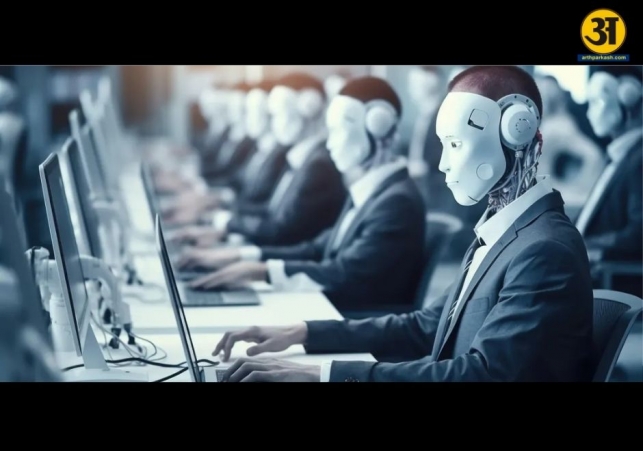
Humans vs. machines? Why AI might be your next teammate, not threat
Is AI really stealing our jobs or just changing how we work?
Artificial Intelligence, or AI, has gone from buzzword to reality faster than most of us imagined. As someone who’s worked closely with tech adoption across various sectors, I can confidently say this: AI is changing everything—how we work, what we work on, and who gets to work.
But here’s the big question: is AI replacing jobs or creating opportunities? The answer, surprisingly, isn’t black or white. It’s both—and it depends on how we choose to respond.
Job loss is real, but so is job evolution
Let’s not sugarcoat it. AI has replaced certain jobs—especially those involving repetitive, rule-based tasks. In customer service, for instance, chatbots are handling what used to be entry-level human jobs. In factories, robots are assembling parts faster than any worker ever could.
But history has taught us one thing—technology doesn’t just wipe out jobs, it transforms them. Think about the Industrial Revolution. It ended a lot of traditional roles, yes, but it also gave birth to entire new industries. The same is happening with AI.
AI is giving birth to jobs we hadn’t imagined
What many don’t realise is that AI is also a job creator. There’s now a growing demand for data scientists, machine learning engineers, AI ethicists, and tech project managers. Even roles like AI trainers—people who help systems learn using data—are now in demand.
The back-end of AI needs an army of humans to design, test, maintain, and refine. So, while AI may take a few jobs away, it’s also opening doors to careers we never thought about five years ago.
AI doesn't replace humans—it works with them
In many cases, AI isn’t replacing humans, it’s assisting them. In healthcare, AI helps doctors detect diseases faster. In journalism, it assists reporters with research and drafts. In finance, it analyses massive data sets for better decision-making.
This human-AI collaboration is what I find most exciting. Imagine a future where humans focus on strategy, empathy, and creativity—things AI can’t replicate—while machines take care of the grunt work.
Reskilling is no longer optional—it’s survival
Here’s the catch: this new world requires new skills. If we’re still clinging to outdated job descriptions, we’re at risk. But the good news? Skills can be learned.
Companies are now investing in reskilling programs, and individuals are turning to online platforms to upgrade themselves. I know people who switched from sales to data analytics in their 30s and found better, more secure careers. It’s all about mindset.
ALSO READ: 6 digital health trends changing the future of healthcare
ALSO READ: 6 Smart Home upgrades that add real value
The startup boom and AI-powered entrepreneurship
Another trend I’ve seen is how AI has empowered entrepreneurship. With tools becoming more accessible, small startups are solving big problems using AI. Whether it’s in agri-tech, health-tech, or education, AI is enabling founders to build lean, smart, scalable solutions.
This means new businesses, new markets, and yes—new jobs. We’re moving towards a knowledge economy, and AI is its strongest engine.
Quality over quantity is the new employment mantra
Yes, we may have fewer traditional jobs. But we’ll have more meaningful ones. AI frees us from doing mundane, repetitive work and opens up space for roles that require judgement, empathy, and vision. The focus is shifting from quantity to quality of jobs.
Who wants to fill out spreadsheets all day when you can make data-driven decisions that actually shape strategy?
AI comes with responsibility, too
Of course, AI isn’t perfect. It can carry biases, make flawed decisions, and if left unchecked, worsen inequalities. That’s why we also need new jobs around AI governance, ethics, and inclusion.
I truly believe every organisation needs not just coders, but thinkers—people who ask the right questions about how AI is used. This layer of human responsibility is more crucial now than ever.
So, are we ready for the shift?
AI is not coming for our jobs—it’s coming for our job descriptions. And that’s a good thing, if we’re ready to evolve with it.
We need policies that promote lifelong learning. We need companies that invest in human potential. And we need individuals who aren’t afraid to move out of their comfort zones.
The question isn’t “Will AI take my job?” but “How can I partner with AI to stay ahead?”
Humans and machines are better together
I’ve seen firsthand that when humans and machines work together, magic happens. Efficiency improves. Job satisfaction rises. Innovation soars. But for that magic to work, we need to be open to change.
Let’s stop fearing the future and start preparing for it. AI isn’t the enemy of employment—it’s the evolution of it. The more we embrace it, the more we can shape it to work for us—not against us.
Related News