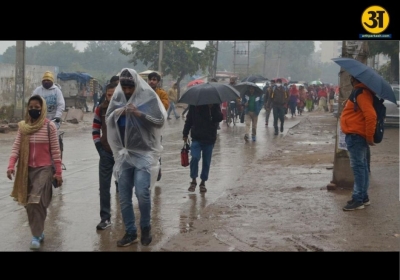
Heavy rains kill 30, displace thousands in Beijing
Torrential rains in Beijing cause 30 deaths and displace 80,000 residents
Heavy rain in Beijing has caused major destruction and the loss of at least 30 lives, according to reports from Chinese state media on Tuesday. The intense rainfall also forced the evacuation of over 80,000 people from various areas in and around the capital. Authorities said the Miyun district, located northeast of the city, recorded the highest number of deaths.
The rain began earlier this week and has continued to batter northern parts of China, including Beijing and the provinces of Hebei, Jilin, and Shandong. Due to continuous heavy rain, roads are damaged, bridges have collapsed, and power supply has been disrupted in many areas.
"The latest round of heavy rainstorms has left 30 people dead in Beijing as of midnight Monday," said China’s state news agency Xinhua, quoting the city's flood control department.
Beijing Daily, a local state media outlet, shared that over 80,000 people have been relocated to safer places. The report said, “Continuous extreme heavy rainfall caused major disasters,” especially in districts like Miyun, Huairou in the north, and Fangshan in the southwest.
In addition to loss of life and property, dozens of roads have been shut down, and electricity is cut off in over 130 villages, leaving thousands in the dark and without essential services. Images from Huairou district showed damaged bridges and flooded streets, where people were seen walking carefully across the destruction.
President urges rescue, Hebei and other provinces affected
Chinese President Xi Jinping responded to the situation by asking government officials to prepare for the worst-case scenarios and ensure people in high-risk areas are relocated quickly. He emphasized the need to stay alert and act fast to save lives.
In Hebei province, which surrounds Beijing, a landslide in a village near Chengde city killed four people and left eight more missing. The landslide occurred as a result of the heavy rain, according to China Central Television (CCTV).
The eastern province of Shandong also experienced flash floods earlier this month, which killed two people and left ten others missing. Similarly, in Sichuan province, five people died after a landslide on a highway pushed several cars off the road and down a steep hill.
Natural disasters like floods and landslides are common in China during the summer, when rainfall can be extremely heavy in some regions. At the same time, other parts of the country face heatwaves and drought-like conditions.
The current situation is another reminder of the impact of climate change. China is the world’s largest emitter of greenhouse gases, which scientists say are making extreme weather events more intense and frequent.
At the same time, China is also working toward becoming carbon-neutral by the year 2060. It has made major investments in renewable energy and leads the world in producing solar panels and electric vehicles.
ALSO READ: Crochet 'forever' flowers are blooming in popularity — and they never wilt
ALSO READ: The ultimate guide to help you stay consistent with workouts this monsoon season
However, the immediate concern remains the safety of people affected by the floods. Authorities have issued strong warnings and asked citizens to pay attention to weather updates and avoid going to dangerous areas unless absolutely necessary.
Emergency teams are on the ground trying to rescue those still trapped and provide shelter to the thousands who have been displaced. Relief efforts are ongoing, and many families have been moved to schools, government buildings, and temporary shelters.
As the rains continue to pour in some areas, the risk of further flooding and landslides remains high. Officials are closely monitoring water levels in rivers and lakes, especially in and around Beijing, to avoid even more damage.
People in affected regions are being urged to stay indoors, stock up on essentials, and avoid any unnecessary travel. Safety messages are being shared on television, radio, and social media platforms to make sure everyone is aware of the risks and precautionary steps.
With thousands of lives affected and major infrastructure damaged, the recovery process is expected to take time. The government has promised full support to help rebuild damaged areas and provide financial help to families who have lost loved ones or homes.
For now, Beijing and the nearby provinces remain on high alert as rain continues to fall, and rescue teams race against time to save as many lives as possible.
Related News