Congress leader denied pre-arrest relief in passport allegation case
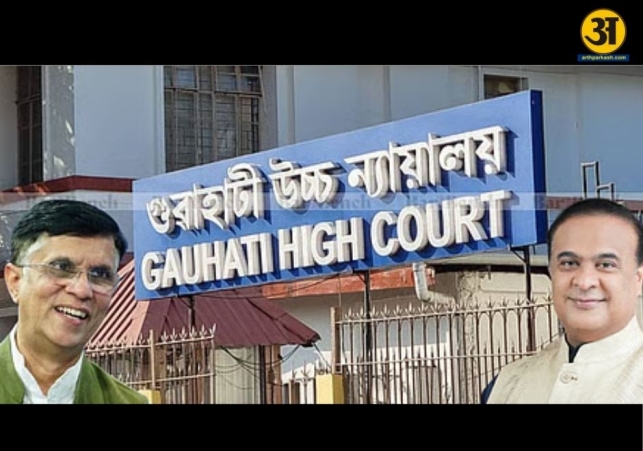
Gauhati High Court rejects Pawan Khera’s anticipatory bail plea in Assam CM wife FIR case
- By Gurmehar --
- Friday, 24 Apr, 2026
The Gauhati High Court on Friday rejected the anticipatory bail plea of Congress leader Pawan Khera in connection with an FIR filed by Riniki Bhuyan Sharma, wife of Assam Chief Minister Himanta Biswa Sarma. The decision means Khera has not received pre-arrest protection in the case at this stage.
The matter has attracted national attention because it involves a senior opposition leader, the family of a sitting chief minister, and allegations made during a political press conference. The case also highlights the growing trend of political disputes moving into legal battles.
Khera had approached the Gauhati High Court seeking anticipatory bail after a case was registered against him by the Guwahati Crime Branch. His plea was heard earlier this week by a single bench of Justice Parthiv Jyoti Saikia, who reserved the order after listening to arguments from both sides for several hours. On Friday, the court pronounced its decision and rejected the plea.
Anticipatory bail is a legal protection that allows a person to seek relief from arrest in advance if they fear being taken into custody in a criminal case. Since the plea has been rejected, investigators may proceed as per law, although Khera still has legal options available in higher courts or through regular bail procedures.
Case began after public allegations
The controversy started after Pawan Khera addressed a press conference in Guwahati and made allegations regarding Riniki Bhuyan Sharma. He claimed that she held three passports and had links to foreign properties and business interests outside India.
These claims were strongly denied by both Sharma and Chief Minister Himanta Biswa Sarma. Soon after, Riniki Bhuyan Sharma filed an FIR against Khera on April 5, accusing him of making false and defamatory statements.
Following the complaint, the Guwahati Crime Branch registered a case under multiple sections of the Bharatiya Nyaya Sanhita (BNS). These reportedly included charges related to false statements in connection with elections, cheating, forgery, using forged documents as genuine, intentional insult likely to provoke breach of peace, and defamation.
The inclusion of several serious sections made the matter legally significant and increased the urgency of Khera’s bail request.
A police team had also conducted searches at Khera’s residence in Delhi on April 7 as part of the investigation. This further intensified the political dispute between the Congress and the BJP.
Arguments in court and political reactions
Senior advocate Abhishek Manu Singhvi appeared for Pawan Khera through video conferencing and argued that the case was politically motivated. According to reports, Singhvi told the court that statements made by the Assam Chief Minister in response to the controversy suggested political vendetta.
He also argued that Khera was not a flight risk and there was no need for his arrest. In such cases, lawyers commonly argue that the accused is willing to cooperate with investigators and therefore should be protected from arrest.
However, the court was not convinced enough to grant anticipatory bail at this stage. Details of the full written order are expected to explain the court’s legal reasoning in greater depth.
Soon after the order, BJP spokesperson Shehzaad Poonawala criticised Khera and the Congress party. He accused them of spreading misinformation and targeting Assam. His remarks reflected the political nature of the controversy, which has now moved beyond courtrooms into public debate.
Congress leaders are likely to respond strongly and may continue to argue that the case is being used to target opposition voices.
ALSO READ: Iranian tanker returns home after crude delivery as US-Iran tensions remain high
Why the case matters
This case is important for several reasons. First, it concerns allegations made in a public political setting, raising questions about the limits of free speech during political campaigns.
Second, it involves defamation and alleged use of false claims. Courts often have to balance political criticism with legal responsibility when statements concern personal reputation.
Third, the rejection of anticipatory bail in a politically sensitive case can have broader implications. It may increase pressure on opposition leaders to defend themselves legally while also campaigning politically.
The case also shows how modern political disputes can quickly lead to criminal complaints, police investigations, and courtroom battles.
What happens next
Pawan Khera still has several legal options. He may approach the Supreme Court or seek another appropriate legal remedy. He may also apply for regular bail if required under future circumstances.
Meanwhile, investigators in Assam are expected to continue examining the allegations, documents, and statements connected to the case. If police believe there is enough evidence, they may proceed further according to law. If not, the investigation could take another course.
The court’s rejection of anticipatory bail does not mean guilt has been established. It only means pre-arrest relief was not granted at this stage of proceedings. Final conclusions in the case would depend on investigation results and future court hearings.
Larger political backdrop
The case comes at a time of intense political rivalry between the BJP and Congress. Assam has become an important political battleground, and exchanges between leaders have often been sharp.
Legal battles involving public statements are increasingly becoming part of political strategy across India. Cases like this are watched closely because they involve questions of speech, accountability, reputation, and the use of law in political conflict.
For now, the immediate outcome is clear: the Gauhati High Court has denied anticipatory bail to Pawan Khera, and the case is set to continue through legal and political channels in the coming days.
Related News