Fuel cutoff in Air India crash raises questions about cockpit error or technical fault
Fuel cutoff mystery in Air India crash: Was it a fatal cockpit error or system failure?
When I read the preliminary report on the Air India AI171 crash, I had to pause. As someone who’s tracked aviation safety for years, few things send a chill down the spine like the words “fuel cutoff switches flipped mid-air.” According to the Aircraft Accident Investigation Bureau (AAIB), this is exactly what happened in the final moments before the Boeing 787-8 Dreamliner plunged to the ground in Ahmedabad, killing 260 people—including people on the ground. And to me, it raises haunting questions: How did both engines lose fuel supply seconds after takeoff? Was this pilot error, a technical glitch, or something even more troubling?
The cockpit switches that should never have moved
On modern aircraft like the Dreamliner, fuel cutoff switches are deliberately designed to be secure and resistant to accidental movement. Located just behind the throttle levers between the pilot and co-pilot, these switches are protected by metal bars and locking mechanisms. They are not something a pilot flips casually. In fact, CNN’s safety analyst David Soucie confirmed that they can’t move on their own.
Yet, the AAIB’s report reveals something terrifying: both switches were flipped from "RUN" to "CUTOFF" one after another, with only a one-second gap. This happened while the aircraft was accelerating to 180 knots during its initial climb. And what makes it even more chilling is the recorded conversation: one pilot asked, “Why did you cutoff?” and the other responded, “I did not.”
That’s not just an error. That’s a crisis unfolding in real-time.
They tried to recover—but it was already too late
Once the pilots realized what had happened, they flipped the switches back to RUN. The engines began the automatic relight process that Boeing aircraft are designed for. But relighting two engines in a low-altitude, high-stress situation is like trying to restart a race car while it’s tumbling off a cliff. They simply didn’t have the time or height.
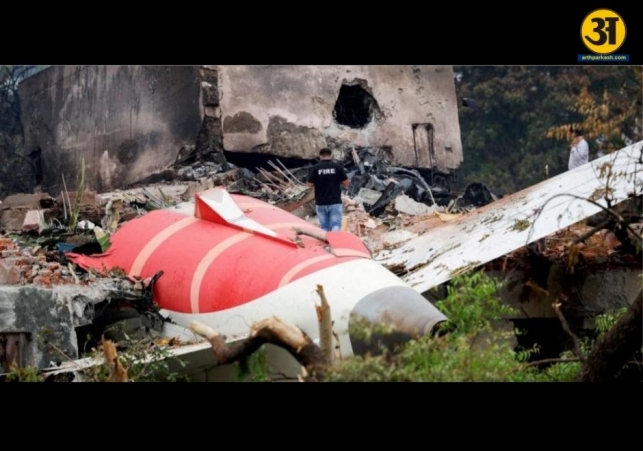
As the report shows, the Ram Air Turbine (RAT)—an emergency backup system—had deployed, indicating electrical systems were in distress. Seconds later, a desperate “MAYDAY” was called, but air traffic control never received a reply after that. The aircraft crashed into the BJ Medical College and Hospital’s hostel, killing not only passengers but innocent people on the ground. Only one person survived.
ALSO READ: Top 6 Tech Innovations Disrupting Traditional Indian Retail
ALSO READ: The rise of the freelance economy: Challenges and opportunities
No red flags, yet everything went wrong
What makes this crash even more tragic is that nothing else was wrong. The aircraft had been properly maintained. Fuel quality was fine. The engines were relatively new—one had been installed in March, the other in May. There were no birds in the flight path, no hazardous cargo, and the plane’s flaps and landing gear were in correct takeoff positions.
Even the takeoff weight was within limits. And yet, the most vital part of flight—engine power—was abruptly cut. Why? And how?
These are the questions the world needs answered.
Families want justice—and so do we
I can’t imagine the agony of the families who lost their loved ones, both onboard and on the ground. The father of one victim, Naresh Maheswari, said, “We want no one else to die due to such carelessness.” He’s right. Whether this was a cockpit mistake, a systems failure, or some unknown fault, someone must be held accountable.
The brother-in-law of another victim, Niraj Patel, put it bluntly: “The government must take all precautions so that people don’t lose family members like this again.”
It’s hard to disagree. For every passenger who boards a flight, for every parent who waves their child goodbye at the airport, safety must never be an assumption—it must be a guarantee.
Conclusion: This isn’t just a report—it’s a call to action
This report is not just paperwork. It’s a wake-up call. Because if a fuel cutoff switch can end 260 lives in seconds, we need better answers, stronger safeguards, and faster reforms. Pilots need advanced cockpit warnings. Aircraft must have smarter fault-isolation systems. And investigators must explore every possibility, including human error, mechanical flaws, and even sabotage.
As a concerned aviation analyst, and more importantly, as a human being—I stand with the families of AI171. The investigation must not rest until every single factor behind this tragedy is revealed. Not just for justice—but to prevent this horror from ever repeating again.
Related News