Five countries Trump may target next and why he is taking a tough line
After Venezuela, five more nations draw Trump’s attention as he hardens foreign policy stance
- By Gurmehar --
- Monday, 05 Jan, 2026
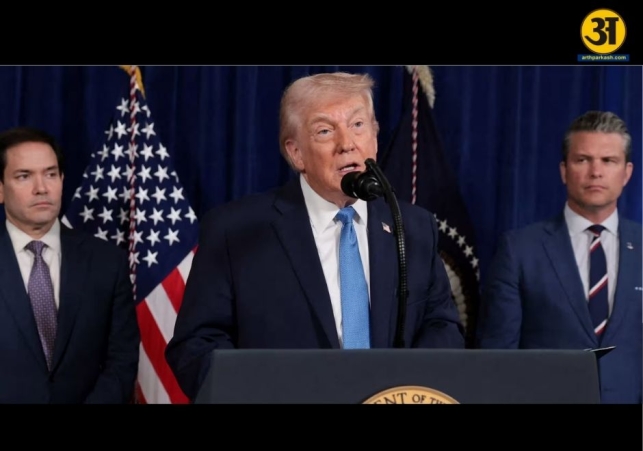
US President Donald Trump has taken a very strong approach to foreign policy after the dramatic capture of Venezuelan President Nicolas Maduro. The operation, which brought Maduro to New York to face charges for narco-terrorism, has sent shockwaves through the Americas. Following this event, Trump issued sharp warnings to at least five countries — Colombia, Greenland, Cuba, Mexico, and Iran.
Trump began his remarks while on Air Force One, speaking about Venezuela and then expanding his comments to other nations. He warned that the US could take strict actions if these countries do not follow America’s expectations. Experts say this shows Trump is trying to increase US influence globally, particularly in the Western Hemisphere.
Colombia was one of the first countries Trump mentioned. He criticised Colombian President Gustavo Petro, accusing him of being involved in drug operations. Trump said Petro has cocaine mills and factories and claimed that he is making drugs and sending them to the US. Trump warned that Petro “will not be doing it for very long” and suggested that the US might consider operations against Colombia if necessary. These comments come at a time when there are already tensions between the US and Colombia over boat strikes in the Caribbean and eastern Pacific. Colombia is known as a major hub in the regional drug trade.
Trump also focused on Greenland, a large island that is a semi-autonomous territory of Denmark. He said Greenland is important for US national security and claimed that Russian and Chinese ships are active around the island. Trump argued that the US needs Greenland to protect its security interests and suggested that Europe supports this idea. Denmark, however, rejected Trump’s remarks. Danish Prime Minister Mette Frederiksen said it makes no sense for the US to try to take over Greenland.
Cuba was another country that Trump briefly mentioned. He expressed concerns about the situation on the island and suggested that the US could increase pressure on Cuba. While he did not give detailed plans, the warning placed Cuba on Washington’s radar alongside Venezuela.
Trump then turned his attention to Mexico, warning that drug cartels are very strong and that the US may have to act if Mexico does not control the situation. He praised Mexican President Claudia Sheinbaum as a “terrific person” but said that the flow of drugs through Mexico is a serious problem. Trump claimed he offered US help, including sending troops, to manage the issue, though he left the decision to the Mexican government.
Finally, Trump spoke about Iran, which is facing protests over its economic crisis. He warned that if Iranian authorities use lethal force against protesters, the US could respond strongly. Trump said the situation is being closely monitored but did not announce immediate steps or actions.
Trump’s warnings are part of his long-standing approach to increasing US influence in the Western Hemisphere. He has revived ideas similar to the 19th-century Monroe Doctrine, which focused on Latin America being under US influence. Trump calls his version the “Don-roe Doctrine” and has used it to justify his strong stance on countries like Venezuela, Colombia, and Cuba.
Why Trump’s statements matter
Trump’s remarks have several implications for global politics and the countries involved. Experts say these statements signal a more aggressive US foreign policy, particularly in Latin America and nearby regions. By issuing public warnings, Trump aims to pressure these nations to follow American expectations, especially on trade, security, and drug control.
For Colombia, the accusations of drug production may increase tension between the US and Bogota. The country already faces pressure from US military and anti-drug operations. Analysts warn that any escalation could affect regional stability and cooperation.
ALSO READ: US strikes Venezuela, captures Nicolas Maduro, but is it legal under international law?
ALSO READ: Explained: Why China’s contraceptive tax shows the limits of pro-natalist policies
Greenland is seen as strategically important because of its location in the Arctic. Russia and China have been increasing their presence there, which Trump says threatens US security. Although Denmark strongly disagrees with the US claims, the issue highlights Trump’s focus on controlling areas that are considered important for defense and global power.
In Mexico, the warnings highlight concerns over drug cartels and border security. While Trump praised President Sheinbaum, he made it clear that the US is ready to intervene if the situation worsens. This could influence future US-Mexico cooperation on security and drug control.
Iran is facing domestic protests due to economic problems, and Trump’s warnings show that the US is closely watching the situation. While no immediate actions were announced, the statements serve as a warning that the US may act if violence increases.
Trump’s approach is consistent with his broader goal of expanding US influence worldwide. By focusing on multiple countries at once, he is signaling that America expects other nations to align with its interests, especially in areas of security, trade, and law enforcement. The Venezuela operation and subsequent statements mark a dramatic shift in how the US interacts with countries in its region, making global politics more tense.
In summary, Trump’s recent statements target Colombia, Greenland, Cuba, Mexico, and Iran, warning them about drug production, security threats, and potential unrest. These warnings follow the dramatic capture of Venezuela’s Maduro and are part of Trump’s revived foreign policy strategy, sometimes called the “Don-roe Doctrine.” Experts say this approach may increase US influence but also raises tensions with several countries in the Americas and beyond.
Related News