Debate builds on Modi’s theatre command decision
Speculation grows over Modi’s possible move on theatre command structure
In two weeks, Prime Minister Narendra Modi will speak to the senior leadership of the armed forces in Vijay Durg, Kolkata, the headquarters of the Eastern Army Command. His speech is expected to touch on two sensitive issues—the ongoing Operation Sindoor and the possibility of creating Integrated Theatre Commands, a military reform that has been on India’s agenda for over two decades.
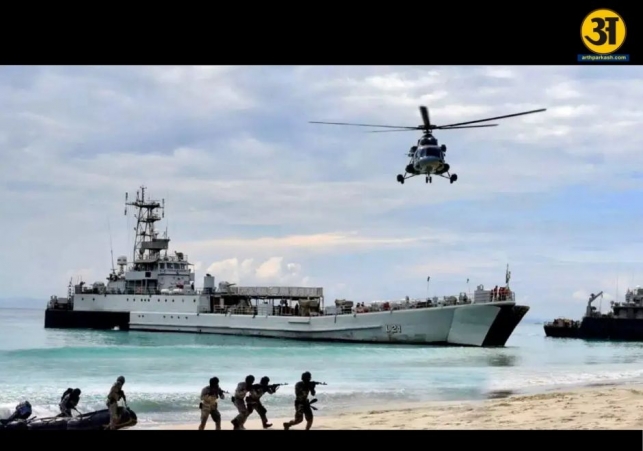
The idea is simple but bold: merge 13 single-service commands into just three large theatre commands—a Western Command against Pakistan, a Northern Command against China, and a Maritime Command for the Indian Ocean. Each theatre would have one commander drawn from the Army, Navy, or Air Force, reporting directly to the Chief of Defence Staff (CDS).
This structure would transform the way India fights wars, with more joint planning and faster decision-making. But as always, the devil lies in the details—and the Air Force is not convinced.
Why the Air Force is worried
The Indian Air Force (IAF) has always been the most vocal opponent of theatre commands. It argues that dividing its limited resources between three theatres could weaken its striking power. This fear has returned to the surface after Operation Sindoor, the recent 88-hour conflict with Pakistan.
In the first phase of the operation, the IAF lost aircraft because it could not neutralize Pakistan’s air defences or target its fighter jets in time. But on the third day, when the IAF launched major strikes, it destroyed key Pakistani airbases and reportedly shot down at least five PAF jets and one large surveillance aircraft from over 300 km away. The lesson: concentrated air power can change the course of a war within hours.
Air Chief Marshal A.P. Singh made this point clear on August 26 at the “Ran Samvad” conference in Mhow. He suggested creating a joint planning and coordination centre in New Delhi under the Chiefs of Staff Committee before reorganizing the entire command structure. In his words, “Disrupting everything and making one structure now, I do not think is a very good idea.”
The IAF’s concern is also practical. After retiring its last MiG-21 squadrons this year, it will be left with only 29 fighter squadrons—13 fewer than the sanctioned strength of 42. This is the lowest number since 1962, when India fought China. Stretching these limited assets across multiple theatre commands could make the IAF less effective in a two-front war against China and Pakistan.
Why the government may push ahead
From the government’s perspective, however, theatre commands are not just about military efficiency. They are also about reform, symbolism, and long-term readiness. Since the Kargil conflict in 1999, multiple committees have recommended reorganizing the armed forces to make them more joint and modern. The first step came in 2019, when the government appointed a CDS. The second step—creating theatre commands—was supposed to follow soon after.
But resistance, especially from the Air Force, kept the plan stuck. By 2023, it seemed like a breakthrough had been reached, when the IAF reluctantly agreed to a version of theatre commands proposed by CDS General Anil Chauhan. The Ministry of Defence even described 2025 as its “Year of Reform.”
If Modi announces theatre commands during his Vijay Durg speech, it would be the most radical shake-up in the military since independence. Service chiefs would no longer directly fight wars. Instead, they would focus on training and equipping forces, while theatre commanders would lead combat operations.
This model works for countries like the United States and China, where theatre commands help integrate land, air, and sea operations. Supporters argue that India, facing threats from two nuclear-armed neighbours, cannot afford to delay such changes.
ALSO READ: Comparing losses in gaming and investing sparks debate on regulation
Opinion: reform or delay again?
The question is whether Modi will take the political and strategic risk of pushing theatre commands now. The timing is tricky. On one hand, Operation Sindoor highlighted the importance of rapid, integrated warfare. On the other, it also showed how critical it is to use air power as a concentrated force rather than splitting it into smaller units.
The risk is clear: if theatre commands are rolled out without full agreement, India could end up with a structure that looks modern on paper but creates confusion in practice. Command and control in a fast-moving conflict is not something to experiment with lightly.
Yet delaying reforms forever is equally dangerous. The longer India waits, the more it struggles with outdated systems, siloed commands, and turf battles. At some point, political leadership has to make a call.
That is why Modi’s speech in Vijay Durg matters. If he announces theatre commands, it will mark the beginning of India’s biggest military transformation in 75 years. If he delays again, it will be another reminder that consensus inside the armed forces remains elusive.
India has debated theatre commands since the Kargil Review Committee in 2000. Twenty-five years later, the debate continues. Whether 2025 will finally be the “Year of Reform” or just another year of discussion is a decision that rests squarely on the Prime Minister’s shoulders.
Related News