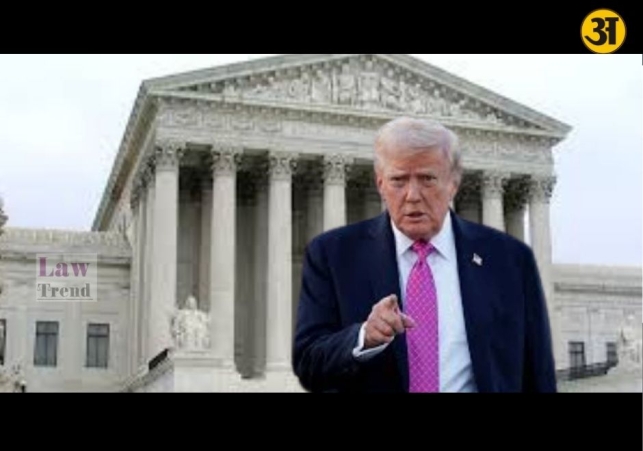
Court blocks Trump tariffs; alternative paths remain
Supreme Court of the United States strikes down Donald Trump’s sweeping tariffs: what options does the US president have now?
The Supreme Court of the United States has dealt a major blow to President Donald Trump’s trade strategy by striking down most of his broad tariff measures. The ruling said the president did not have the legal authority under the International Emergency Economic Powers Act (IEEPA) of 1977 to impose such wide import duties on many US trading partners. The decision could affect global trade, American businesses, consumer prices, and inflation trends.
The judgment marks an important moment in the ongoing debate over presidential powers in trade policy. While the court has recently allowed some of Trump’s policies to move forward temporarily, this decision draws a clear legal boundary. However, the ruling does not completely end Trump’s ability to impose tariffs, and the administration still has several possible paths it could explore.
What the court decided
The court ruled that the IEEPA law was not meant to give the president unlimited authority to place tariffs on nearly all imports. According to the justices, the law allows emergency economic actions, but it does not clearly permit sweeping, long-term tariff programs of the kind the Trump administration introduced.
This interpretation is important because the administration had relied heavily on emergency powers to justify its trade actions. By rejecting that argument, the court has effectively narrowed the president’s ability to use emergency laws for broad trade measures.
The financial stakes are very high. Reports suggest the contested tariffs covered trillions of dollars in trade. The US government had already collected about $134 billion in tariff revenue under the disputed authority by mid-December. Because of the ruling, future collections under that specific legal route are now blocked.
The decision also reflects unusual political alignment. Legal challenges came not only from Democrats but also from libertarian and pro-business groups that often support Republican policies. Public opinion surveys have also shown that tariffs are not widely popular, especially as voters worry about rising living costs.
ALSO READ: US military on standby for possible Iran strike, Trump yet to take final decision
What options remain
Even though Trump cannot directly overturn the Supreme Court’s decision, the administration still has several alternative routes.
First, the most direct option is legislative. The Republican Party currently holds a majority in Congress (often informally referred to as Parliament in some reports). Lawmakers could pass a new law that clearly gives the president authority to impose the kind of tariffs the court rejected. If such a bill becomes law, it would likely address the legal gap identified by the court.
Second, the administration can rely on other existing trade laws. One key pathway is Section 301 of the Trade Act of 1974. This provision allows the US government to impose tariffs in response to unfair trade practices by other countries. The United States has used Section 301 before, especially in trade disputes with China. However, this route usually requires investigations and findings of unfair behavior, so it may take more time and involve a narrower scope.
Third, national security-based tariffs remain an option under different statutes. Past administrations have used national security arguments to place tariffs on products such as steel and aluminum. While this method has also faced legal scrutiny, it is still considered a viable tool if properly justified.
Fourth, the administration could redesign its tariff program to make it more targeted. Instead of sweeping measures affecting many countries at once, narrower tariffs aimed at specific sectors or nations might stand a better chance of surviving court review.
Despite these options, the ruling creates practical and political challenges. Passing new legislation requires coordination in Congress and could face resistance from business groups worried about higher costs. Using Section 301 or national security laws may also invite fresh legal battles.
Economically, the decision could ease some pressure on importers and consumers if broad tariffs are delayed or reduced. Tariffs often raise prices because companies pass higher import costs to buyers. With inflation already a concern for many households, any reduction in tariff pressure could have wider effects on the economy.
At the same time, supporters of strong tariffs argue they protect American industries and reduce dependence on foreign supply chains. This means the political debate over trade policy is likely to continue.
In the coming months, much will depend on how aggressively the Trump administration pursues alternative legal tools and whether Congress steps in with new legislation. The Supreme Court’s ruling has clearly limited one powerful method, but it has not ended the broader trade fight.
Related News


.jpg)