Controversy over omitted lines from national song
Debate erupts over missing verses from ‘Vande Mataram’ during official events
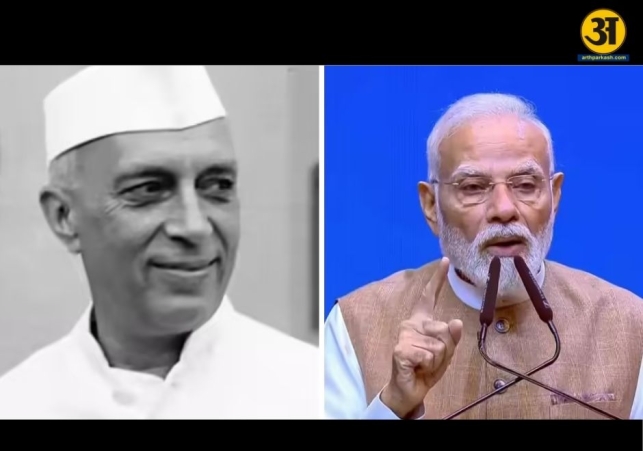
As India marks 150 years of Vande Mataram, Prime Minister Narendra Modi’s remarks have reignited debate over the history of the national song. The Prime Minister alleged that in 1937, the Congress party dropped key stanzas of Vande Mataram, weakening its unity message and “sowing the seeds of partition.” His statement came during the inauguration of a year-long celebration to commemorate the song’s 150th anniversary.
The history of Vande Mataram and the missing stanzas
Vande Mataram was written by Bankim Chandra Chatterjee in both Sanskrit and Bengali. It first appeared in his 1882 novel Anandamath, a story that inspired patriotic feelings during India’s struggle for independence. The song has six stanzas, and over time, it became a symbol of resistance and unity against colonial rule. It was sung in political protests, public gatherings, and freedom meetings across the country.
In 1937, however, the Indian National Congress decided to officially adopt only the first two stanzas of the song as the national song. These verses focused on the idea of the motherland and expressed love and gratitude toward India as a nurturing mother.
The remaining four stanzas were not included. They contained strong religious references to Hindu goddesses — Durga, Lakshmi, and Saraswati — portraying India as a divine mother. The Congress leadership at that time believed that these verses could make people from other religions uncomfortable and might go against the secular and inclusive spirit the national movement aimed to uphold.
One of the omitted verses reads:
"Thou art Durga, Lady and Queen, with her hands that strike and her swords of sheen,
Thou art Lakshmi lotus-throned..."
By focusing only on the first two verses, the Congress wanted Vande Mataram to represent all Indians equally, without any particular religious tone. This decision, however, has continued to be a matter of discussion and disagreement even decades later.
Congress’s reasoning and political reactions
The Congress Party’s reasoning was recorded in a 1939 resolution drafted by Mahatma Gandhi, which stated that the party retained only those stanzas of Vande Mataram “to which no objection could be taken on religious or other grounds.” The resolution added that singing the song should be a matter of choice, especially outside purely Congress events.
It said, “Except at purely Congress gatherings, it should be left open to individuals whether they will stand up when the stanzas are sung. In Local Board and Assembly meetings, the singing of Vande Mataram should be discontinued.”
This decision reflected Gandhi’s efforts to maintain communal harmony at a time when India’s political and religious landscape was becoming increasingly sensitive. However, the move has often been criticised by those who believe that Vande Mataram should have remained whole and untouched as a symbol of complete national pride.
During his recent address, Prime Minister Modi described the omission of stanzas as an act that divided the spirit of the song. He said, “Vande Mataram became the voice of India's freedom struggle, it expressed the feelings of every Indian. Unfortunately, in 1937, important stanzas... a part of its soul, were separated. The division of Vande Mataram also sowed the seeds of partition.”
ALSO READ: BJP still needs Nitish Kumar despite differences in Bihar politics
ALSO READ: Why strokes can strike at any age: 8 common myths busted
He further said that the “divisive mindset” that caused this separation is still a challenge for India today. Modi urged the younger generation to understand why this decision was taken and to value Vande Mataram as a “maha mantra” of nation-building.
In response, the Congress Party strongly rejected the Prime Minister’s comments. Congress president Mallikarjun Kharge criticised Modi, saying that the Bharatiya Janata Party (BJP) and the Rashtriya Swayamsevak Sangh (RSS) themselves have not shown full respect toward national symbols.
Kharge alleged that the BJP and RSS “avoided” Vande Mataram and the national anthem Jana Gana Mana in their activities. He claimed that these organisations sing “Namaste Sada Vatsale” at their shakhas (branches) instead.
Kharge said, “The RSS and Sangh Parivar supported the British during the national movement, did not raise the national flag for 52 years, insulted the Constitution of India, burnt effigies of Mahatma Gandhi and Dr. Ambedkar, and, as Sardar Patel said, were involved in Gandhi ji’s assassination.”
His remarks turned the commemoration into a sharp political exchange between the ruling party and the opposition.
The continuing legacy of Vande Mataram
Despite the controversy, Vande Mataram remains a powerful national symbol that celebrates India’s unity and love for the motherland. The first two stanzas — “Vande Mataram, Sujalam, Suphalam…” — are still sung with pride across schools, public functions, and national events.
For many, the song continues to represent the voice of India’s freedom movement and the emotional connection citizens have with their country. The ongoing debate over its verses reflects India’s complex relationship with religion, politics, and national identity.
As the nation celebrates 150 years of Vande Mataram, the discussion around its missing verses has once again brought to light the delicate balance between faith and inclusivity, history and interpretation, and tradition and unity — values that continue to shape the idea of India today.
Related News