Congress leader seeks discussion on Iran crisis
Sonia Gandhi demands Parliament debate on Khamenei killing, questions Centre’s silence
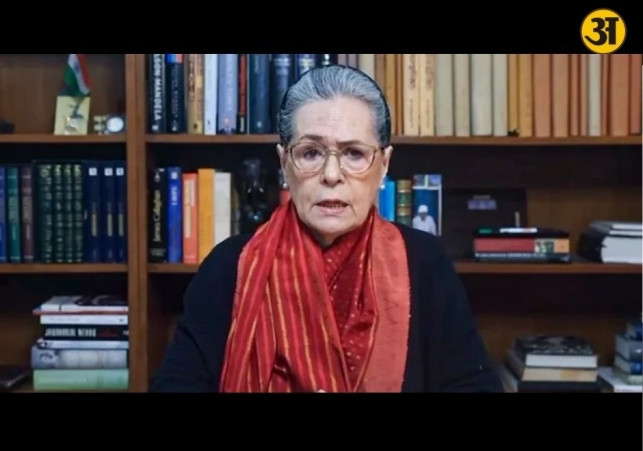
Congress Parliamentary Party chairperson Sonia Gandhi on Tuesday sharply criticised the Central government’s response to the reported killing of Iran’s Supreme Leader Ayatollah Ali Khamenei. She said the government’s silence was troubling and demanded that the issue be openly debated when Parliament reconvenes for the second part of the Budget session.
In an article published in The Indian Express, Gandhi said India must speak clearly on what she described as a serious breakdown of international norms. She argued that remaining silent on such a major global development raises questions about the direction and credibility of India’s foreign policy.
Gandhi said the Congress party has strongly condemned the bombings and targeted assassinations on Iranian soil. According to her, these actions represent a dangerous escalation that could have serious regional and global consequences.
Call for debate
The former Congress president said Parliament must discuss the matter without delay. She stated that the government’s “disturbing silence” should be examined openly rather than avoided. Gandhi stressed that India has historically stood for respect of sovereignty and peaceful resolution of disputes, and therefore cannot afford ambiguity on such issues.
Referring to reports from Iran, Gandhi said Tehran confirmed on March 1 that its Supreme Leader Ayatollah Seyed Ali Hosseini Khamenei had been killed in targeted strikes allegedly carried out a day earlier by the United States and Israel. She described the reported killing of a sitting head of state during ongoing negotiations as a grave rupture in modern international relations.
Gandhi questioned why New Delhi has not issued a clear condemnation of what she called a violation of Iranian sovereignty. She said the Prime Minister initially focused on condemning Iran’s retaliatory strike on the United Arab Emirates but did not address the events that preceded it.
According to her, later statements expressing “deep concern” and calling for dialogue were not sufficient. She argued that dialogue and diplomacy were already underway before the attacks occurred, making the government’s response appear inadequate.
ALSO READ: Israel-US strikes on Iran trigger regional emergency; explosions reported across Gulf
ALSO READ: Pakistan launches retaliatory strikes on Afghanistan, tensions surge
Foreign policy concerns
Gandhi warned that silence in such situations cannot be considered neutral. In her view, failing to defend principles of sovereignty and international law may weaken India’s long-standing diplomatic position.
She cited Article 2(4) of the United Nations Charter, which prohibits the threat or use of force against the territorial integrity or political independence of any state. Gandhi argued that the targeted killing of a serving head of state directly challenges these global norms.
“If such acts pass without principled objection from the world’s largest democracy, the erosion of international norms becomes easier to normalise,” she wrote. She added that India must rediscover and clearly articulate its moral position in global affairs.
Gandhi also pointed to the timing of recent diplomatic developments. She noted that the Prime Minister had returned from a visit to Israel shortly before the reported assassination and had reiterated support for the government of Benjamin Netanyahu. According to her, this sequence has added to concerns about India’s current foreign policy direction.
She further observed that many countries of the Global South, along with major powers and India’s BRICS partners such as Russia and China, have maintained a cautious distance from the situation. In contrast, she claimed India’s high-profile political positioning without clear moral messaging marks a worrying shift.
The Congress leader said the consequences of the incident extend beyond immediate geopolitics. She warned that the ripple effects of the crisis could be felt across continents and communities.
Gandhi said the Congress party has already extended condolences to the people of Iran and to Shia communities worldwide. She reiterated that India’s foreign policy has traditionally been anchored in peaceful settlement of disputes, as reflected in Article 51 of the Constitution.
According to her, principles such as sovereign equality, non-intervention and promotion of peace have long been central to India’s diplomatic identity. The current hesitation, she argued, appears inconsistent with these stated values.
The Centre has not yet issued a detailed response to Gandhi’s latest remarks. Government sources have previously maintained that India is closely monitoring the rapidly evolving situation in the Middle East and continues to support dialogue and de-escalation.
As geopolitical tensions in the region remain high, Gandhi’s demand has added political pressure for a formal discussion in Parliament. Whether the government agrees to a full debate when the Budget session resumes remains to be seen.
For now, the issue has opened a fresh political debate in India over how the country should position itself amid rising global conflicts and shifting diplomatic equations.
Related News