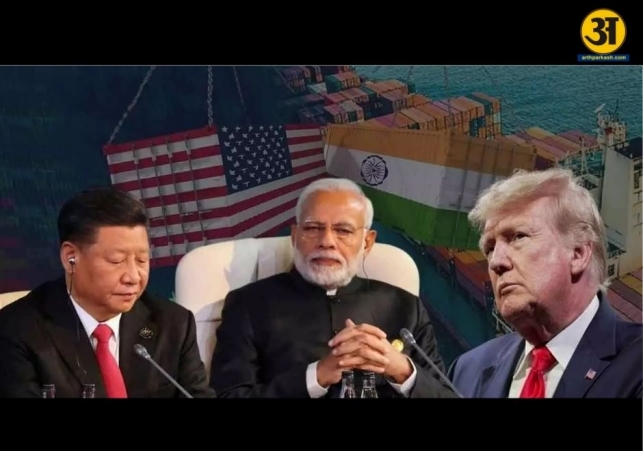
Chinese President’s secret letter hints at closer India-China ties
Trump’s tariffs push China and India towards closer ties with secret outreach
- By Gurmehar --
- Friday, 29 Aug, 2025
US President Donald Trump’s decision to double tariffs on imports from India to 50 per cent has created fresh pressure in global trade. The move was announced as punishment for India’s continued oil purchases from Russia. While the US had earlier announced tariffs on China, Canada, and Mexico, many of those decisions were either amended, delayed, or increased later. Most recently, Trump gave China another 90-day extension before enforcing new high tariffs on Chinese goods.
In this changing trade environment, questions are now being raised about whether Trump’s tariff war is indirectly pushing India and China closer together. Reports suggest that both countries are looking at new ways of cooperation in areas of trade, diplomacy, and cultural exchange.
According to the Ministry of External Affairs (MEA), India and China have agreed to take practical steps such as making visas easier, restarting direct air services, and increasing exchanges between media organisations and think tanks. These measures are seen as part of a broader effort to rebuild trust and strengthen ties.
Xi Jinping’s letter and India’s cautious response
Interestingly, analysts say China had already made an outreach to India even before the new round of tariffs from the United States. According to a Bloomberg report, Chinese President Xi Jinping wrote a personal letter to Indian President Droupadi Murmu in March 2025.
The letter expressed Beijing’s concern over possible US deals that might affect China’s strategic and economic interests in the region. In the letter, Xi also assigned a senior regional official to lead China’s diplomatic efforts with India. The message was later passed on to Prime Minister Narendra Modi.
Though the letter came in March, Indian officials say that a more serious effort to respond began in June. Since then, diplomatic exchanges between New Delhi and Beijing have gained momentum. The upcoming visit of Prime Minister Narendra Modi to China, which will be his first in seven years, is being seen as a major step forward in this process.
Experts believe that this outreach by China was aimed at reducing tensions and building new ground for cooperation at a time when both countries are dealing with US trade pressure.
Impact of Trump’s tariff strategy
Many international observers feel that Trump’s aggressive tariff policies are not only reshaping US-China relations but also influencing how India positions itself. Ashley Tellis, a senior fellow at the Carnegie Endowment for International Peace and a former US diplomat in New Delhi, told Bloomberg that Trump deserves credit for unintentionally pushing India and China towards each other.
“Trump is indeed the great peacemaker — he deserves all the credit for stimulating the incipient rapprochement between Delhi and Beijing. He has singlehandedly pulled this off by treating India as an enemy,” Tellis said, in a sarcastic remark highlighting the irony of the situation.
ALSO READ: Trump’s tariffs on India take effect: Sectors impacted and exemptions explained
ALSO READ: INS Himgiri and INS Udaygiri: India commissions indigenous stealth frigates to Navy
By imposing harsh tariffs on both India and China, the US may have created common ground for the two Asian neighbours to find shared interests. For years, relations between India and China have been tense, marked by border disputes, competition for regional influence, and differences over global alliances. However, the current trade war appears to be giving both sides a reason to sit down and explore cooperation.
Areas of renewed engagement
Beyond trade and tariffs, both countries have shown interest in rebuilding people-to-people ties. In July, India and China agreed to fast-track steps like resuming direct flights, making visa processes easier, and encouraging collaboration between research groups and media outlets. These small but practical measures are being described as confidence-building steps.
At the same time, India is closely monitoring how far it can go in working with Beijing without hurting its own strategic partnerships, especially with the US. New Delhi has been cautious, knowing that while cooperation with China could help balance US pressure, India also needs American support in areas like technology, defence, and counter-terrorism.
The fact that Prime Minister Modi has decided to visit China after seven years is itself seen as an important signal. The trip could mark the beginning of a new chapter in India-China relations, although experts warn that deep differences will not disappear overnight. Issues such as border tensions and regional security will continue to test the relationship.
The ongoing trade war triggered by US President Donald Trump is not only affecting global markets but also reshaping diplomatic ties. By targeting India with higher tariffs, Trump may have unintentionally created space for New Delhi and Beijing to find common ground.
Chinese President Xi Jinping’s personal letter to India earlier this year shows that Beijing had already begun reaching out to improve ties. With Prime Minister Narendra Modi preparing to visit China for the first time in seven years, the stage is now set for closer engagement.
Whether this new understanding will last remains uncertain. India and China have a history of mistrust and competition, but the pressure of US tariffs has given both sides a strong reason to talk. For now, the world will be watching closely as two of Asia’s largest powers test a cautious but potentially significant partnership.
Related News