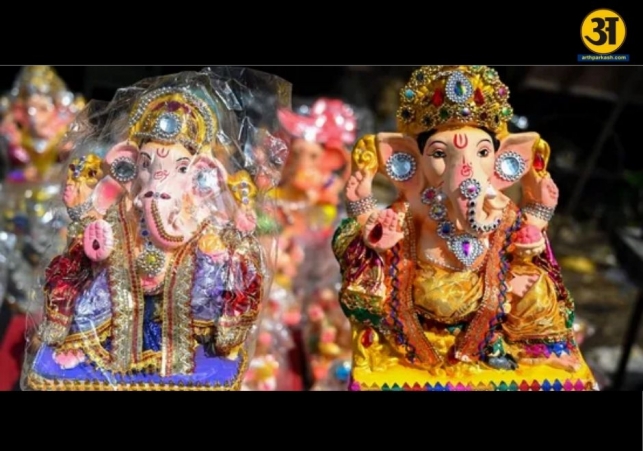
Best muhurat to bring Ganpati home on Ganesh Chaturthi 2025
Ganesh Chaturthi 2025 sthapana muhurat: Best time to bring Ganpati home on 27 August
Ganesh Chaturthi 2025 is on 27 August. The sthapana muhurat, rituals, and traditions not only guide the spiritual practices of devotees but also reflect India’s deep cultural values.
The spiritual importance of Ganesh sthapana timing
Ganesh Chaturthi is one of the most celebrated festivals in India, symbolising devotion, prosperity, and new beginnings. It is the day dedicated to Lord Ganesha, the remover of obstacles and the giver of wisdom. This year, Ganesh Chaturthi falls on 27 August 2025, and millions of families across India are preparing to bring Lord Ganpati home.
While the decorations, sweets, and cultural programs form a vibrant part of the festival, the most awaited moment for devotees is the sthapanā muhurat — the auspicious time to install the idol of Lord Ganesha at home or in community pandals. Devotees strongly believe that choosing the right time is not just about following tradition but about inviting divine blessings into their homes.
According to the Hindu calendar, Ganesh Chaturthi begins during the Shukla Paksha of the Bhadrapada month, a period that holds special significance in Vedic astrology. Scriptures suggest that Lord Ganesha was born during the Madhyahna Kala (midday time), and that is why the puja performed during this period is believed to be the most powerful.
For 2025, the Chaturthi tithi begins at 1:54 PM on August 26 and ends at 3:44 PM on August 27. However, since the midday period of 27 August aligns best with traditional beliefs, the ideal time for Ganesh sthapana is set between 11:05 AM and 1:40 PM on August 27. This window is considered the most auspicious for bringing Ganpati home, ensuring that devotees start the celebrations with the right spiritual energy.
In today’s world, where religious observances often have to adjust to work schedules, school routines, and modern lifestyles, one may ask — why is this exact timing still given so much importance? The answer lies in faith and continuity. Following the muhurat is not only about astrology; it is about aligning one’s devotion with centuries-old cultural wisdom, strengthening the bond between the devotee and the divine.
Why the rituals go beyond tradition
Ganesh Chaturthi is not just a religious festival; it is a cultural event that binds communities together. In homes, families perform Shodashopachar Ganapati Puja, a detailed ritual with 16 offerings to the deity. From flowers and sweets to mantras and aarti, every step has a meaning — reminding devotees of humility, gratitude, and devotion.
Interestingly, the festival also highlights the balance between spirituality and social life. In many regions, the celebrations last only for a day, but in others, the festivities continue for ten days until Anant Chaturdashi. During this period, families and communities come together, share food, perform cultural programs, and immerse themselves in collective devotion.
The final day, Anant Chaturdashi, marks the immersion of the Ganpati idol in rivers, lakes, or the sea. Symbolically, it represents letting go of attachments, with the belief that Ganesha will return next year to bless his devotees again.
This cycle of arrival, worship, and departure carries a powerful message — life is about celebrating moments with joy but also learning to accept change and impermanence. In a way, Ganesh Chaturthi teaches us resilience, patience, and hope.
From an economic angle, the festival also fuels industries such as textiles, sweets, flowers, handicrafts, and idol-making, supporting thousands of artisans and small businesses across India. Cities like Mumbai, Pune, Hyderabad, and Bengaluru witness massive Ganesh pandals, while smaller towns celebrate with equal devotion in homes and community spaces.
As ArthPrakash observes, the true spirit of Ganesh Chaturthi lies in its ability to bridge tradition with modernity. For urban families living in apartments, even a small eco-friendly clay idol brings the same joy as the grand public celebrations in big cities. The festival allows every devotee — rich or poor — to feel equally close to the deity.
ALSO READ: PM Modi’s vision sparks a new era in India’s space journey
ALSO READ: Why the UN declaring a famine in Gaza holds critical global importance | Explained
Conclusion: More than a festival, a reminder of faith
In 2025, as Ganesh Chaturthi begins on August 27, it is not only about placing an idol at home but about understanding the deeper message it brings. The sthapanā muhurat — between 11:05 AM and 1:40 PM — may seem like a detail of ritual, but for devotees, it reflects a desire to align life with divine timing, to start on the right note.
Ganesh Chaturthi reminds us that festivals are not just about rituals; they are about values — faith, family, community, and continuity. Whether celebrated in a small home temple or a large pandal, the essence remains the same: Lord Ganesha arrives to remove obstacles and bless new beginnings.
As India lights up with devotion this Ganesh Chaturthi, ArthPrakash believes that the festival is more than tradition — it is a living example of how faith can unite hearts, guide lives, and inspire resilience in uncertain times.
Related News