Balance test may predict lifespan
Scientists link 10-second balance challenge to life expectancy
Sometimes the simplest checks can say more about your health than the most expensive medical tests. One such example is the “10-second balance test,” which scientists now say could be a surprisingly strong indicator of your overall well-being — and even how long you might live.
According to a large study published in the British Journal of Sports Medicine, people who could not balance on one leg for 10 seconds were 84% more likely to die from any cause over the next seven years compared to those who could. This finding held true even after adjusting for age, gender, weight, and existing health problems.
Of course, this doesn’t mean your life depends entirely on a single standing pose. But it does suggest that balance is closely connected to several important aspects of health — from muscle strength to brain function — and it deserves more attention than it usually gets.
What the test shows about your body
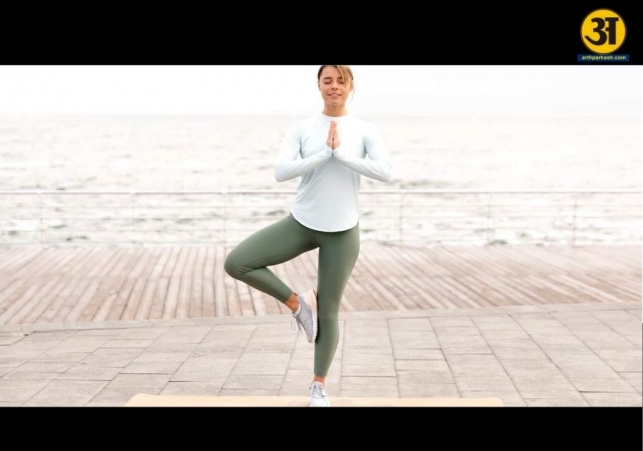
The beauty of this test lies in its simplicity. Here’s how it works: stand barefoot on one leg, keep your arms relaxed by your sides, and look straight ahead. If you can hold the position for 10 seconds without wobbling or putting your foot down, you pass.
It sounds easy, but for many people — especially in their 50s, 60s, and beyond — it can be unexpectedly difficult. Struggling to stay balanced doesn’t just mean your coordination is off. Scientists believe it can also point to deeper issues like:
-
Reduced muscle strength, especially in the legs and core.
-
Slower brain processing speed, which affects coordination.
-
Pre-frailty, an early stage of physical decline.
-
Hidden medical conditions, such as poor circulation, nerve damage, or early-stage neurological disorders.
Poor balance is also a known risk factor for falls, which can be life-changing in older age. Even a single fall can lead to fractures, long recovery periods, and reduced independence. That’s why this test is more than a party trick — it’s a small but telling snapshot of your physical stability.
How to improve your balance starting today
If you can’t hold the pose for 10 seconds, don’t panic. This is not a diagnosis or a prediction of your exact life expectancy. Think of it as a friendly warning light on your dashboard — it’s telling you it’s time to take care of your balance, mobility, and strength.
ALSO READ: India’s strategic options to counter Trump’s tariff pressure
ALSO READ: How Trump’s tariff tirade may be fueling a Russia-India-China troika revival | Explained
Here are some easy ways to improve:
-
Practice every day
Make balancing a part of your daily routine. Try standing on one leg while brushing your teeth, washing dishes, or waiting for the microwave. Start with a few seconds and increase the time gradually. -
Do balance-focused exercises
Yoga, tai chi, and Pilates are all excellent for building stability, coordination, and flexibility. Even simple moves like heel-to-toe walking across the room can help. -
Strengthen your lower body
Strong legs and hips are key to good balance. Include exercises like squats, lunges, step-ups, and calf raises in your weekly routine. You don’t need a gym — these can be done at home. -
Stay generally active
Walking, light jogging, cycling, or swimming can keep your muscles, joints, and heart in good condition, which indirectly supports balance. -
Pay attention to your feet
Good footwear matters. Shoes that fit well and support your feet can reduce strain and improve stability.
My take: balance is about more than not falling
In my opinion, the real message here isn’t “pass this test or else.” It’s that balance is a mirror of your overall health, reflecting your muscle strength, nervous system function, and even your lifestyle. The ability to stand steady on one leg shows that your body is working in harmony — your brain, muscles, joints, and reflexes are all communicating efficiently.
We often focus on numbers like weight, blood pressure, or cholesterol, but rarely think about our ability to balance. This is a mistake. Just like lifting a heavy weight or running a mile, standing still without swaying is a form of fitness — one that becomes even more valuable as we age.
The 10-second balance test is easy, free, and safe for most people to try at home. If you fail, it’s not a reason for fear, but an invitation to start improving your stability. By making small changes — practicing balance, building strength, and staying active — you can protect not only your mobility but also your independence in the years to come.
In the end, staying upright is about much more than avoiding a fall. It’s about living a life where your body supports your ambitions, whether that’s playing with your grandchildren, traveling without hesitation, or simply moving through your day with confidence. And that, to me, is the real measure of longevity.
Related News