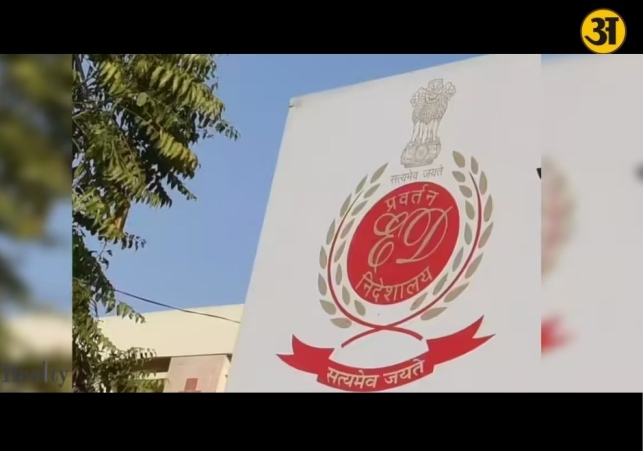
Action taken in Ansal Hub-83 project
ED attaches ₹82 crore properties in Gurugram real estate fraud case
- By Gurmehar --
- Friday, 20 Feb, 2026
The Enforcement Directorate (ED) has attached immovable properties worth ₹82 crore in connection with an alleged large-scale real estate fraud linked to the commercial project “Ansal Hub-83” in Sector-83, Gurugram. The action was taken under the provisions of the Prevention of Money Laundering Act (PMLA), 2002.
According to the agency, the project is spread over about 2.47 acres of land and includes 147 commercial shops, 137 office spaces, and two restaurant units. The ED’s Gurugram zonal office carried out the attachment to prevent the sale or transfer of the property while the investigation continues.
The probe began after an FIR was registered by Haryana Police in June 2023. The case was filed under various sections of the Indian Penal Code related to criminal conspiracy, breach of trust, and cheating. The FIR named promoters and senior officials of Ansal Housing Limited, earlier known as Ansal Housing and Construction Ltd.
Among those booked was the company’s whole-time director, Kushagra Ansal, along with associated firms Samyak Projects Private Limited and Aakansha Infrastructure Private Limited. The case was based on a complaint filed by the HUB-83 Allottee Welfare Association, which represents more than 1,000 investors.
Allegations of delay and diversion
According to the ED, the investigation revealed that the project was launched and commercial units were sold even before obtaining proper statutory approvals. The agency said that although the project’s licence expired in December 2015, the developers continued collecting money from investors and selling units until September 2023 without renewing the licence.
The ED further stated that investors were promised timely possession and modern facilities. However, even after nearly 15 years, no occupation certificate has been issued and possession of the units has not been handed over to buyers.
Several investors also approached the Haryana Real Estate Regulatory Authority (HRERA), filing complaints about delays, non-completion of the project, and alleged illegal collection of money. They claimed that the developer violated statutory obligations and failed to deliver what was promised.
The agency said that more than ₹82 crore was collected from investors between 2011 and 2023. Instead of using the funds to complete construction, the money was allegedly diverted for other purposes, including personal gain.
Officials believe that the diversion of funds is a key part of the money laundering investigation. By attaching the land and the construction carried out so far, the ED aims to secure the assets and prevent any attempt to dispose of them before the legal process is complete.
ALSO READ: US military on standby for possible Iran strike, Trump yet to take final decision
Protection of investor interests
The provisional attachment means that the project land and the existing structure cannot be sold, transferred, or otherwise dealt with without permission. This step is intended to protect the value of the property and ensure that it remains available for possible confiscation under the PMLA if the charges are proven.
The ED said that the action sends a strong message that financial irregularities in the real estate sector will not be ignored. The agency added that it is continuing its investigation to trace the flow of funds and identify all beneficiaries of the alleged fraud.
Real estate fraud cases often leave investors in financial distress, especially when projects are delayed for many years. In this case, many buyers had invested their savings with the hope of owning commercial space in a growing area of Gurugram. Instead, they are still waiting for possession.
Legal experts say that regulatory bodies like HRERA were created to protect homebuyers and ensure transparency in the sector. However, cases from the pre-regulation period or those involving complex financial structures can take time to resolve.
The ED’s involvement under the anti-money laundering law adds another legal layer to the case. If the agency proves that funds were generated through criminal activity and laundered, the attached properties could eventually be confiscated.
For now, the attachment is provisional and subject to confirmation by the adjudicating authority under the PMLA. The accused parties will have the opportunity to present their defence during the legal proceedings.
The case highlights ongoing concerns in the real estate sector, where delays, licence issues, and fund diversion have affected thousands of buyers across different states. Authorities say stricter monitoring and enforcement are necessary to restore trust in the sector.
As the investigation progresses, investors will be closely watching developments, hoping for accountability and eventual recovery of their investments.
Related News