136 properties linked to tax arrears
Punjab attaches properties worth ₹91 crore to recover pre-GST tax dues, says Harpal Cheema
- By Gurmehar --
- Friday, 20 Feb, 2026
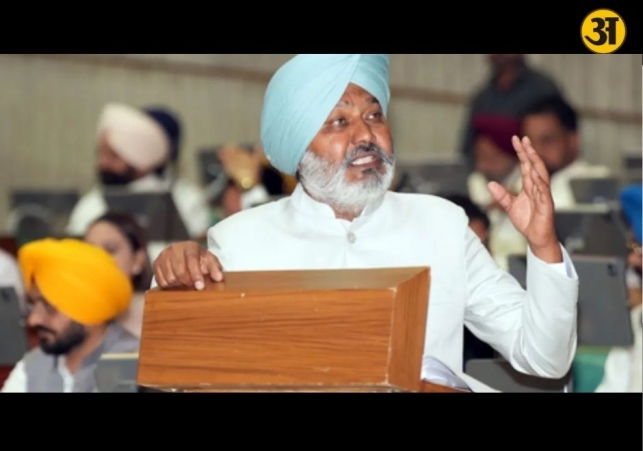
Punjab’s Finance, Excise and Taxation Minister Harpal Singh Cheema has announced that the state taxation department has attached 136 properties worth ₹91.10 crore to recover pending tax dues from the pre-GST period. The move is part of a major enforcement drive aimed at collecting long-pending arrears from defaulters.
Speaking about the action, Cheema said the state government is committed to maintaining a business-friendly and harassment-free environment. At the same time, he made it clear that wilful tax evasion will not be tolerated. He urged traders to make use of the government’s one-time settlement policy to clear their legacy dues and avoid stricter measures such as property auctions.
The attached properties belong to traders and businesses that failed to clear their tax liabilities before the Goods and Services Tax (GST) system was introduced in 2017. These dues relate to the earlier tax system, which included Value Added Tax (VAT) and other state levies.
Strong enforcement action
Cheema shared official data showing the scale of the recovery drive. According to him, 78 properties worth ₹50.58 crore have been attached in primary districts of Punjab. In addition, 58 properties valued at ₹40.52 crore have been attached in other districts, states, or union territories. Together, the total value of attached properties stands at ₹91.10 crore.
He also revealed that some properties have already been auctioned. Through these auctions, the department has recovered ₹15.27 crore so far. The minister said this shows that the government is serious about collecting pending dues and ensuring that tax rules are followed.
The attachment of property means that the owner cannot sell or transfer it until the outstanding tax amount is cleared. If the dues remain unpaid, the government can auction the property to recover the money.
Cheema described the action as a clear message to major defaulters. He said the taxation department is closely monitoring such cases and will continue to take strict steps against those who deliberately avoid paying taxes.
However, he emphasized that the government does not want to trouble honest traders. According to him, enforcement measures are being targeted at persistent defaulters who have ignored repeated notices and reminders.
ALSO READ: US military on standby for possible Iran strike, Trump yet to take final decision
One-time settlement offer
At the same time, the Punjab government has introduced a one-time settlement policy to give traders a chance to resolve their old tax disputes. Under this scheme, eligible traders can settle their pre-GST dues by paying a reduced amount, depending on the category of arrears.
Cheema called this policy a “golden opportunity” for traders. He said the aim is to allow businesses to clear old liabilities in a simple and peaceful manner, without lengthy legal battles or additional penalties.
He urged all concerned traders to immediately take advantage of the scheme. According to him, those who fail to act may face property attachment and possible auction in the future.
The minister also highlighted that clearing old dues will help improve the state’s financial position. Tax revenue is an important source of income for the government, which uses it to fund public services such as education, healthcare, infrastructure, and welfare schemes.
Officials believe that many traders may come forward to settle their dues now that strict action has begun. The combination of enforcement and a settlement scheme is designed to increase compliance while giving businesses a fair chance to regularize their accounts.
Punjab, like many other states, has been trying to close pending cases from the pre-GST era. When GST was introduced as a unified national tax system, many older tax disputes and unpaid amounts remained unresolved. Over time, these arrears built up, making recovery more difficult.
The latest drive signals that the government wants to clean up these pending matters. By attaching properties and conducting auctions, the department hopes to speed up recovery and discourage future non-compliance.
Cheema said the government’s goal is not only to collect revenue but also to ensure fairness. Honest taxpayers, he added, should not feel disadvantaged compared to those who avoid paying dues.
Business groups are expected to closely watch how the drive unfolds. Some traders may welcome the clarity and finality offered by the one-time settlement policy. Others may be concerned about strict enforcement actions.
For now, the message from the Punjab government is clear: old tax dues cannot be ignored. Traders have been given an opportunity to settle their accounts, but those who continue to default may risk losing their attached properties through auction.
The coming months will show how many businesses step forward to use the settlement scheme and how much additional revenue the state is able to recover from pre-GST arrears.
Related News